
Table of Contents
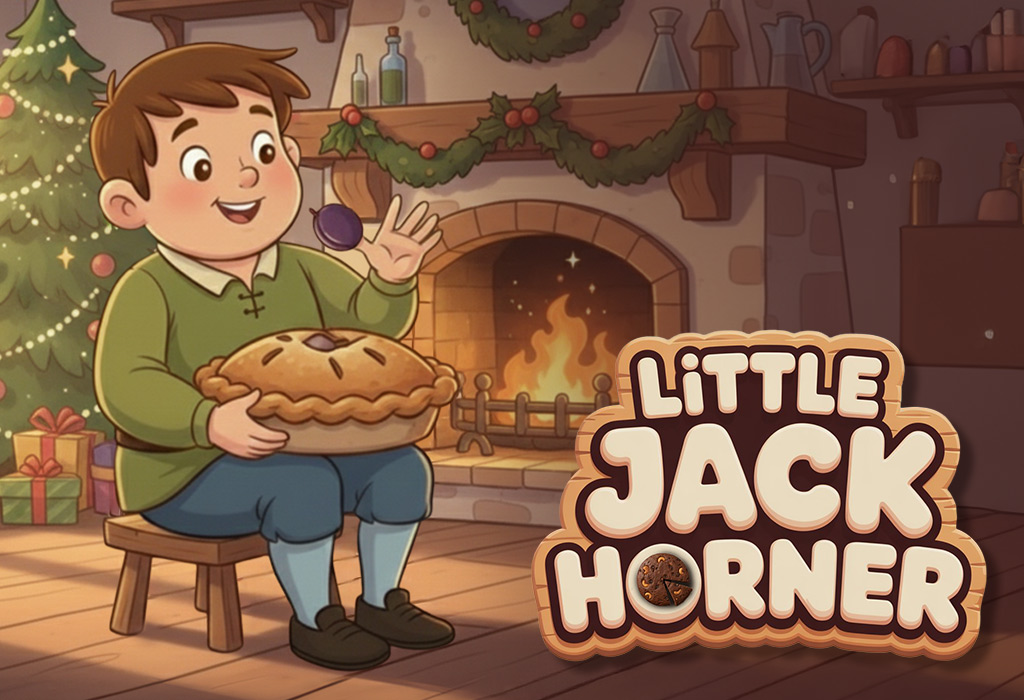
Little Jack Horner is a classic nursery rhyme that tells the simple and playful story of a little boy enjoying a Christmas pie and proudly pulling out a plum. Its short length, clear rhythm, and cheerful ending make it easy for young children to listen to and remember. Kids love the rhyme because it feels fun and lighthearted, with actions they can copy and words they can repeat confidently. For parents and teachers, this rhyme is a gentle way to introduce early language skills, such as rhyming sounds, listening, and sentence flow. Singing or reciting it together also encourages bonding time and expressive play. With its familiar tune and easy words, Little Jack Horner remains a favourite for early learning and joyful storytelling.
Little Jack Horner Song Lyrics
These familiar Little Jack Horner words are short, catchy, and easy for children to enjoy through listening and repetition.
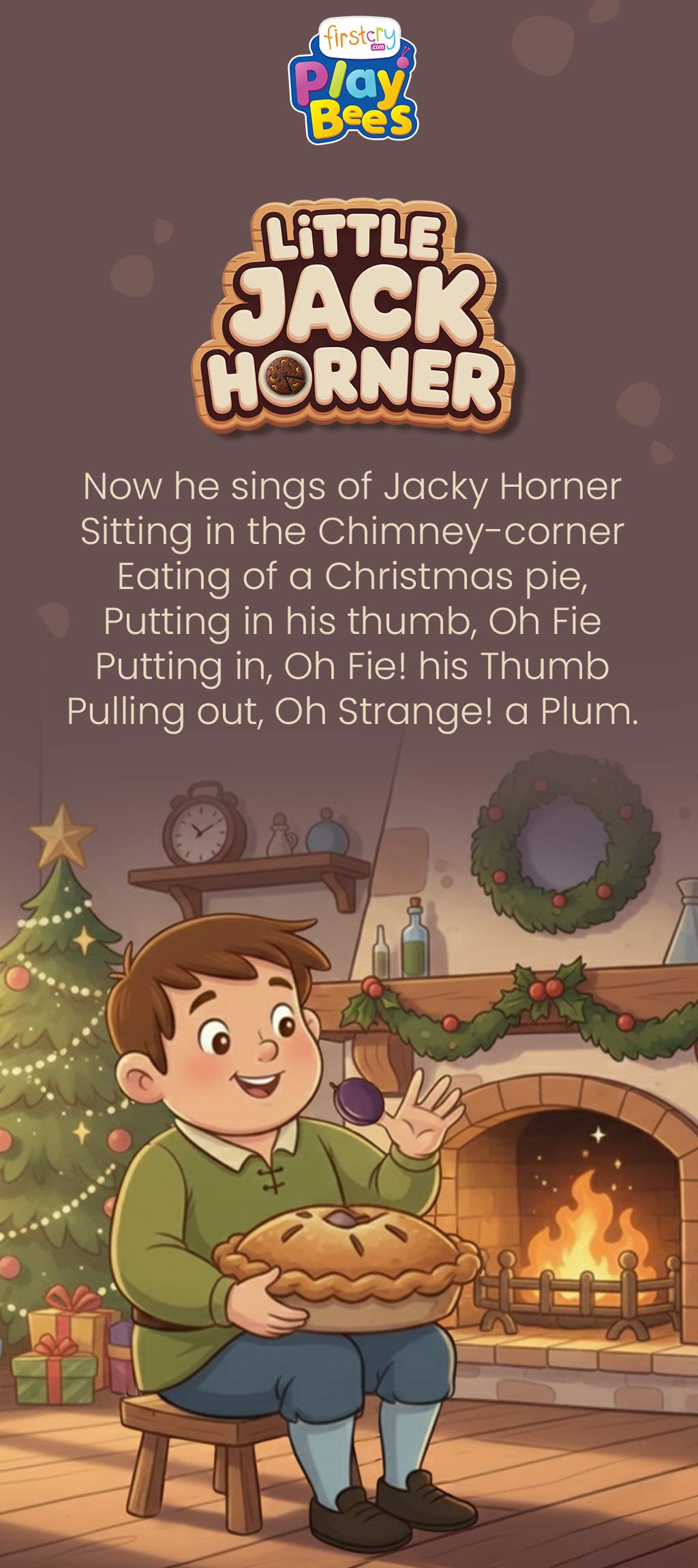
“Now he sings of Jacky Horner
Sitting in the Chimney-corner
Eating of a Christmas pie,
Putting in his thumb, Oh Fie
Putting in, Oh Fie! his Thumb
Pulling out, Oh Strange! a Plum.”
Other Versions of the Little Jack Horner Song
Over the years, Little Jack Horner has been shared in slightly different versions while keeping the same core story and rhythm. Some versions change “Christmas pie” to simply “a pie” for everyday use, while others add small lines or actions to make the rhyme longer and more interactive for group singing.
Little Jack Horner
Sat in a corner,
Eating a nice warm pie;
He put in his thumb,
And pulled out a plum,
And said, “What a good boy am I!”
Little Jack Horner
Sat on the floor,
Eating a tasty pie;
He put in his thumb,
And pulled out a plum,
And smiled as the pie went by.
Little Jack Horner
Sat in a corner,
Sharing his yummy pie;
He put in his thumb,
And pulled out a plum,
And laughed with a happy sigh.
Gestures – How to Teach Little Jack Horner to Kids
Using actions helps children understand the rhyme better and keeps them actively involved while learning. Simple gestures also improve memory and coordination when paired with the words.
- Sit on the floor or pretend to sit to show “sat in a corner,” helping children understand position and encouraging calm body movement.
- Use both hands to mime holding and eating a pie, which supports pretend play and helps children connect actions with the words they hear.
- Gently tuck one thumb into the opposite fist for “put in his thumb,” improving fine motor skills and finger coordination.
- Slowly pull the thumb out to show “pulled out a plum,” creating excitement and reinforcing cause-and-effect through movement.
- Pretend to hold a small plum and smile proudly, helping children express emotions and understand the character’s happiness.
- Point to yourself with a happy expression for “what a good boy am I,” encouraging self-confidence and positive self-expression in young learners.
History & Quick Facts
Little Jack Horner is an English nursery rhyme that dates back to the early 18th century and was first recorded in Mother Goose’s Melody around 1725. The author of the rhyme is unknown, which is common for many traditional nursery rhymes passed down orally over generations. Some historians believe the rhyme may have been inspired by real historical events, though it is mostly enjoyed today as a simple children’s verse. Over time, it became popular in homes and schools because of its easy structure and playful theme. Today, it remains a staple in early childhood learning and storytelling.
Interesting Facts
- The rhyme is traditionally sung or recited rather than read, helping young children enjoy it through listening and repetition before they can read on their own.
- It originated in England and later spread worldwide, becoming a well-known nursery rhyme in many countries and cultures.
- Many children learn it before the age of five, as its short length and simple words suit early childhood learning stages.
- The tune is simple and often adapted for action songs, making it easy for teachers and parents to add hand movements and play-based learning.
- It has been translated into several languages for global use, allowing children around the world to enjoy the same rhyme in their native language.
- The “plum” line makes it fun and memorable for young learners, as the surprise action keeps children engaged and smiling.
Suitable Age & Learnings
Little Jack Horner is best suited for children aged 2 to 5 years, as the rhyme uses simple words and clear actions. It supports early learning through repetition, rhythm, and playful storytelling.
- Builds listening skills as children focus on the short narrative and learn to follow the sequence of events from beginning to end.
- Encourages speech development by allowing children to practice clear pronunciation and rhythm through easy-to-repeat lines.
- Introduces basic vocabulary such as pie, plum, and corner, helping children connect new words with simple actions and objects.
- Develops memory skills as children remember and anticipate predictable phrases through repetition.
- Supports motor skills when children perform hand and finger gestures that match the actions in the rhyme.
- Boosts confidence as children gain pride in reciting the rhyme independently or performing it in front of others.
FAQs
1. What is the rhyming scheme of Little Jack Horner?
The rhyme follows an AABCCB rhyming scheme.
2. Why is Little Jack Horner good for young children?
Its short length, rhythm, and actions make it easy for children to learn and enjoy.
Little Jack Horner is a timeless nursery rhyme that continues to delight young children with its simplicity and charm. Its playful story and gentle rhythm make it ideal for early learning and bonding moments. Parents and teachers can use it to introduce language skills, actions, and confidence in speaking. The rhyme’s flexibility also allows for creative gestures and group participation. Even after centuries, it remains relevant and enjoyable for modern children. Sharing Little Jack Horner helps keep traditional rhymes alive while supporting joyful learning experiences.
Explore Other Rhymes for Kids:
Jack Sprat Rhyme With Lyrics
Little Jack Horner Rhyme With Lyrics
Jack and Jill Nursery Rhyme With Lyrics