
Table of Contents
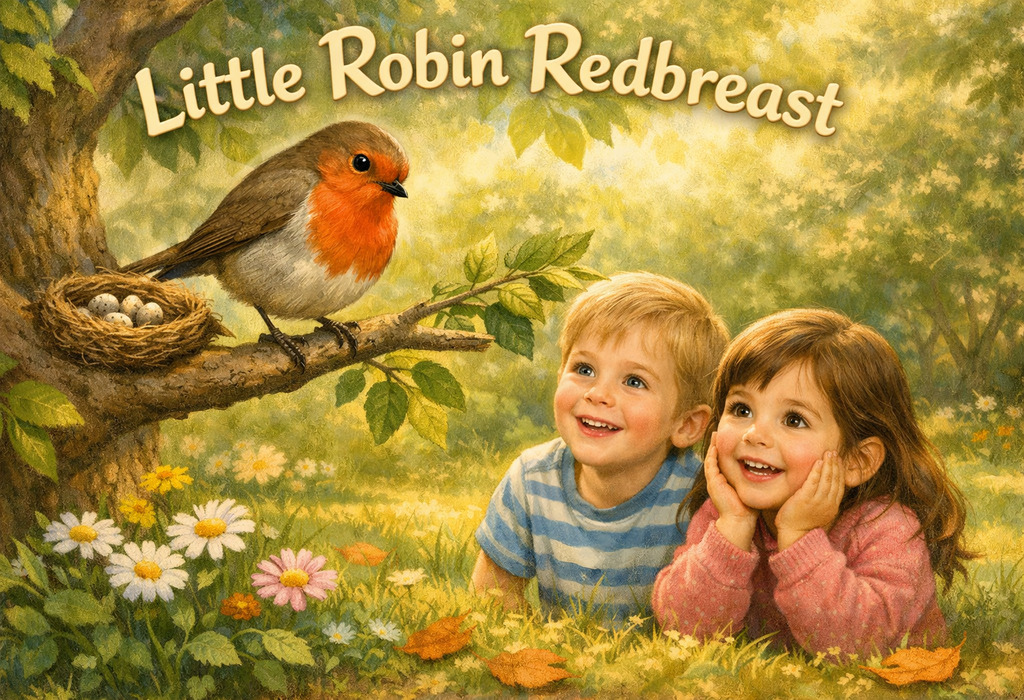
Little Robin Redbreast is a sweet and gentle nursery rhyme that tells the story of a tiny bird and its simple daily actions. Children enjoy this rhyme because it has a calm rhythm, easy words, and a touch of nature that feels familiar and comforting. The mention of a small bird makes it relatable and fun for young learners. This rhyme also helps children build early language skills, listening ability, and memory through repetition. It introduces them to basic actions and descriptive words in a playful way. Parents and teachers often use it to create a soothing learning moment while encouraging imagination. Overall, it is a lovely rhyme that supports both learning and enjoyment in early childhood.
Little Robin Redbreast Song Lyrics
Here are the Little Robin Redbreast words that children can enjoy singing and remembering easily:
Little Robin Redbreast sat upon a tree,
Up went pussycat and down went he,
Down came pussycat, away Robin ran,
Says little Robin Redbreast, “Catch me if you can.”
Little Robin Redbreast jumped upon a wall,
Pussycat jumped after him, and almost had a fall.
Little Robin chirped and sang and what did pussy say?
Pussycat said “Meow”, and Robin flew away.
Other Versions of Little Robin Redbreast Song
Some variations of this rhyme exist with slight word changes while keeping the same meaning and rhythm.
Little Robin Redbreast sat upon a wall,
Pussycat jumped up and nearly made him fall;
Robin flew away, happy as can be,
Singing in the branches of a greenwood tree.
Gestures – How to Teach Little Robin Redbreast to Kids
Teaching this rhyme with actions makes it more engaging and helps children remember the words better. Simple movements can bring the story to life.
- Sit like a bird on a branch by pretending to perch with your hands tucked like wings.
- Raise one hand slowly to show the cat creeping up quietly.
- Quickly crouch down to act out the bird hopping down.
- Pretend to chase by moving your fingers like a cat running.
- Move your hands like flapping wings to show the bird flying away.
- End with a playful gesture by pointing and smiling as if saying “catch me if you can.”
History & Quick Facts
Little Robin Redbreast is a traditional English nursery rhyme that dates back to the 18th century. Like many classic rhymes, its exact author is unknown. It was first published in early nursery rhyme collections and became popular because of its simple storyline and catchy rhythm. The rhyme reflects everyday nature scenes, which made it easy for children to connect with. Over time, it spread across generations through oral storytelling and printed books, becoming a familiar part of early childhood learning.
Interesting Facts
- This rhyme is one of the oldest nature-themed nursery rhymes that introduces children to birds and animals in a simple way.
- The robin is often seen as a friendly and cheerful bird in many cultures, which adds to the rhyme’s charm.
- It is commonly included in early learning books due to its short and easy-to-memorize lines.
- The rhyme helps children understand action words like sat, ran, and catch through storytelling.
- It is often paired with hand actions or role play in classrooms to make learning fun.
- The rhyme has been adapted slightly in different regions while keeping its original idea intact.
Suitable Age & Learnings
This rhyme is best suited for children aged 2 to 5 years, as it uses simple words and a short storyline. It supports early learning by combining rhythm, actions, and vocabulary in a playful way.
- Children learn basic action words like sit, run, and catch, which help build everyday language skills.
- The rhyme improves listening and memory as kids repeat and recall the lines.
- It introduces children to animals and nature, encouraging curiosity about the world around them.
- Kids develop coordination when they perform gestures along with the rhyme.
- The playful storyline supports imagination and storytelling skills in young learners.
- It helps build confidence as children recite the rhyme independently or in groups.
FAQs
1. What is the rhyming scheme of Little Robin Redbreast?
The rhyme follows a simple AABB pattern, where the first two lines rhyme and the next two lines rhyme.
2. Why is Little Robin Redbreast good for toddlers?
It is short, easy to remember, and uses simple words, making it perfect for early language development.
3. Can this rhyme be used for classroom activities?
Yes, it is great for action-based learning, storytelling sessions, and group recitation activities.
Little Robin Redbreast is a timeless nursery rhyme that brings together simplicity, rhythm, and storytelling in a way young children love. Its short and engaging lines make it easy for kids to learn and enjoy without feeling overwhelmed. The gentle theme of a small bird and playful chase captures attention while teaching useful words and actions. With added gestures, it becomes even more fun and interactive for little learners. Parents and teachers can use it as a calming and educational activity during the day. Over the years, it has remained a favorite because of its charm and ease. This rhyme continues to support early learning while creating joyful moments for children.