
Table of Contents
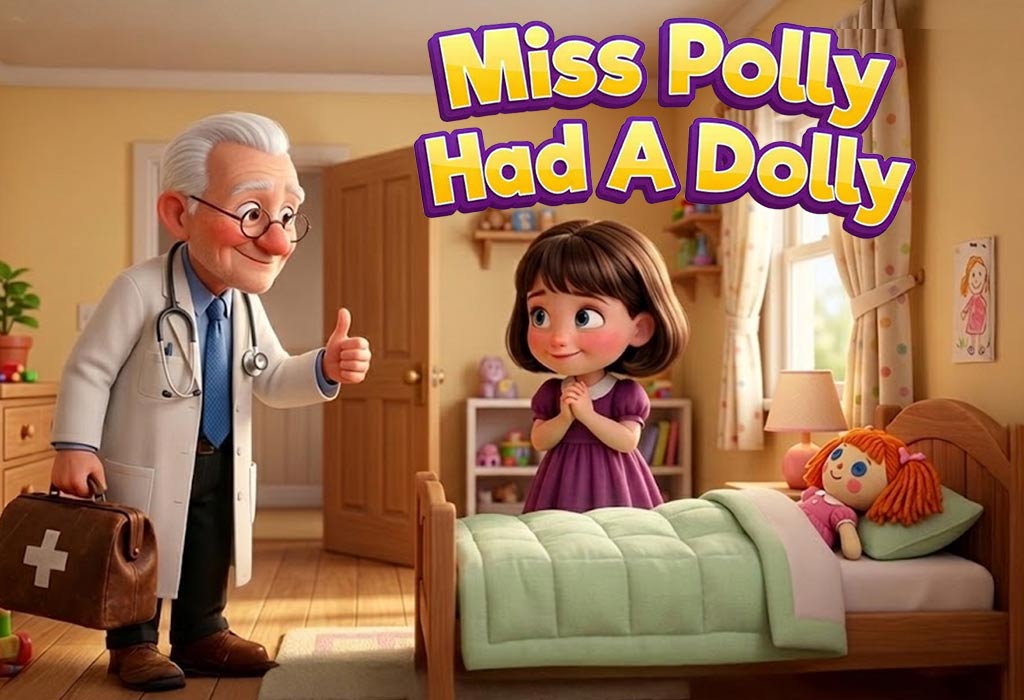
“Miss Polly Had a Dolly” is a cheerful nursery rhyme about a little girl named Polly whose doll falls sick, so she calls a doctor to help. The rhyme follows the playful story of the doctor arriving with his bag and hat and giving the doll medicine to make her feel better. Children enjoy this rhyme because it tells a simple story with fun rhythm and easy words that are pleasant to repeat and sing. The doctor-visit theme also sparks curiosity and imaginative play among kids. Parents and teachers often use this rhyme to introduce storytelling, rhythm, and basic vocabulary. As children sing along, they improve listening skills, memory, and pronunciation while learning about caring, helping others, and everyday experiences in a gentle and entertaining way.
Miss Polly Had A Dolly Song Lyrics
Here are the Miss Polly Had A Dolly words that children love to sing and repeat while enjoying the playful story.
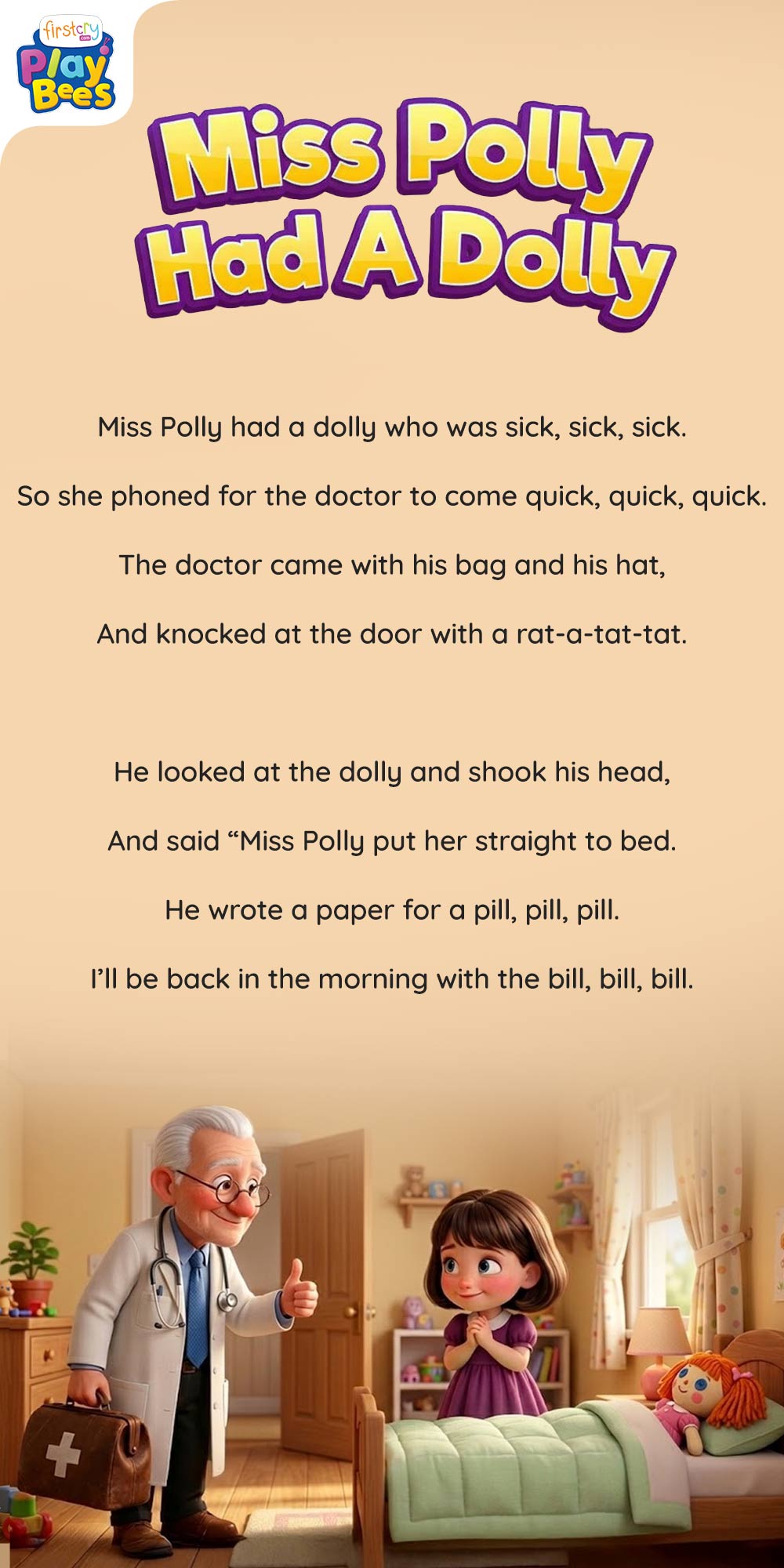
Miss Polly had a dolly who was sick, sick, sick.
So she phoned for the doctor to come quick, quick, quick.
The doctor came with his bag and his hat,
And knocked at the door with a rat-a-tat-tat.
He looked at the dolly and shook his head,
And said “Miss Polly put her straight to bed.
He wrote a paper for a pill, pill, pill.
I’ll be back in the morning with the bill, bill, bill.
Other Versions of Miss Polly Had A Dolly Song
Like many classic nursery rhymes, Miss Polly Had A Dolly is sometimes sung with slightly different words or small variations depending on the region or storyteller.
1. The Classic Recovery
Miss Polly had a dolly who was sick, sick, sick.
So she called for the doctor to come quick, quick, quick.
The doctor came with his bag and his hat,
And he knocked on the door with a rat-a-tat-tat.
He looked at the dolly and he shook his head,
He said, “Miss Polly, put her straight to bed!”
He wrote on a paper for a pill, pill, pill,
“I’ll be back in the morning with my bill, bill, bill.”
2. The “All Better” Happy Ending
Miss Polly had a dolly who was sick, sick, sick.
So she called for the doctor to come quick, quick, quick.
The doctor came with his bag and his hat,
And he knocked on the door with a rat-a-tat-tat.
He looked at the dolly and he shook his head,
He said, “Miss Polly, put her straight to bed!”
She went to sleep and she slept all night,
And she woke in the morning feeling quite alright!
3. The Modern Nurse
Miss Polly had a dolly who was sick, sick, sick.
So she called for the nurse to come quick, quick, quick.
The nurse came in with her medical kit,
And she sat by the dolly for a little bit.
She took her temperature and she shook her head,
She said, “Miss Polly, keep her warm in bed!”
She gave her some water and a little red pill,
And soon the dolly no longer felt ill.
4. The “Miss Molly”
Miss Molly had a dolly who was sick, sick, sick.
So she called for the doctor to come quick, quick, quick.
The doctor came with his bag and his cane,
To help the dolly who was feeling the pain.
He looked at the dolly and he gave a little tap,
He said, “Miss Molly, let her have a little nap!”
He smiled at the girl and he waved goodbye,
“She’ll be good as new when the sun is in the sky!”
Gestures – How to Teach Miss Polly Had A Dolly to Kids
Teaching Miss Polly Had A Dolly with simple gestures makes the rhyme more fun and helps children remember the words easily. Using actions also improves listening skills, coordination, and participation during rhyme time.
- Pretend to hold a doll: When saying “Miss Polly had a dolly”, ask children to pretend they are holding a small doll in their arms and gently rock it like a baby.
- Show the doll is sick: For the line “who was sick, sick, sick”, children can touch their forehead and make a sad face to show that the doll is not feeling well.
- Pretend to make a phone call: During “she called for the doctor”, ask kids to hold their hand like a phone near their ear to act like they are calling the doctor.
- Doctor arriving quickly: When saying “to come quick, quick, quick”, children can tap their feet or move their fingers quickly to show the doctor rushing.
- Doctor checks the doll: For “the doctor came with his bag and his hat”, children can pretend to carry a doctor’s bag in one hand and touch their head as if wearing a hat.
- Doctor checks the patient: During “he knocked on the door with a rat-a-tat-tat”, children can pretend to knock on an imaginary door three times using their knuckles.
History of Miss Polly Had A Dolly Rhyme
Miss Polly Had A Dolly is a traditional English nursery rhyme believed to have originated in Scotland and later spread across the United Kingdom and other English-speaking countries. The exact author of the rhyme is unknown because it was first shared through oral storytelling and singing. Many researchers believe the rhyme became widely known in the late 19th or early 20th century, when nursery rhymes were commonly used in homes and classrooms for young children. Over time, its simple story, catchy rhythm, and playful actions helped it become a popular rhyme used by parents and teachers in early childhood learning.
Interesting Facts
- Miss Polly Had A Dolly is a traditional nursery rhyme that has been passed down through generations and does not have a known author.
- The rhyme is believed to have become popular in the late 1800s or early 1900s when nursery rhymes were widely shared in homes and schools.
- Many teachers teach this rhyme with simple actions and gestures to make learning more fun and engaging for young children.
- The rhyme tells a simple story about caring for someone who is sick, as Miss Polly calls a doctor to help her doll feel better.
- There are slightly different versions of the rhyme sung in different countries, although the main story usually remains the same.
- Because of its rhythm and repetition, the rhyme is commonly used in preschools to help children develop language, memory, and listening skills.
Suitable Age & Learnings
Miss Polly Had A Dolly is a simple and engaging nursery rhyme that is ideal for toddlers and preschool children aged 2 to 6 years. The rhyme combines storytelling, rhythm, and actions, making it a fun way for young children to learn while singing.
- Language development: The rhyme helps children improve their language skills by repeating simple words and phrases that support early speech development.
- Vocabulary building: Children learn new everyday words such as doctor, dolly, sick, bag, and knock while singing the rhyme.
- Listening skills: Kids develop better listening skills as they pay attention to the story and follow the sequence of the rhyme.
- Memory improvement: Repeating the rhyme regularly helps children remember the lines and strengthens their memory.
- Empathy and caring: The story teaches children about caring for someone who is unwell by showing Miss Polly calling a doctor for her sick doll.
- Motor skill development: When children perform simple actions along with the rhyme, they improve their coordination and movement skills.
FAQs
1. What is the rhyming scheme of Miss Polly Had A Dolly?
The rhyme mainly follows an AABB rhyming pattern, where two consecutive lines rhyme together, such as sick–quick and hat–tat, making it easy for children to remember and sing.
2. What does Miss Polly Had A Dolly teach children?
The rhyme teaches children simple ideas about caring, helping others when they are sick, and listening to instructions, while also supporting language and memory development.
3. Why is Miss Polly Had A Dolly popular in preschools?
The rhyme is popular in preschools because it has a simple story, catchy rhythm, and easy actions, which makes it fun and engaging for young children during group learning activities.
Miss Polly Had A Dolly is a delightful nursery rhyme that combines a simple story, rhythmic lines, and fun actions, making it a favorite among young children. Through singing and acting out the rhyme, kids not only enjoy the playful storytelling but also develop important early learning skills such as language, listening, memory, and empathy. Because of its engaging nature and easy-to-follow structure, the rhyme continues to be widely used by parents and teachers to introduce music, movement, and meaningful lessons to toddlers and preschoolers.
Explore Other Rhymes for Kids:
This Old Man Nursery Rhyme With Lyrics
Mummy And Daddy Nursery Rhyme With Lyrics
Five Little Monkeys Nursery Rhyme With Lyrics