

Table of Contents
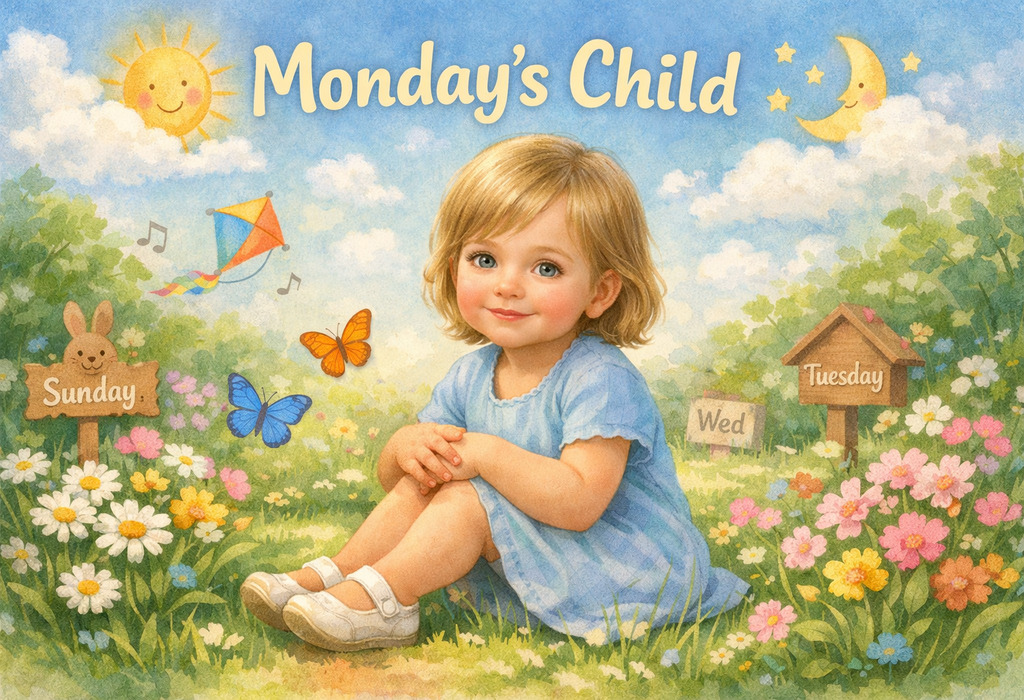
“Monday’s Child” is a classic nursery rhyme that describes children born on different days of the week and the qualities they are believed to have. Each line highlights a special trait, making it fun and meaningful for young listeners. Kids enjoy this rhyme because of its rhythmic flow and simple, repetitive pattern that is easy to remember. It also sparks curiosity as children connect days of the week with personality traits. For parents and teachers, this rhyme is a helpful tool for introducing basic concepts like days, sequencing, and descriptive words. It supports early language development while encouraging imagination. Overall, it is a gentle and engaging way to build listening skills and confidence in young learners.
Monday’s Child Song Lyrics
The Monday’s Child words are simple, rhythmic, and easy for children to remember while learning about days of the week and personality traits.
Monday’s child is fair of face,
Tuesday’s child is full of grace,
Wednesday’s child is full of woe,
Thursdays child has far to go,
Fridays child is loving and giving,
Saturday’s child works hard for his living,
And the child that is born on the Sabbath day
Is bonny and blithe, and good and gay;
Other Versions of Monday’s Child Song
Different versions of this rhyme exist, with slight changes in wording and tone across regions and time periods.
Monday’s child is fair and wise,
Tuesday’s child with sparkling eyes,
Wednesday’s child is full of care,
Thursday’s child is bright and fair,
Friday’s child is kind and true,
Saturday’s child works hard too,
Sunday’s child is happy and blessed,
Loved by all and truly the best.
Gestures – How to Teach Monday’s Child to Kids
Using simple actions makes this rhyme more engaging and helps children remember it better. These easy gestures encourage participation and movement while learning.
- Point to your face with a smile while saying “fair of face” to help children connect words with expressions.
- Gracefully wave hands or twirl slightly during “full of grace” to show elegance in movement.
- Pretend to look sad by making a gentle frown for “full of woe” so children understand emotions.
- Stretch arms forward like walking far during “has far to go” to show the idea of distance.
- Hug yourself or pretend to give something for “loving and giving” to express kindness.
- Pretend to work by miming simple actions like sweeping for “works hard for a living” to show effort.
History & Quick Facts
“Monday’s Child” is a traditional English nursery rhyme believed to have originated in the 19th century. It was first recorded in print in the 1830s, although it likely existed in oral form before that. The rhyme reflects old beliefs about personality traits linked to the day of birth. The author of the rhyme is unknown, as it was passed down through generations. Over time, it became popular in children’s books and collections of nursery rhymes. Today, it remains a well-loved rhyme used in homes and classrooms worldwide.
Interesting Facts
- The rhyme connects each day of the week with a personality trait, making it both fun and educational for children.
- It has been translated into many languages, showing its popularity across different cultures.
- Some versions of the rhyme replace “Sunday” with “Sabbath day,” reflecting older traditions.
- The rhyme does not have a fixed tune, so it is often spoken or sung in different ways.
- It is commonly used in early education to teach days of the week and descriptive vocabulary.
- The meaning of some phrases, like “bonny and blithe,” introduces children to older English words.
Suitable age & Learnings
This rhyme is ideal for children aged 2 to 6 years as it uses simple language and repetitive patterns that are easy to follow. It supports early learning by combining rhythm, vocabulary, and imagination in a playful way.
- Children learn the days of the week, helping them understand sequence and time concepts.
- The rhyme introduces descriptive words like “grace” and “loving,” which build vocabulary skills.
- It encourages listening and memory as kids repeat and recall each line.
- Emotional understanding improves as children connect words like “woe” with feelings.
- Social values such as kindness and hard work are gently introduced through the lines.
- It boosts confidence as children participate through speaking, singing, and actions.
FAQs
1. What is the meaning of Monday’s Child rhyme?
It describes personality traits linked to the day a child is born, making it both fun and imaginative.
2. What is the rhyming scheme of Monday’s Child?
The rhyme follows a couplet style pattern where lines rhyme in pairs, creating a smooth and rhythmic flow.
3. Why is Monday’s Child popular with kids?
Children enjoy its rhythm, simple language, and the idea of connecting birthdays with special qualities.
“Monday’s Child” is a timeless nursery rhyme that continues to delight children with its gentle rhythm and meaningful lines. It introduces simple concepts like days of the week while also encouraging imagination and curiosity. The rhyme is easy to teach, especially when combined with actions and expressions that make learning interactive. Its rich history and cultural presence add depth, making it more than just a fun poem. For parents and teachers, it is a valuable tool to support early language and social learning. Most importantly, it creates joyful moments of connection between children and caregivers.