
Table of Contents
The Mummy And Daddy nursery rhyme is a short and sweet poem that expresses a child’s love for their parents. In this rhyme, a child happily tells their mummy and daddy how much they love them and asks for affection like a kiss or attention when they call. Young children enjoy this rhyme because it uses simple words, a gentle rhythm, and a meaningful message about family love. Parents and teachers often use it to encourage emotional expression in kids. By singing or reciting this rhyme, children begin to understand feelings like love, care, and appreciation. It also helps them learn basic vocabulary and practice speaking clearly. Because of its easy lines and warm theme, this rhyme is perfect for toddlers and preschoolers who are just beginning to explore language and emotions. It’s a wonderful way to bond with children during learning time.
Mummy And Daddy Song Lyrics
These Mummy And Daddy words beautifully show a child’s love and affection for their parents.
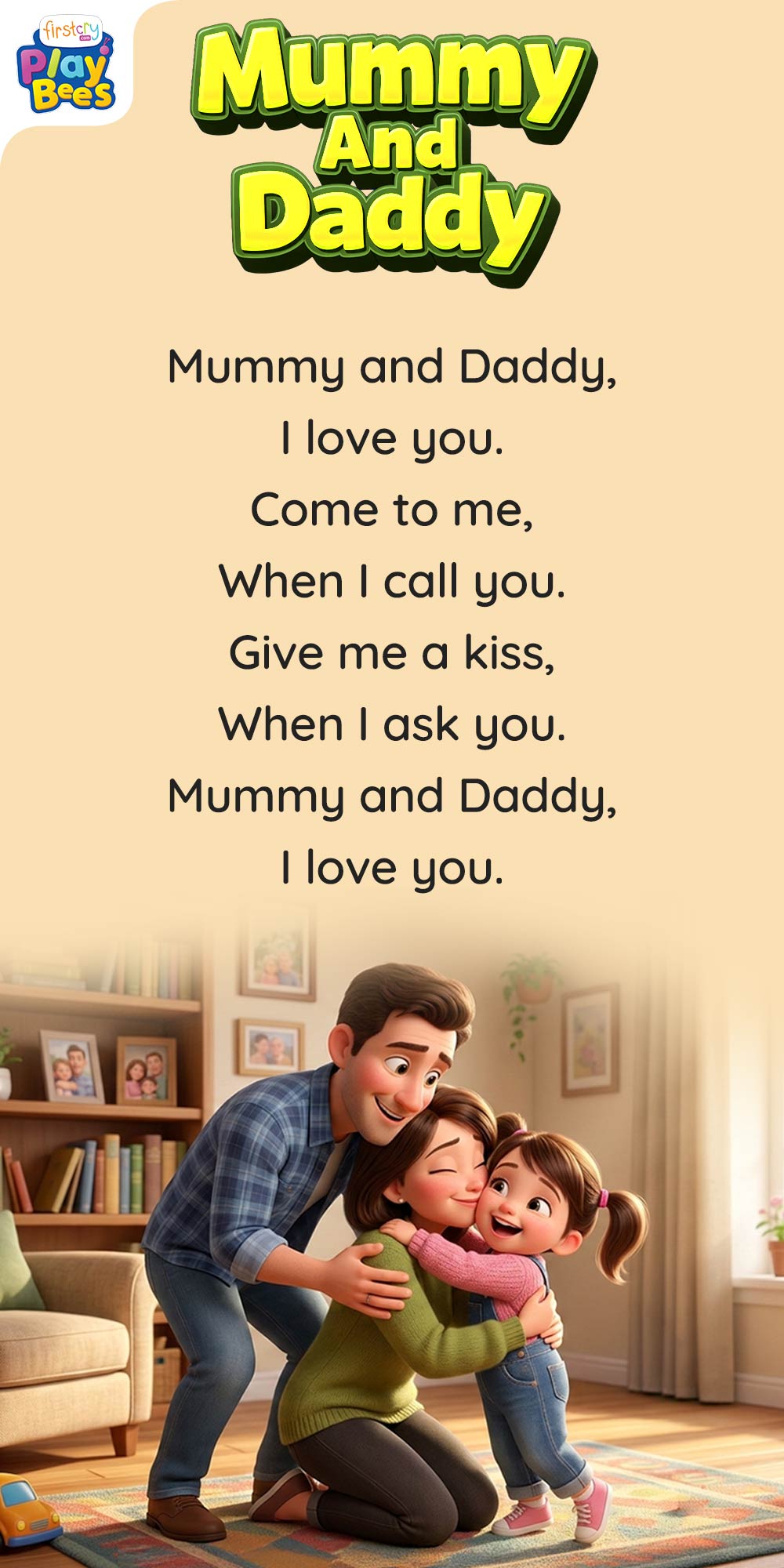
Mummy and Daddy,
I love you.
Come to me,
When I call you.
Give me a kiss,
When I ask you.
Mummy and Daddy,
I love you.
Other Versions of Mummy And Daddy Song
Although the rhyme is usually sung in one simple form, some teachers and parents slightly modify the lines to make it more interactive for kids.
1. Hug and Smile
Mummy and Daddy,
I love you.
Come and hug me,
When I call you.
Give me a smile,
When I ask you.
Mummy and Daddy,
I love you.
2. Action and Play
Mummy and Daddy,
I love you.
Clap your hands,
When I call you.
Give me a hug,
When I ask you.
Mummy and Daddy,
I love you.
Gestures – How to Teach Mummy And Daddy to Kids
Adding gestures makes the rhyme more fun and helps children remember the words more easily. Simple actions also keep kids engaged while they sing along.
- Point to parents: When saying “Mummy and Daddy,” children can point toward their parents or pretend to point at them.
- Hands on heart: During “I love you,” kids can place both hands on their chest to show love.
- Calling gesture: On the line “Come to me,” children can stretch their arms forward and gesture as if inviting someone.
- Cup hands around mouth: When saying “When I call you,” kids can cup their hands around their mouth like they are calling someone.
- Blow a kiss: During “Give me a kiss,” children can blow a kiss in the air with their hand.
- Hug gesture: At the end of the rhyme, kids can wrap their arms around themselves to pretend they are giving a hug.
History & Quick Facts
The Mummy And Daddy rhyme is a modern nursery rhyme commonly used in preschools and early childhood learning programs. Its exact origin and author are unknown, but it is widely shared in children’s learning resources and parenting platforms. The rhyme gained popularity because of its simple wording and emotional theme about a child’s love for their parents. Over time, teachers and parents around the world began using it to help children express affection and understand family relationships. Because of its simplicity, it is often one of the first rhymes taught to toddlers and preschoolers. The rhyme is usually sung or recited in classrooms, homes, and daycare centers.
Interesting Facts
- The rhyme focuses on love and affection between children and their parents, making it emotionally meaningful for young learners.
- It is written in free verse, meaning it does not follow a strict rhyming pattern.
- The rhyme is often used by teachers to help children express their emotions openly.
- It contains very simple vocabulary words such as mummy, daddy, love, call, ask, and kiss.
- The rhyme is popular in preschool and kindergarten classrooms around the world.
- Parents often use the rhyme during storytime or bonding moments to teach kids about family love.
Suitable Age & Learnings
The Mummy And Daddy rhyme is ideal for toddlers and preschoolers aged 2 to 5 years because it uses very simple words and a clear message. Children at this age enjoy repeating short lines and learning about emotions through songs.
- Emotional expression: The rhyme teaches children how to express love and affection toward their parents.
- Vocabulary building: Kids learn basic words such as mummy, daddy, love, call, ask, and kiss.
- Listening skills: When children listen and repeat the rhyme, they improve their listening and comprehension abilities.
- Memory development: Repeating the short lines helps strengthen early memory and recall skills.
- Social connection: The rhyme encourages children to appreciate family relationships and bonding.
- Speech development: Saying the lines aloud helps toddlers practice pronunciation and build confidence in speaking.
FAQs
1. What is the rhyming scheme of Mummy And Daddy?
The rhyme is written in free verse, meaning it does not follow a fixed rhyming pattern.
2. When can I start teaching the Mummy And Daddy rhyme to my child?
You can start teaching this rhyme as early as 2 years old, since the lines are very short and easy to remember.
3. What is the main message of the Mummy And Daddy rhyme?
The rhyme teaches children about love, affection, and expressing emotions toward their parents.
The Mummy And Daddy nursery rhyme is a simple yet heartwarming poem that celebrates the love between children and their parents. Its short lines and gentle message make it perfect for toddlers who are just beginning to learn language and emotions. Singing this rhyme helps children build vocabulary, improve memory, and practice speaking with confidence. At the same time, it encourages them to express affection and appreciation for their family. Adding gestures and actions can make the rhyme even more engaging and fun for young learners. Parents and teachers can use it as a lovely bonding activity during playtime or learning sessions. Overall, this rhyme is a wonderful way to combine learning, emotions, and joyful family connection.
Explore Other Rhymes for Kids:
Finger Family Nursery Rhyme With Lyrics
Johny Johny, Yes Papa Nursery Rhyme With Lyrics
This Little Light of Mine Nursery Rhyme With Lyrics