
Table of Contents
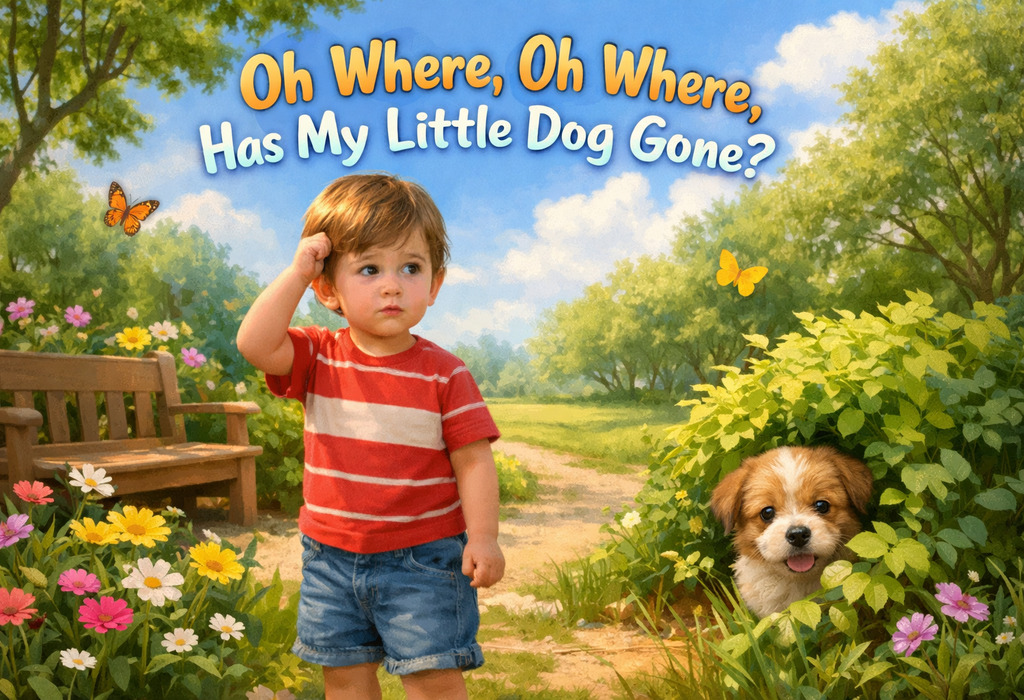
Gentle melodies and simple storytelling make this rhyme a favorite among young children. It tells a sweet and slightly curious story about a missing little dog, sparking imagination and playful thinking. Kids enjoy singing it because of its repetitive words and easy tune, which make it fun to remember and repeat. For parents and teachers, this rhyme is a great tool for early learning, as it helps children develop listening skills, memory, and basic vocabulary. It also introduces simple emotions like curiosity and concern in a comforting way. Singing together can strengthen bonding time while encouraging kids to express themselves through music and rhythm in a joyful and engaging manner.
Oh Where, Oh Where, Has My Little Dog Gone Lyrics
Here are the popular Oh Where, Oh Where, Has My Little Dog Gone words that children love to sing along with:
Oh where, oh where has my little dog gone?
Oh where, oh where can he be?
With his ears cut short and his tail cut long,
Oh where, oh where can he be?
Other Versions of Oh Where, Oh Where, Has My Little Dog Gone Song
This rhyme has a few playful variations that slightly change the words while keeping the tune the same.
Version 1
Oh where, oh where has my little dog gone?
Oh where, oh where can he be?
With his tail cut short and his ears cut long,
Oh where, oh where can he be?
Version 2 (Line Swap Version)
Oh where, oh where can my little dog be?
Oh where, oh where has he gone?
With his ears cut short and his tail cut long,
Oh where, oh where has he gone?
Version 3 (Action-Based Version)
Oh where, oh where has my little dog gone?
Let’s look and try to see,
With his ears cut short and his tail cut long,
Come find him here with me!
Version 4 (Playful Ending Version)
Oh where, oh where has my little dog gone?
Oh where, oh where can he be?
Let’s search around and call his name,
Oh come back here to me!
Gestures – How to Teach Oh Where, Oh Where, Has My Little Dog Gone to Kids
Using simple gestures makes the rhyme more engaging and helps children remember the lines better. These easy actions turn singing time into a fun learning activity.
- Raise your hands and look around as you sing “Oh where, oh where” to show searching.
- Cup your hands around your eyes like binoculars to act out looking for the dog.
- Point to your ears while singing “ears cut short” to connect words with body parts.
- Use your hand behind you like a tail and move it while saying “tail cut long.”
- Shrug your shoulders gently during “can he be” to show curiosity.
- End by looking around again with excitement to encourage kids to repeat the rhyme.
History & Quick Facts
“Oh Where, Oh Where, Has My Little Dog Gone” is a traditional American folk song believed to have roots in the late 19th century. The tune is thought to be adapted from a German melody, which later became popular in English-speaking countries. The exact author is unknown, as it was passed down through oral tradition rather than formal publication. Over time, it became widely used in early childhood education due to its simple lyrics and catchy rhythm. Today, it remains a well-loved nursery rhyme sung in homes and classrooms around the world.
Interesting Facts
- The rhyme is based on an older German tune, showing how music travels across cultures.
- It is often used in preschool settings to teach rhythm and repetition in a fun way.
- The song has been translated into different languages while keeping its melody.
- Its simple structure makes it one of the easiest rhymes for toddlers to learn.
- The playful theme of a missing dog helps spark imagination and storytelling.
- Many parents add actions or gestures to make the rhyme more interactive for kids.
Suitable Age & Learnings
This rhyme is best suited for children aged 2 to 5 years, as its simple words and tune are easy for young learners to follow. It supports early development by combining music, language, and movement in a playful way.
- Children improve listening skills as they follow the rhythm and repeated lines.
- The rhyme builds memory by encouraging kids to recall and repeat phrases.
- Vocabulary grows as kids learn words like “ears,” “tail,” and “gone.”
- It develops emotional understanding by introducing curiosity and concern in a gentle way.
- Actions and gestures help strengthen motor skills and coordination.
- Singing together boosts confidence and encourages social interaction among children.
FAQs
1. What is the rhyming scheme of Oh Where, Oh Where, Has My Little Dog Gone?
The rhyme follows an AABB pattern, where “gone” rhymes with “long” and “be” rhymes with “be,” making it simple and catchy for kids.
2. Why do children enjoy this rhyme so much?
Children enjoy it because of its repetitive lines, easy melody, and playful theme of searching for a lost dog.
3. How can parents make this rhyme more engaging?
Parents can add gestures, facial expressions, and actions to turn the rhyme into an interactive and fun activity.
Songs like this bring together fun, learning, and bonding in a simple yet meaningful way. The gentle story of a missing little dog captures a child’s imagination while encouraging curiosity. Its easy tune and repetitive lines make it perfect for young learners who are just starting to explore language. Parents and teachers can use it as a playful tool to build early skills without making learning feel like a task. Adding gestures and actions makes the experience even more lively and memorable. Over time, this rhyme becomes more than just a song, turning into a cherished part of childhood.