
Table of Contents
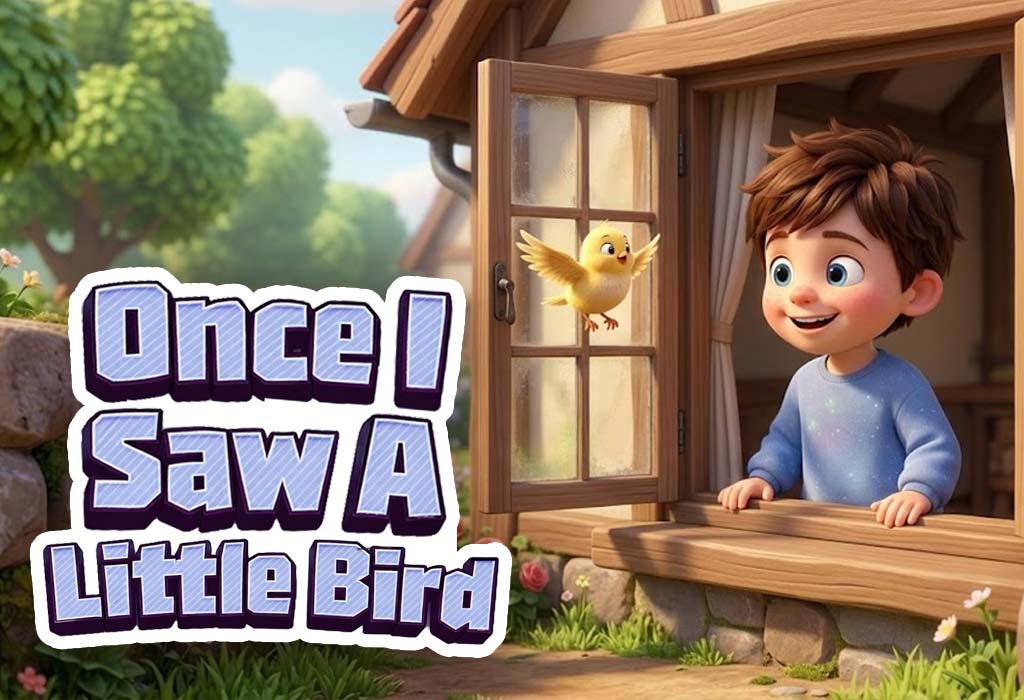
“Once I Saw A Little Bird” is a gentle and charming nursery rhyme that tells the story of a child spotting a small bird and trying to interact with it. The rhyme captures a simple moment of curiosity and wonder that young children easily relate to. Kids enjoy this rhyme because of its easy rhythm, short lines, and playful imagery of a bird flying away. It is often accompanied by simple actions, making it fun for toddlers and preschoolers to sing and perform. For parents and teachers, this rhyme is a helpful tool for early learning. It encourages listening, speaking, and vocabulary development while introducing children to nature and animals. The rhyme also supports memory and rhythm recognition, which are important skills in early childhood development. Its friendly tone and repetitive pattern make it perfect for young learners.
Once I Saw A Little Bird Lyrics
Below are the Once I Saw A Little Bird words, a short and delightful rhyme that children love to sing and act out.
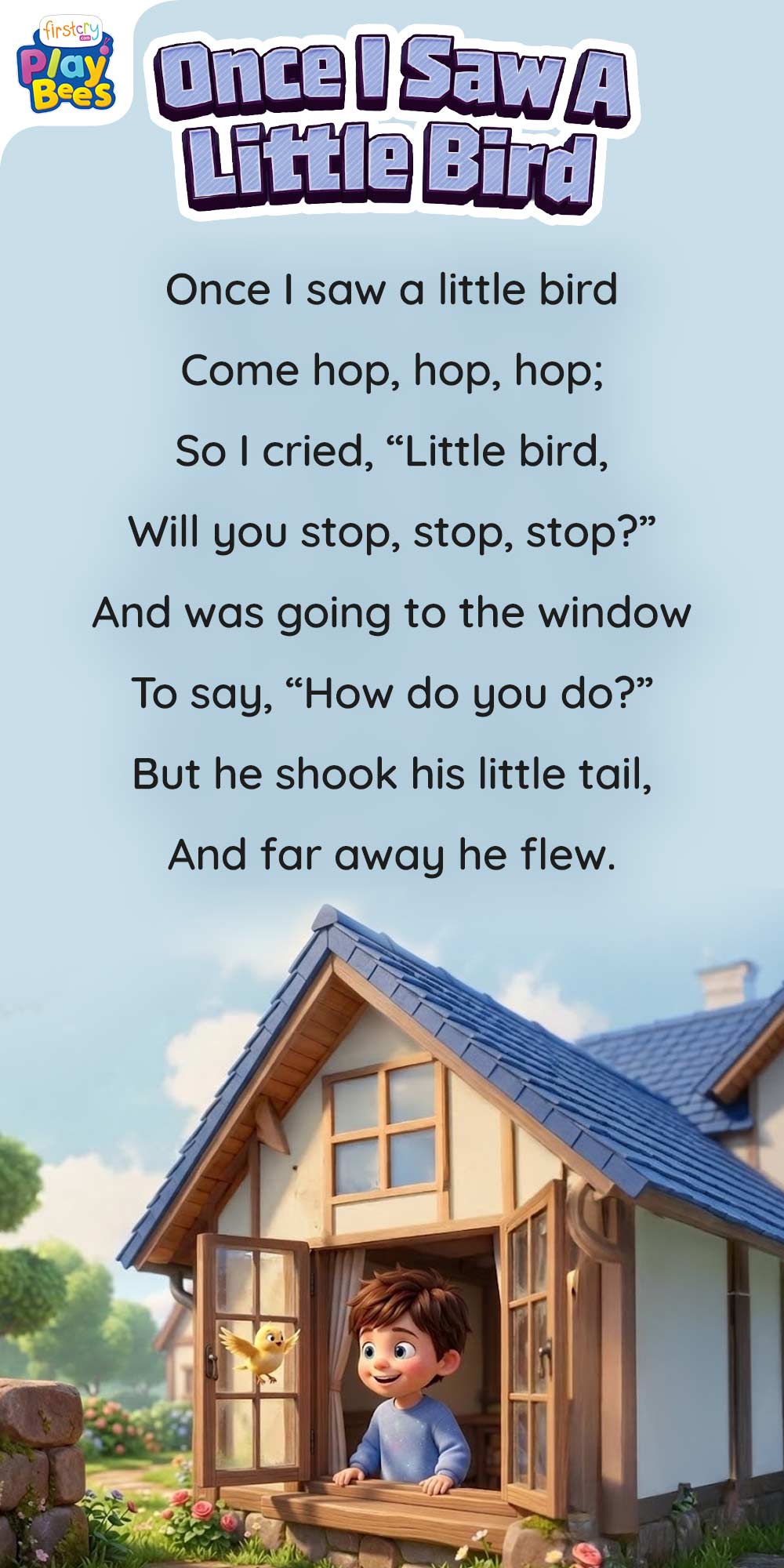
Once I saw a little bird
Come hop, hop, hop;
So I cried, “Little bird,
Will you stop, stop, stop?”
And was going to the window
To say, “How do you do?”
But he shook his little tail,
And far away he flew.
Other Versions of Once I Saw A Little Bird Song
Like many traditional nursery rhymes, this song sometimes appears with small wording changes or extended verses.
Version 1
Once I saw a little bird
Come hop, hop, hop,
And I said, “Little bird,
Will you stop, stop, stop?”
I went close to the window
To say “How do you do?”
But he wagged his little tail
And away he flew.
Version 2 (Extended Classroom Version)
Once I saw a little bird
Come hop, hop, hop,
So I cried, “Little bird,
Will you stop, stop, stop?”
I was going to the window
To say “How do you do?”
But he shook his little tail
And away he flew.
Little bird, little bird,
Come back, come back,
I will give you some crumbs
For a tasty snack.
Gestures – How to Teach Once I Saw A Little Bird to Kids
This rhyme becomes more engaging when children perform simple gestures while singing. Actions help kids remember the lines and make the learning process playful.
- Point forward with excitement – When saying “Once I saw a little bird,” children can point ahead as if they have just spotted a bird nearby.
- Hop in place – During “hop, hop, hop,” kids can make small hopping movements like a bird moving on the ground.
- Raise hands like calling someone – For “Will you stop, stop, stop?” children can cup their hands around their mouth as if calling the bird.
- Pretend to walk to a window – When singing “I was going to the window,” children can take two or three small steps forward.
- Wiggle fingers behind like a tail – During “he shook his little tail,” kids can wiggle their fingers behind their back to mimic a bird’s tail.
- Stretch arms like flying wings – At “away he flew,” children can spread their arms and flap them like wings as if the bird is flying away.
History & Quick Facts
“Once I Saw A Little Bird” is a traditional English nursery rhyme that has been passed down through generations. The exact author of the rhyme is unknown, which is common with many classic nursery rhymes that originated in oral storytelling traditions. It likely emerged in the 19th century in England, where simple rhymes about animals and everyday life were widely used to entertain and educate young children. Over time, the rhyme became popular in classrooms, nursery books, and early learning collections because of its simple structure and playful imagery. Teachers and parents often use it with actions to help children understand rhythm and storytelling.
Interesting Facts
- The rhyme is often used in preschool classrooms because its short length makes it easy for toddlers to memorize.
- Many teachers pair the rhyme with bird-themed activities or nature lessons to introduce children to animals.
- The rhyme has been translated into several languages so children around the world can enjoy singing it.
- Some versions slightly change the words “shook his little tail” to “wagged his little tail,” but the meaning remains the same.
- The rhyme is commonly sung with simple gestures or actions to make learning more interactive.
- It is frequently included in early childhood learning books and nursery rhyme collections.
Suitable age & Learnings
“Once I Saw A Little Bird” is most suitable for children between 2 to 5 years old, as the rhyme is short, rhythmic, and easy to follow. It supports early learning by introducing simple vocabulary, movement, and listening skills.
- Animal awareness – Children learn to recognize and talk about birds and other animals in nature.
- Vocabulary building – Words like bird, hop, stop, window, and flew help expand early language skills.
- Listening skills – Kids practice listening carefully so they can follow the rhyme and actions correctly.
- Memory development – The repeating words and rhythm make it easier for children to remember and repeat lines.
- Motor skills – Performing gestures like hopping and flapping arms improves coordination and body movement.
- Imagination and storytelling – The rhyme encourages children to imagine a bird hopping and flying away.
FAQs
1. What is the rhyming scheme of Once I Saw A Little Bird?
The rhyme follows a simple AABB pattern, where words like bird rhyme with heard (in some versions) and hop rhymes with stop, making it easy for children to recognize sound patterns.
2. Why is Once I Saw A Little Bird popular among young children?
The rhyme is short, rhythmic, and includes actions like hopping and flying, which make it fun and easy for toddlers to remember.
3. How can parents use this rhyme for learning at home?
Parents can sing the rhyme with gestures, ask children to imitate bird movements, and discuss birds or animals they see outdoors.
“Once I Saw A Little Bird” is a sweet and timeless nursery rhyme that introduces young children to rhythm, language, and nature in a playful way. Its simple story about spotting a bird makes it easy for kids to understand and enjoy. When paired with gestures and actions, the rhyme becomes even more engaging and memorable for little learners. Parents and teachers often use it to encourage movement, listening, and vocabulary development. Because it is short and repetitive, children can quickly learn to sing it on their own. Nursery rhymes like this help build early language skills while creating joyful learning moments. Most importantly, it reminds children to observe and appreciate the small wonders of the world around them.
Explore Other Rhymes for Kids:
Hey Diddle Diddle Nursery Rhyme With Lyrics
Two Little Dickie Birds Nursery Rhyme With Lyrics
Sing a Song of Sixpence Nursery Rhyme With Lyrics