


Table of Contents
“Pease Porridge Hot” is a classic nursery rhyme that has been loved by children for generations. The rhyme talks about a simple bowl of porridge that can be eaten hot, cold, or even after several days. Its repetitive and rhythmic lines make it easy for young children to remember and sing along. Kids enjoy the playful rhythm and the funny idea of eating the same porridge for days. For parents and teachers, this rhyme is a helpful early learning tool that introduces children to rhyme patterns, counting concepts, and simple food vocabulary. Singing the rhyme with actions can also improve listening and speaking skills. Because it is short and catchy, “Pease Porridge Hot” is often one of the first rhymes toddlers learn, making it a great addition to early childhood learning and storytelling time.
Pease Porridge Hot Song Lyrics
The Pease Porridge Hot words are short, rhythmic, and easy for children to remember, making the rhyme perfect for singing and learning together.
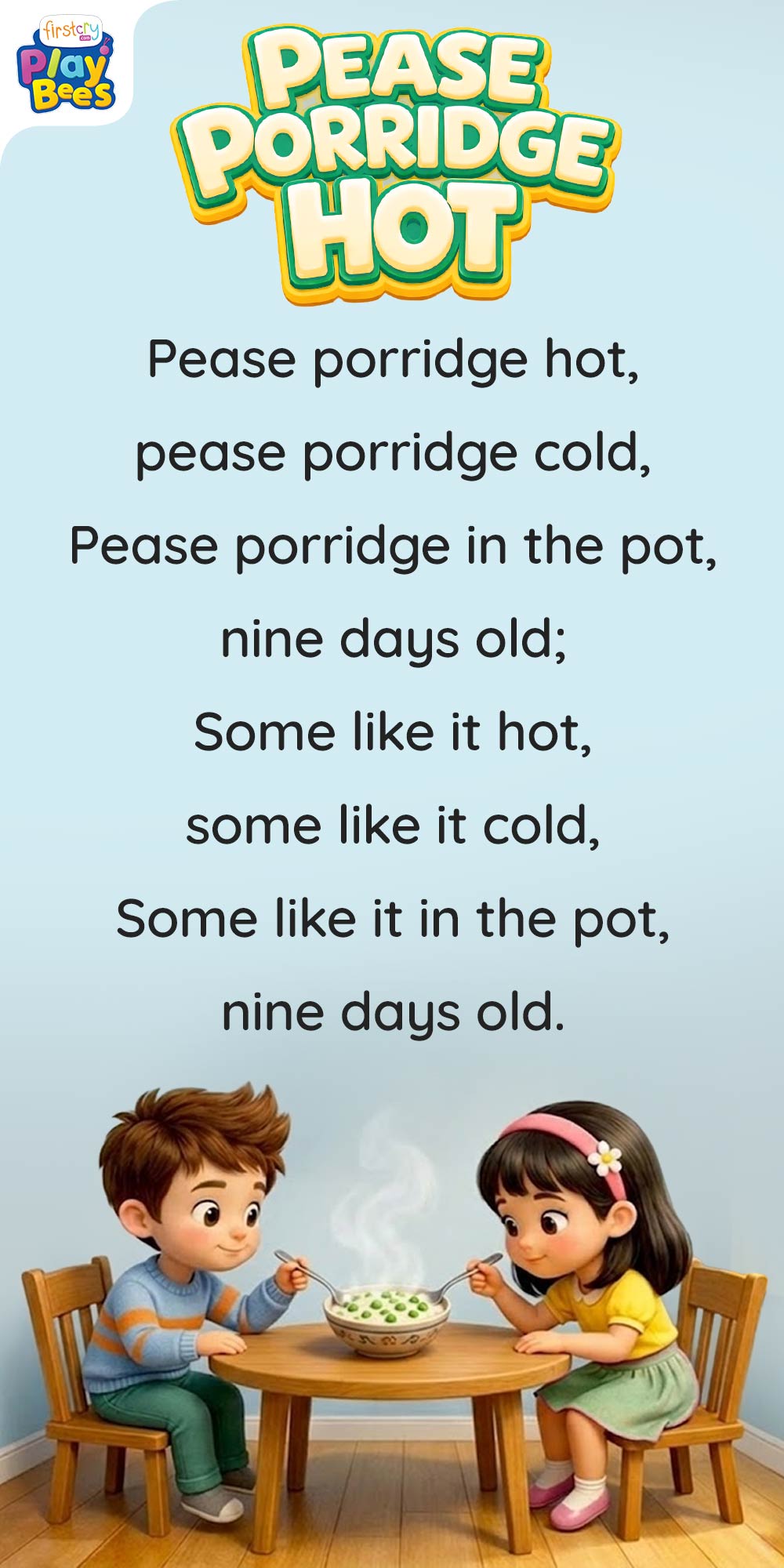
Pease porridge hot, pease porridge cold,
Pease porridge in the pot, nine days old;
Some like it hot, some like it cold,
Some like it in the pot, nine days old.
Other Versions of Pease Porridge Hot Song
Over time, a few small variations of the rhyme have appeared in books and classrooms, although the original version remains the most popular.
Version 1
Pease porridge hot,
Pease porridge cold,
Pease porridge in the pot,
Nine days old.
Some like it hot,
Some like it cold,
Some like it in the pot,
Nine days old.
Version 2 (Extended classroom version)
Pease porridge hot,
Pease porridge cold,
Pease porridge in the pot,
Nine days old.
Some like it hot,
Some like it cold,
Some like it in the pot,
Nine days old.
Some like it warm,
Some like it sweet,
Some like it every day,
As a tasty treat.
Gestures – How to Teach Pease Porridge Hot to Kids
Using simple gestures while singing helps children understand the rhyme better and keeps them engaged during the activity. These movements also make the learning experience more interactive and fun.
- Pretend to hold a bowl and stir it with an imaginary spoon when saying “Pease porridge hot” to show that the porridge is being cooked.
- Blow gently on the pretend bowl when saying “Pease porridge cold” to show cooling food.
- Form a circle with both hands to represent a pot when singing “Pease porridge in the pot.”
- Show the number nine with fingers when saying “Nine days old” to introduce counting.
- Point to different friends in the room when singing “Some like it hot” and “Some like it cold.”
- Pretend to taste the porridge with a spoon at the end to make the rhyme playful and fun.
History & Quick Facts
“Pease Porridge Hot” is a traditional English nursery rhyme that dates back several centuries. The rhyme was first recorded in print in the 18th century, although it is believed to have existed as a folk rhyme even earlier. The word “pease” originally referred to peas, which were commonly used to make a thick soup or porridge in medieval England. Since refrigeration did not exist, the dish was often kept in a pot and reheated over several days. This everyday food practice inspired the humorous line “nine days old.” Because the rhyme was short and easy to remember, it became popular among children and was later included in many nursery rhyme collections and schoolbooks.
Interesting Facts
- The word “pease” was once the plural form of “pea,” but over time the singular word “pea” became more common in English.
- Pease porridge was a real dish made from boiled peas and was widely eaten in England many centuries ago.
- The rhyme became popular in early nursery rhyme books and children’s story collections in the 1700s.
- Many teachers use this rhyme to introduce rhythm and repetition to toddlers during early language learning.
- The tune is simple and often varies because the rhyme was originally passed down through oral storytelling.
- The rhyme is sung in many countries and sometimes translated into different languages for children.
Suitable age & Learnings
“Pease Porridge Hot” is ideal for young children because it is short, rhythmic, and easy to remember. It is usually taught to kids between 2 to 5 years old, helping them build early language and listening skills.
- Rhyming awareness: Children learn how words like “hot,” “pot,” and “cold” create a rhythmic rhyming pattern.
- Listening skills: Repeating the rhyme helps children focus on sounds and follow spoken instructions.
- Vocabulary building: Kids learn simple food and temperature words such as hot, cold, and pot.
- Memory development: The repetitive lines make it easier for children to memorize and recall the rhyme.
- Counting concept: The phrase “nine days old” introduces a simple number and encourages curiosity about counting.
- Motor coordination: Adding gestures while singing helps improve movement and coordination.
FAQs
1. What is the rhyming scheme of Pease Porridge Hot?
The rhyme mainly follows an AABB pattern, where words like “hot” rhyme with “pot” and “cold” rhymes with “old.”
2. Why does the rhyme mention “nine days old”?
In earlier times, food such as porridge was often kept in a pot and reheated for several days, which inspired this humorous line.
3. Why is Pease Porridge Hot good for toddlers?
The rhyme is short, repetitive, and easy to sing, which helps toddlers improve memory, vocabulary, and listening skills.
“Pease Porridge Hot” is a charming and timeless nursery rhyme that continues to delight young children. Its catchy rhythm and simple words make it easy for kids to sing along and remember. The rhyme also gives a small glimpse into historical food traditions while keeping the tone playful and fun. When paired with simple gestures, it becomes an engaging activity for both parents and teachers. Children benefit by learning new words, recognizing rhymes, and improving their listening skills. Even though the rhyme is very short, it plays a meaningful role in early childhood learning. Sharing this rhyme with children creates joyful moments of music, movement, and learning together.
Explore Other Rhymes for Kids:
Hot Cross Buns Nursery Rhyme With Lyrics
The Muffin Man Nursery Rhyme With Lyrics
Patty Cake Song Nursery Rhyme With Lyrics