


Table of Contents
Peter Piper is a classic tongue-twisting nursery rhyme that has delighted children for generations. The rhyme tells a playful story about a boy named Peter who picked a peck of pickled peppers and challenges listeners to figure out where they are! Kids love this rhyme because it sounds funny, fast, and full of repeating “P” sounds that make it exciting to say aloud. Parents and teachers enjoy using it because it helps children practice clear speech and pronunciation. The repetition and rhythm make it easy to remember, while also strengthening listening skills. It’s a wonderful rhyme for building confidence in speaking, improving memory, and introducing new vocabulary in a fun and playful way.
Peter Piper Song Lyrics
Here are the popular Peter Piper words that children love to recite again and again:
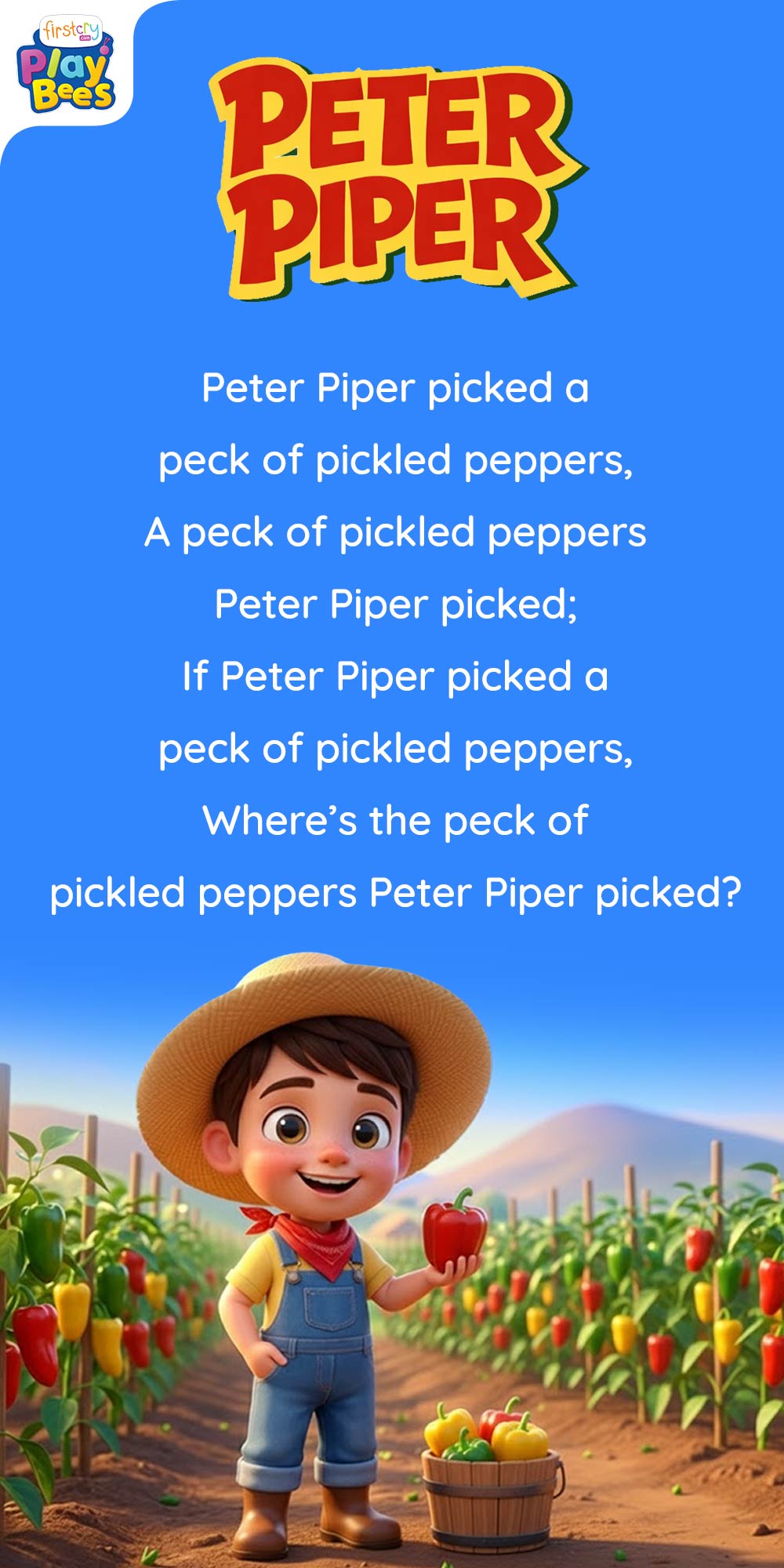
Peter Piper picked a peck of pickled peppers,
A peck of pickled peppers Peter Piper picked;
If Peter Piper picked a peck of pickled peppers,
Where’s the peck of pickled peppers Peter Piper picked?
Other Versions of Peter Piper Song
Over time, playful variations of this rhyme have appeared to make the tongue twister even more challenging and fun.
One popular extended version goes like this:
Peter Piper picked a peck of pickled peppers,
A peck of pickled peppers Peter Piper picked,
If Peter Piper picked a peck of pickled peppers,
Where’s the peck of pickled peppers Peter Piper picked?
Gestures – How to Teach Peter Piper to Kids
Teaching this rhyme with actions makes it more exciting and helps children remember the words better. Simple hand movements and expressions can turn it into an active learning game.
- Pretend to pick peppers by reaching down and picking imaginary vegetables from the ground when saying “picked a peck.”
- Show a big basket shape with your arms to represent a “peck” and help children understand quantity.
- Tap your lips gently when repeating the “P” sound to help kids focus on pronunciation.
- Point to yourself or a friend when saying “Peter Piper” to make the rhyme more interactive.
- Shrug your shoulders and spread your hands when asking “Where’s the peck?” to show curiosity.
- Clap slowly to the rhythm as you repeat the rhyme together to build timing and confidence.
History & Quick Facts
The Peter Piper rhyme is believed to have been published in the early 19th century, around 1813, in a book called Peter Piper’s Practical Principles of Plain and Perfect Pronunciation. It is often linked to John Harris, a British publisher who helped popularize children’s educational rhymes. The rhyme may also have been inspired by Pierre Poivre, a French horticulturist known for introducing spices to different regions. Over time, the catchy tongue twister became widely popular in schools and homes as a fun way to practice clear speech and pronunciation.
Interesting Facts
- The rhyme is famous as one of the most popular English tongue twisters ever created.
- Many speech teachers use it to help children practice the “P” sound clearly and confidently.
- The word “peck” is an old measurement used for dry goods like peppers and apples.
- The rhyme has been translated into different languages, though the tongue-twister effect works best in English.
- Some historians believe the character may have been inspired by a real spice trader.
- It is often included in early reading and phonics programs because of its strong alliteration.
Suitable Age & Learnings
Peter Piper is suitable for children aged 3 to 7 years, especially preschool and early primary learners. The rhyme supports early language development while keeping learning light and playful.
- Children improve pronunciation skills as they repeat the strong “P” sound throughout the rhyme.
- The rhyme builds memory skills because kids try to remember and repeat the full tongue twister.
- It strengthens phonics awareness by highlighting alliteration with repeating beginning sounds.
- Kids learn new vocabulary words like “peck” and “pickled.”
- The rhythm encourages listening and concentration skills during group recitation.
- Repeating the rhyme quickly boosts confidence in public speaking and expressive language.
FAQs
1. What is the rhyming scheme of Peter Piper?
The rhyme mainly uses repetition and alliteration rather than a traditional rhyming scheme, focusing strongly on the repeating “P” sound.
2. Why is Peter Piper considered a tongue twister?
It repeats similar sounds close together, which makes it tricky and fun to say quickly without making mistakes.
3. How can I help my child say the rhyme clearly?
Encourage slow repetition first, practice the “P” sound separately, and turn it into a playful speaking game.
Peter Piper is more than just a funny tongue twister—it’s a playful learning tool that supports early language development. With its catchy rhythm and repeating sounds, children enjoy saying it again and again. Parents and teachers can easily turn it into a speech exercise, a classroom activity, or a fun family challenge. The simple story sparks curiosity while building important pronunciation skills. By adding gestures and group recitation, the rhyme becomes even more engaging. Most importantly, it reminds us that learning can be joyful, lively, and full of laughter.
Explore Other Rhymes for Kids:
Betty Botter Nursery Rhyme With Lyrics
She Sells Seashells Nursery Rhyme With Lyrics
How Much Wood Would a Woodchuck Chuck Nursery Rhyme With Lyrics