
Table of Contents
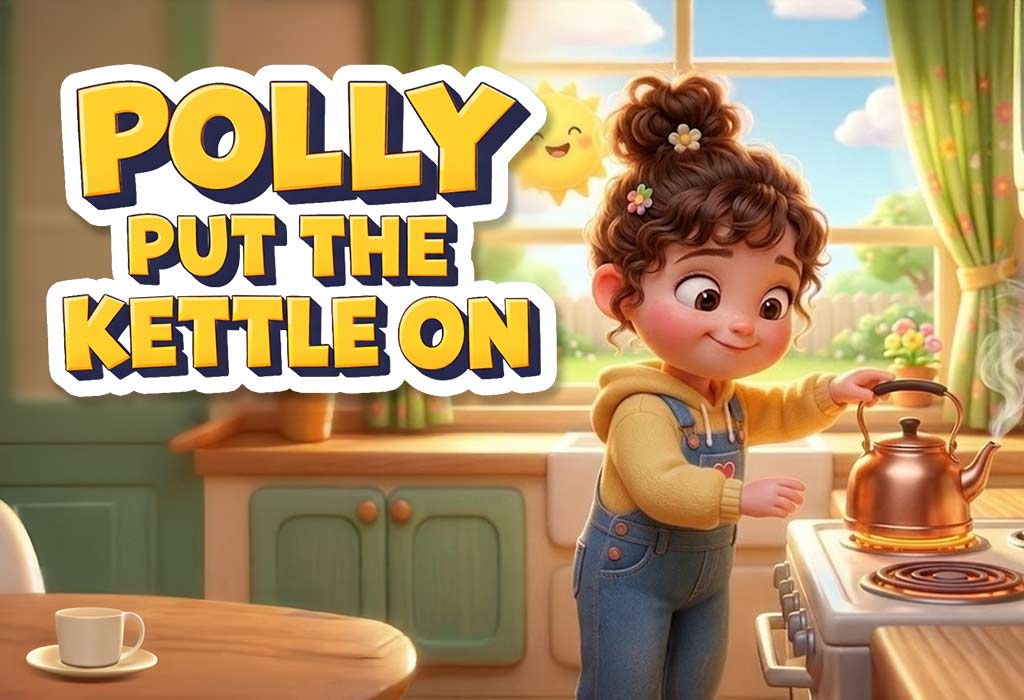
“Polly Put the Kettle On” is a cheerful and simple nursery rhyme about preparing tea and enjoying a cozy moment together. The rhyme follows Polly as she puts the kettle on for tea and Sukey who takes it off again once everyone has gone away. Children enjoy this rhyme because of its playful repetition and easy rhythm, which makes it fun to sing again and again. The words are simple, so kids can quickly remember and join in while singing with parents or teachers. Like many traditional nursery rhymes, it also encourages imagination and pretend play, especially tea party games. Singing this rhyme helps young learners develop listening skills, language rhythm, and memory while enjoying a fun and interactive activity with others.
Polly Put the Kettle On Song Lyrics
Here are the classic Polly Put the Kettle On words that children love to sing along with.
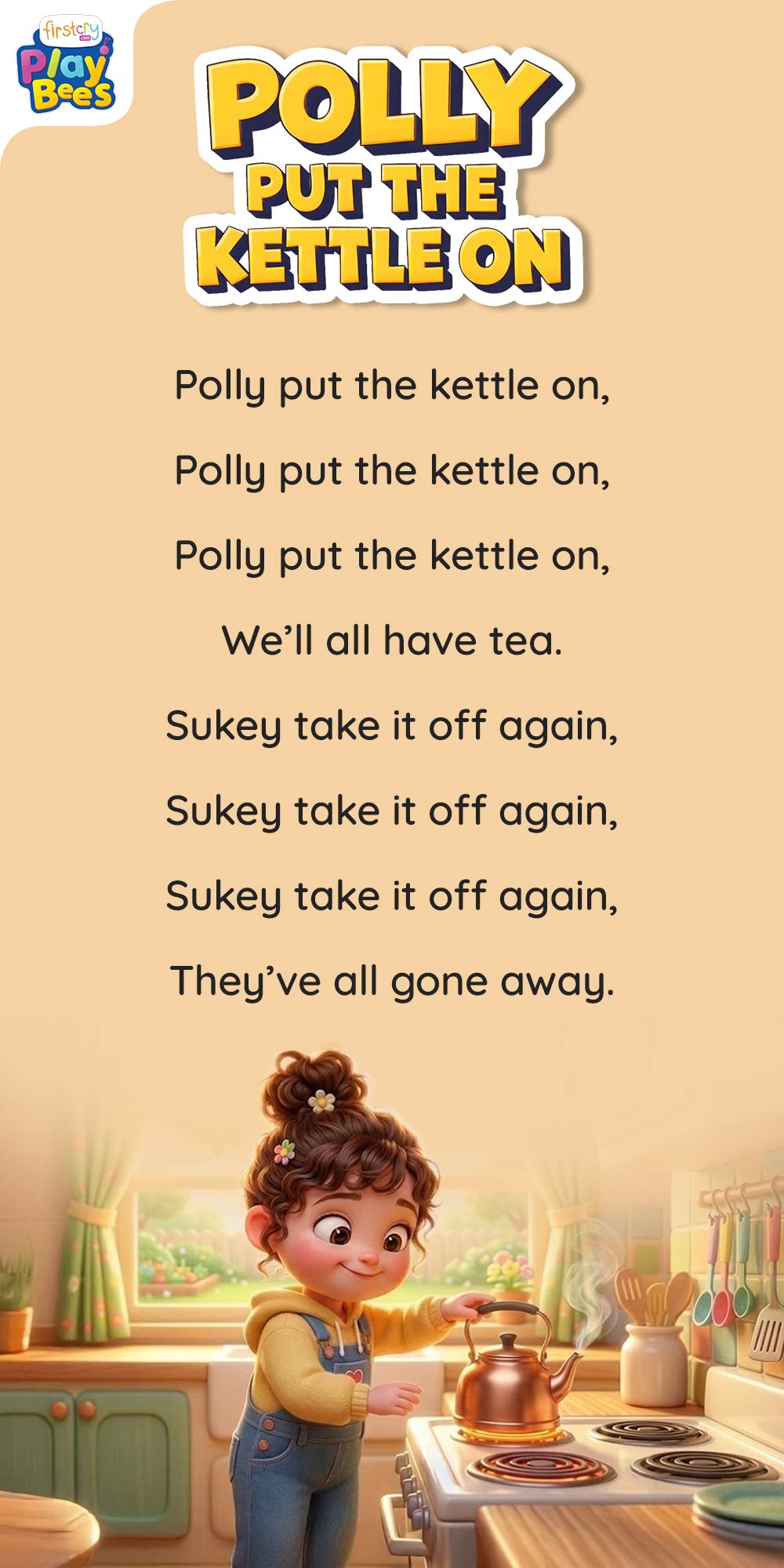
Polly put the kettle on,
Polly put the kettle on,
Polly put the kettle on,
We’ll all have tea.
Sukey take it off again,
Sukey take it off again,
Sukey take it off again,
They’ve all gone away.
Other Versions of Polly Put the Kettle On Song
Over time, the rhyme has appeared in slightly different versions, especially with small changes in names or wording. One of the older variations replaces Polly with Molly.
Molly put the kettle on,
Molly put the kettle on,
Molly put the kettle on,
We’ll all have tea.
Sukey take it off again,
Sukey take it off again,
Sukey take it off again,
They’ve all gone away.
Gestures – How to Teach Polly Put the Kettle On to Kids
Teaching actions along with the rhyme makes it more engaging and helps children remember the words easily. Simple gestures also keep kids active while singing.
- Pretend to place a kettle: When singing “Polly put the kettle on,” children can mime lifting a kettle and placing it on an imaginary stove.
- Invite everyone for tea: During “We’ll all have tea,” kids can pretend to hold a teacup and sip from it.
- Point to a friend as Sukey: When singing “Sukey take it off again,” point toward another child or pretend to call someone named Sukey.
- Lift the kettle off the stove: Children can pretend to carefully remove the kettle from the stove with both hands.
- Look around the room: For “They’ve all gone away,” kids can look around dramatically as if everyone has disappeared.
- Wave goodbye: End the rhyme by waving goodbye to imaginary friends who have left the tea party.
History & Quick Facts
“Polly Put the Kettle On” is a traditional nursery rhyme that originated in England and dates back to the late 18th century. It is believed to have been first published around 1797, although the melody associated with the rhyme was already known in the 1770s. Early versions of the rhyme sometimes used the name Molly instead of Polly, and a related song titled “Molly Put the Kettle On or Jenny’s Baubie” was published in London in 1803. Over time, the rhyme spread through oral tradition and children’s songbooks, eventually becoming a well-known nursery rhyme across English-speaking countries.
Interesting Facts
- The rhyme comes from England and dates back to the 18th century, making it one of the older traditional nursery rhymes still sung today.
- The melody used in the rhyme is linked to an earlier tune called “Jenny’s Baubie,” which was known in the 1770s.
- In some early versions of the rhyme, the character Polly was called Molly, showing how songs changed over time.
- The rhyme is believed to reflect children pretending to host a tea party, which was a common imaginative game in the past.
- The rhyme was mentioned in Charles Dickens’ novel Barnaby Rudge (1841), showing that it was popular even in the 19th century.
- The characters’ names come from common nicknames of the time, where Polly meant Mary and Sukey referred to Susan.
Suitable Age & Learnings
“Polly Put the Kettle On” is ideal for children aged 2 to 6 years, as the rhyme is short, repetitive, and easy to remember. It helps young learners build early language and social skills through singing and pretend play.
- Listening Skills: Children learn to listen carefully to the rhythm and repeat the lines of the rhyme.
- Memory Development: The repeated phrases make it easier for kids to memorize and recall the song.
- Vocabulary Growth: Words such as kettle, tea, and away introduce simple everyday vocabulary.
- Imaginative Play: The rhyme encourages children to pretend they are hosting a tea party with friends.
- Social Interaction: Singing together teaches children about sharing, turn-taking, and group participation.
- Rhythm and Language Patterns: The rhyme helps kids understand patterns and rhyming sounds in language.
FAQs
1. What is the rhyming scheme of Polly Put the Kettle On?
The rhyme mostly follows a simple repeating pattern with lines ending in similar sounds, making it easy for children to remember and sing.
2. What is the meaning behind Polly Put the Kettle On?
The rhyme describes a playful pretend tea party where Polly prepares tea and Sukey removes the kettle once everyone has gone away.
3. Why is Polly Put the Kettle On popular with children?
Kids enjoy the rhyme because it has a catchy rhythm, simple words, and encourages pretend play like hosting a tea party.
“Polly Put the Kettle On” is a charming nursery rhyme that has entertained children for generations. Its simple story about preparing tea makes it easy for young learners to understand and enjoy. The rhyme’s repetition and rhythm help children build language skills while having fun singing along. Adding gestures and actions makes the song even more engaging for toddlers and preschoolers. Parents and teachers often use it during circle time or playtime to encourage participation and imagination. Even after more than two centuries, this classic rhyme continues to bring smiles and playful learning to children everywhere.