

Table of Contents
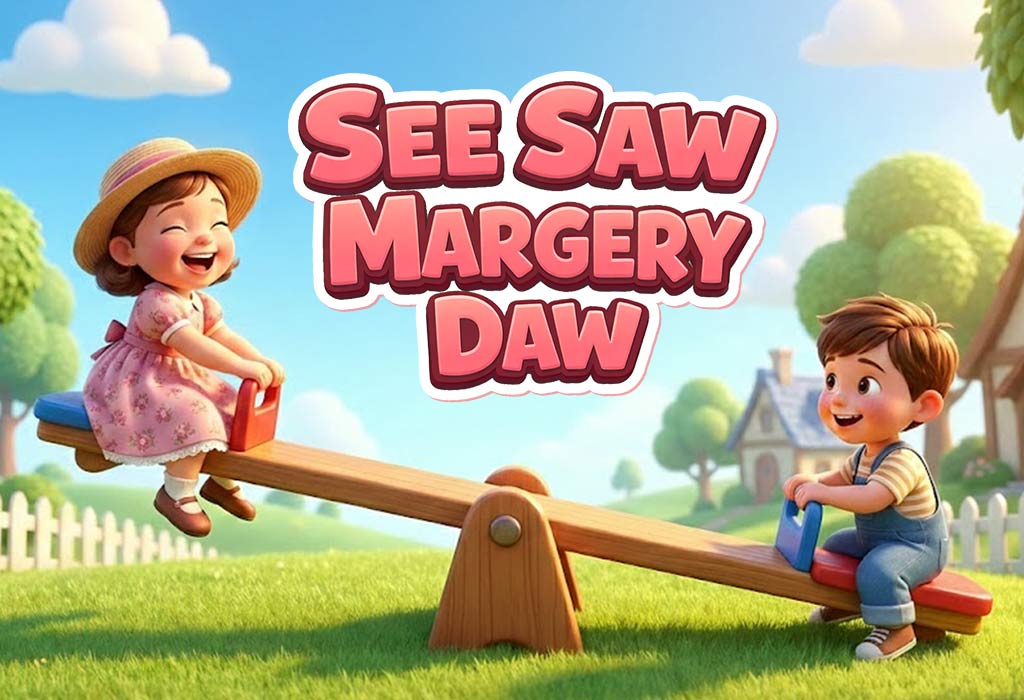
“See Saw Margery Daw” is a classic nursery rhyme that paints a playful picture of work, rhythm, and gentle movement. The rhyme is short, catchy, and easy for young children to remember, which is why it has been loved for generations. Kids enjoy the bouncy, see-saw–like rhythm that naturally invites actions and gestures while singing along. Parents and teachers often use this rhyme to introduce early listening and speaking skills in a fun way. The simple words help children recognize sounds, patterns, and repetition, which are important for language development. Singing it together also supports bonding time and encourages confidence as children join in. Overall, this rhyme turns learning into a joyful experience through music, movement, and imagination.
See Saw Margery Daw Song Lyrics
This well-known rhyme, often searched as See Saw Margery Daw words, is loved for its rhythm and simplicity and is easy for children to sing along to.
See Saw Margery Daw,
Jacky shall have a new master;
Jacky shall earn but a penny a day,
Because he can’t work any faster.

Other Versions of the See Saw Margery Daw Song
Over the years, a few small variations of this rhyme have appeared as it was passed down orally.
Alternate Version 1 – Name Change
See-saw, Margery Daw,
Johnny shall have a new master;
He shall earn but a penny a day,
Because he can’t work any faster.
Alternate Version 2 – Work-Themed Extension
See-saw, Margery Daw,
Johnny shall have a new master;
He shall earn but a penny a day,
Because he can’t work any faster.
Work while the daylight shines,
Rest when the day is done.
Alternate Version 3 – Simplified Modern Wording
See-saw, Margery Daw,
Johnny works all day long;
He earns a penny every day,
Singing a happy song.
Alternate Version 4 – Action-Based Version
See-saw, Margery Daw,
Up and down we go;
Rocking gently to and fro,
Fast and then slow.
Gestures – How to Teach See Saw Margery Daw to Kids
This rhyme is perfect for simple actions that match the rhythm and keep children engaged.
- Sit facing a child and gently hold their hands to move back and forth like a see-saw while singing the opening line.
- Rock your bodies forward and backward together to match the up-and-down motion of the rhyme.
- Point to an imaginary person when saying “Johnny” to help children connect words with meaning.
- Use a finger pinch motion to show “a penny a day,” making the idea more visual.
- Shake your head gently while singing about working “faster” to add expression.
- Repeat the rhyme with steady movements so children can copy and remember the actions.
History & Quick Facts
“See Saw Margery Daw” is an old English nursery rhyme believed to have originated in the 18th century. Like many traditional rhymes, its exact author is unknown, as it was passed down orally before being written down. The rhyme first appeared in printed collections of nursery rhymes in the late 1700s. It became popular because of its simple rhythm and playful motion, which made it easy for children to remember and enjoy. Over time, it spread through homes and schools as a teaching rhyme paired with movement.
Interesting Facts
- The rhyme uses a rocking rhythm that matches the motion of a real see-saw, making it ideal for action play.
- It has been included in many classic nursery rhyme books across different countries.
- The tune is simple and flexible, so adults often sing it in slightly different melodies.
- Children around the world learn similar rhymes that involve balance and movement.
- The word “penny” reflects the historical period when the rhyme was created.
- It remains popular today because it is short, memorable, and easy to act out.
Suitable Age & Learnings
This rhyme is best suited for toddlers and preschoolers, usually between 1.5 and 5 years old, as it combines sound, rhythm, and movement. It supports early learning in a gentle and playful way.
- Children develop listening skills by focusing on the rhythm and repeated lines.
- Language skills grow as kids hear and repeat simple, clear words.
- Memory improves when children sing the rhyme multiple times.
- Motor skills are supported through rocking and hand movements.
- Rhythm awareness is built as children feel the steady beat of the song.
- Social bonding increases when the rhyme is shared during group play or parent-child time.
FAQs
1. What is “See Saw Margery Daw” about?
It is a playful rhyme about work and effort, presented in a simple and rhythmic way for children.
2. What is the rhyming scheme of See Saw Margery Daw?
The rhyme follows a simple AABB rhyming scheme, making it easy for young children to remember.
3. Why is this rhyme good for toddlers?
Its short length, repetition, and actions help toddlers learn language and coordination naturally.
“See Saw Margery Daw” is a timeless nursery rhyme that continues to delight young children and adults alike. Its gentle rhythm and simple words make it easy for little ones to join in with confidence. The rhyme encourages movement, listening, and early language development in a fun and relaxed way. Parents and teachers can use it during playtime, circle time, or quiet bonding moments. With its long history and lasting charm, it remains a wonderful introduction to music and rhyme. Sharing this classic song helps keep traditional nursery rhymes alive for future generations.
Explore Other Rhymes for Kids:
Jack and Jill Nursery Rhyme With Lyrics
Little Jack Horner Nursery Rhyme With Lyrics
Peter Peter Pumpkin Eater Nursery Rhyme With Lyrics