
Table of Contents
If you’ve ever watched a kindergartener proudly read their first sentence aloud, you know how magical that moment feels. Early reading isn’t about racing ahead, it’s about building confidence, curiosity, and a genuine love for books. For many children, the foundation of that journey begins with sight words for kindergarten, which help young readers recognize common words quickly without sounding them out every time. These familiar words act like stepping stones, making sentences feel less overwhelming and more inviting.
Parents and teachers often notice that once children stop pausing at every word, their reading suddenly sounds smoother and more confident. That’s because their brains are no longer working overtime to decode each letter, they are understanding meaning instead. This article is written for parents, caregivers, and educators who want practical, real-world guidance, not textbook jargon. We will explore what sight words really are, why they matter, and how to teach them in ways that feel natural, playful, and effective for young learners.
What are Sight Words?
Sight words are common words that children learn to recognize instantly by seeing them. These words are read without sounding out each letter. Learning them helps young readers read more smoothly and with better confidence
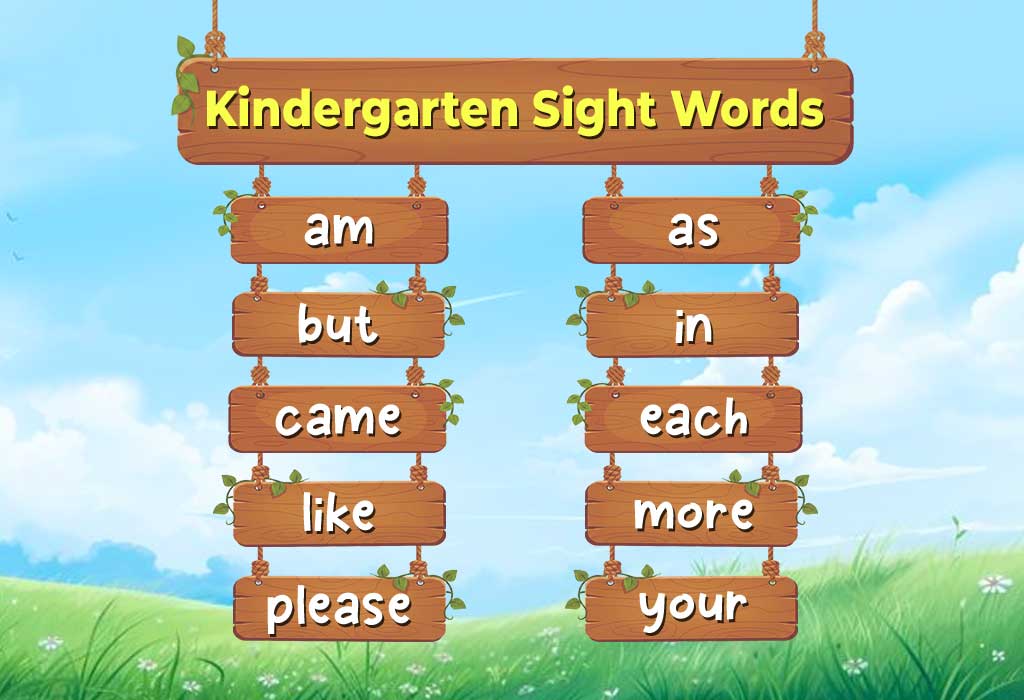
List of Sight Words for Kindergarten
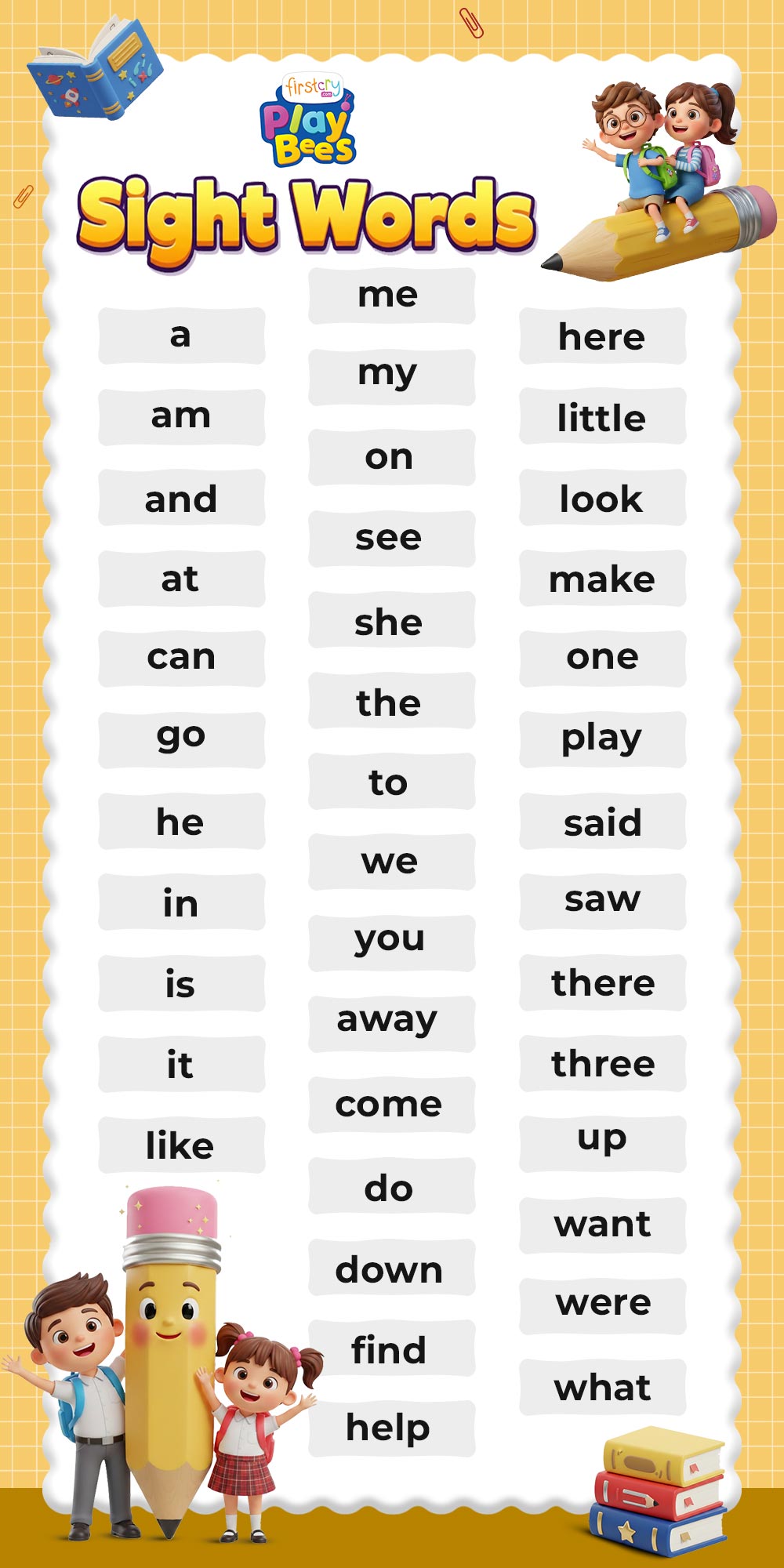
Learning sight words takes time and patience especially for young children who are just beginning to read. A gentle approach with small daily practice often works better than pressure or long lessons. This kindergarten sight word list is meant to support early readers in a calm and encouraging way helping them feel successful as they grow.
Dolch Sight Words
The Dolch list is one of the most trusted word sets used in early learning classrooms. These words appear often in children books and help build early reading confidence. Using dolch sight words kindergarten learners begin to recognize familiar words quickly which makes reading feel easier and more enjoyable.
| a | all |
| am | are |
| at | ate |
| be | black |
| brown | but |
| came | did |
| do | eat |
| four | get |
| good | have |
| he | into |
| like | must |
| new | no |
| now | on |
| our | out |
| please | pretty |
| ran | saw |
| say | she |
| so | that |
| there | they |
| this | too |
| under | want |
| was | well |
| went | what |
| white | who |
| will | yes |
Fry Sight Words
The Fry word list is based on words children see most often in everyday reading. These words support smooth reading and help children focus more on meaning than decoding. The fry kindergarten sight word list is especially helpful for building early fluency in simple sentences and stories.
| the | of |
| and | to |
| a | in |
| is | you |
| that | it |
| he | was |
| for | on |
| are | as |
| with | his |
| they | I |
| at | be |
| this | have |
| from | or |
| one | had |
| by | words |
| but | not |
| what | all |
| were | we |
| when | your |
| can | said |
| there | use |
| an | each |
| which | she |
| do | how |
| their | if |
| will | up |
| other | about |
| out | many |
| then | them |
| these | so |
| some | her |
| would | make |
| like | him |
| into | time |
| has | look |
| two | more |
| write | go |
| see | number |
| no | way |
| could | people |
| my | than |
Simple Sentences Using Kindergarten Sight Words
Simple sentences help children feel proud because they can read a full thought on their own. Reading short lines builds confidence and reduces fear of making mistakes. These sight words exercises kindergarten learners enjoy work best when reading feels easy and encouraging.
- I see a cat.
- We like the dog.
- She is my friend.
- He can run fast.
- I am happy today.
- The sun is up.
- We can go out.
- This is my book.
- I see the red ball.
- They are in the house.
Benefits of Learning Sight Words in Kindergarten
Learning sight words is a big step in a child reading journey and it should always feel supportive and positive. When children begin to recognize words easily they feel less pressure and more joy while reading. These sight word ideas for kindergarten help build strong habits that support early learning in gentle ways.
- Builds reading confidence as children recognize words without stopping.
- Helps reading sound smooth and natural which keeps children interested.
- Improves understanding because kids focus on meaning not decoding.
- Encourages independent reading and a sense of pride.
- Reduces frustration and anxiety during reading time.
- Supports early writing as familiar words are easier to spell.
How to Teach Sight Words to Kindergarten Easily?
Teaching sight words should feel gentle encouraging and never rushed. Young children learn best when they feel safe supported and free to make mistakes. Simple sight word activities for kindergarten work well when they use common sight words for kindergarten children already see in books and daily life.
Step 1 – Start with a calm approach
Teaching sight words should never feel hurried or stressful. When adults stay patient children feel more relaxed and open to learning.
Step 2 – Create a safe learning space
Children learn better when they know mistakes are allowed. Feeling safe and supported helps them try without fear.
Step 3 – Keep lessons short and gentle
Young children have small attention spans. Short practice sessions work better than long lessons.
Step 4 – Use familiar words first
Begin with common sight words for kindergarten that children already hear often. Familiar words feel easier and less confusing.
Step 5 – Use everyday reading moments
Point out words while reading storybooks signs or labels. This shows children how words are used in real life.
Step 6 – Turn practice into simple activities
Sight word activities for kindergarten work best when they feel like play. Games songs and simple matching keep children interested.
Step 7 – Encourage effort not perfection
Praise trying and progress instead of correct answers only. This builds confidence and keeps children motivated.
Learning sight words in kindergarten is not about speed or pressure but about building comfort with reading. When children recognize words easily they begin to trust their own abilities. Small daily practice creates steady progress without overwhelming young learners. Support from parents and teachers makes children feel safe to try and even make mistakes. Reading together and celebrating effort helps build a positive connection with books. Every child learns at their own pace and that pace should always be respected. With patience care and consistency early reading can become a joyful lifelong skill.
Also Read: