
Table of Contents
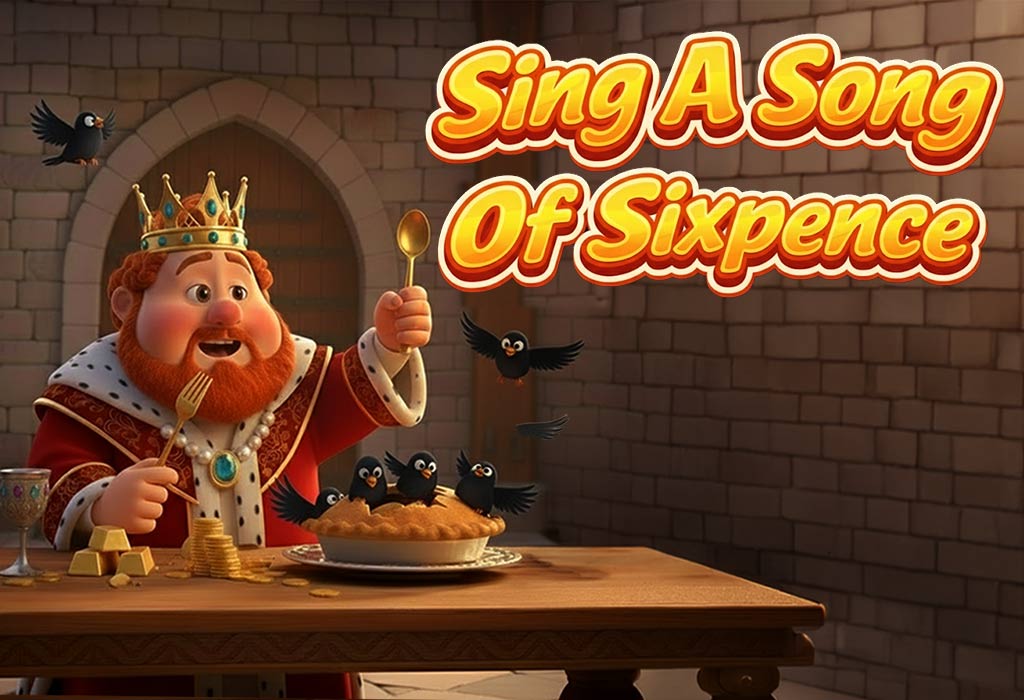
“Sing a Song of Sixpence” is a classic nursery rhyme filled with playful imagery, surprising moments, and a gentle rhythm that instantly captures children’s attention. From blackbirds popping out of a pie to a king counting money, the rhyme feels like a tiny storybook set to music. Kids enjoy it because it is catchy, easy to remember, and full of fun pictures they can imagine while listening or singing along. For parents and teachers, this rhyme is a lovely early-learning tool. It supports language development through repetition and rhyme, encourages listening skills, and introduces children to sequencing as the story unfolds line by line. Its calm, steady tune also makes it perfect for group singing, circle time, or bedtime, helping children feel relaxed while learning through music and rhythm.
Sing a Song of Sixpence Song Lyrics
This well-loved rhyme is often shared with children to introduce rhythm and storytelling, and the Sing a Song of Sixpence words are simple enough for young learners to follow and enjoy.
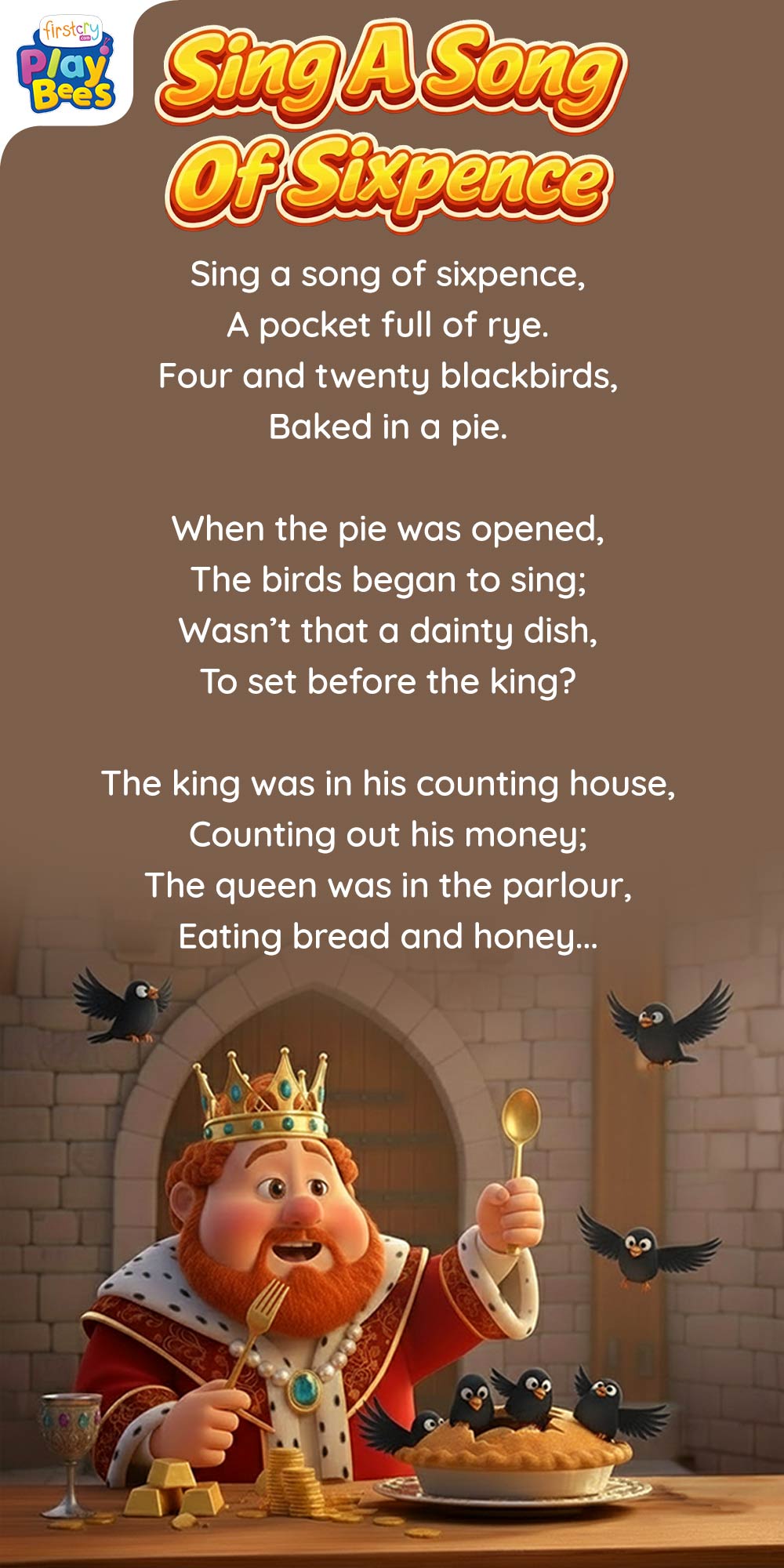
Sing a song of sixpence,
A pocket full of rye.
Four and twenty blackbirds,
Baked in a pie.
When the pie was opened,
The birds began to sing;
Wasn’t that a dainty dish,
To set before the king?
The king was in his counting house,
Counting out his money;
The queen was in the parlour,
Eating bread and honey.
The maid was in the garden,
Hanging out the clothes;
When down came a blackbird
And pecked off her nose.
Alternate version of the last rhyme:
They sent for the king’s doctor,
who sewed it on again;
He sewed it on so neatly,
the seam was never seen.
or:
There was such a commotion,
that little Jenny wren;
Flew down into the garden,
and put it back again.
Other Versions of the Sing a Song of Sixpence Song
The rhyme has been passed down for generations, so a few gentle variations exist across books and classrooms.
Version 1: Softened Ending (Gentle & Toddler-Safe)
*Sing a song of sixpence,
A pocket full of rye.
Four and twenty blackbirds
Baked in a pie.
When the pie was opened,
The birds began to sing;
Wasn’t that a dainty dish
To set before the king?
The king was in his counting house,
Counting out his money;
The queen was in the parlour,
Eating bread and honey.
The maid was in the garden,
Hanging out the clothes,
When down came a blackbird
And tickled her on the nose.*
Version 2: Very Young Kids Version (Extra Mild)
*Sing a song of sixpence,
A pocket full of rye.
Four and twenty blackbirds
Baked in a pie.
When the pie was opened,
The birds began to sing;
Wasn’t that a happy sound
To share with everyone?
The king was counting money,
The queen had food so sweet,
The maid was in the garden,
With sunshine at her feet.
A little bird flew gently by
And gave a cheerful pose.*
Version 3: Musical Classroom Version (Same Words, Lighter Ending)
*Sing a song of sixpence,
A pocket full of rye.
Four and twenty blackbirds
Baked in a pie.
When the pie was opened,
The birds began to sing;
Wasn’t that a dainty dish
To set before the king?
The king was in his counting house,
Counting out his money;
The queen was in the parlour,
Eating bread and honey.
The maid was in the garden,
Hanging out the clothes,
When down came a blackbird
And sat upon her toes.*
Gestures – How to Teach Sing a Song of Sixpence to Kids
Using actions while singing helps children stay engaged and remember the rhyme more easily. Simple movements also support coordination and listening skills.
- Sing a song of sixpence – Pretend to sing into a microphone to show the start of the song.
- A pocket full of rye – Point to your pocket and act like you are filling it with something.
- Blackbirds baked in a pie – Make a round shape with your hands to show a pie.
- The birds began to sing – Wiggle fingers upward like birds flying out and chirping.
- The king and queen – Pretend to wear a crown and then mime eating gently.
- The maid and blackbird – Act like hanging clothes, then flap hands like a bird swooping down.
History & Quick Facts
“Sing a Song of Sixpence” is an old English nursery rhyme that dates back to at least the 18th century. It was first published in 1744 in a collection called Tommy Thumb’s Pretty Song Book. The rhyme does not have a known single author, as it comes from oral tradition, where songs were shared by word of mouth. Over time, it became popular in homes and schools because of its memorable rhythm and imaginative story. Today, it remains a staple of traditional nursery rhyme collections around the world.
Interesting Facts
- The rhyme is over 250 years old and is still sung by children today.
- “Four and twenty blackbirds” simply means twenty-four birds, using old-style counting.
- The song has been translated into many languages for children worldwide.
- Its tune is simple, making it easy for young kids to sing together.
- The rhyme appears in many classic nursery rhyme books and collections.
- Some historians enjoy guessing hidden meanings, but children mostly love it for the fun story.
Suitable Age & Learnings
This rhyme is suitable for children aged 2 to 6 years, as it combines simple words with imaginative storytelling. It supports both fun and foundational learning during early childhood.
- Language development – Children hear new words and sentence patterns through repetition.
- Rhyming skills – The clear rhyme scheme helps kids recognize sound patterns.
- Listening skills – Following the story from start to end improves attention.
- Imagination – Funny images like birds in a pie spark creative thinking.
- Memory building – Repeating verses helps strengthen recall and sequencing.
- Social learning – Singing together encourages group participation and confidence.
FAQs
1. What is the rhyme scheme of Sing a Song of Sixpence?
The rhyme follows a simple AABB pattern, which makes it easy for children to remember and sing.
2. Is Sing a Song of Sixpence suitable for toddlers?
Yes, with gentle explanation or softer versions, it works well for toddlers and preschoolers.
3. Why do kids enjoy this rhyme so much?
Children love the surprise elements, catchy tune, and playful images that feel like a short story.
“Sing a Song of Sixpence” is a timeless nursery rhyme that continues to charm children generation after generation. Its mix of rhythm, repetition, and storytelling makes learning feel natural and fun. Parents and teachers appreciate how easily it fits into daily routines like playtime, circle time, or bedtime. With simple gestures and group singing, the rhyme becomes an engaging activity rather than just a song. It also gently supports early language, memory, and listening skills without feeling like formal learning. Overall, this classic rhyme remains a warm and joyful way to introduce young children to the magic of music and words.
Explore Other Rhymes for Kids:
Little Jack Horner Nursery Rhyme With Lyrics
There Was a Crooked Man Nursery Rhyme With Lyrics
Peter Peter Pumpkin Eater Nursery Rhyme With Lyrics