
Table of Contents
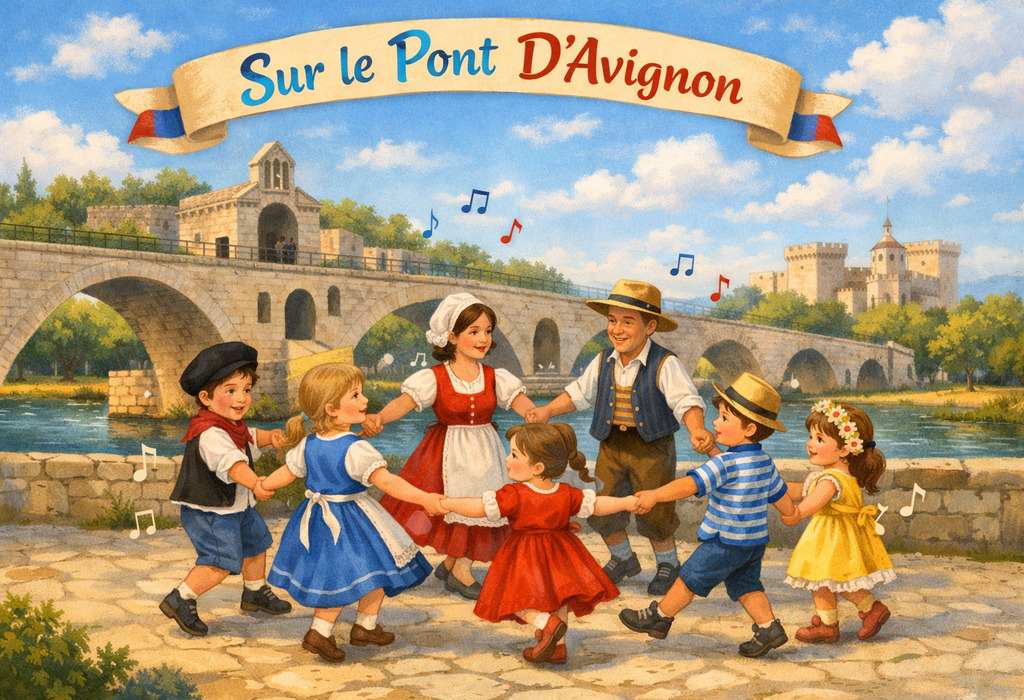
“Sur le Pont d’Avignon” is a cheerful French nursery rhyme that invites children to sing, move, and imagine dancing on a famous bridge in France. The rhyme describes people dancing in a circle, making it lively and fun for young learners. Kids enjoy its catchy tune, simple repetition, and the playful idea of dancing together. It is especially engaging when paired with actions, helping children stay active while learning. This rhyme supports early language development by introducing basic French words and rhythm patterns. It also encourages social interaction, listening skills, and coordination. Parents and teachers love it because it combines music, movement, and cultural learning in a simple and enjoyable way.
Sur le Pont D’Avignon Song Lyrics
Here are the popular Sur le Pont D’Avignon words that children love to sing and act out:
On the bridge of Avignon
We’re all dancing, we’re all dancing
On the bridge of Avignon
We all dance in circles.
The fine gentlemen go like this
And then again like this.
Chorus
The beautiful ladies go like this
And then again like that.
Chorus
The young girls go like this
And then like that.
Chorus
The musicians go like this
And then like that.
Chorus
Other Versions of Sur le Pont D’Avignon Song
This rhyme has a few variations where different groups or actions are added to make it more interactive.
1. Children’s Version
Sur le pont d’Avignon,
On y danse, on y danse,
Sur le pont d’Avignon,
On y danse tous en rond.
Les petits enfants font comme ça,
Et puis encore comme ça,
Sur le pont d’Avignon,
On y danse tous en rond.
2. Musicians’ Version
Sur le pont d’Avignon,
On y danse, on y danse,
Sur le pont d’Avignon,
On y danse tous en rond.
Les musiciens font comme ça,
Et puis encore comme ça,
Sur le pont d’Avignon,
On y danse tous en rond.
3. Soldiers’ Version
Sur le pont d’Avignon,
On y danse, on y danse,
Sur le pont d’Avignon,
On y danse tous en rond.
Les soldats font comme ça,
Et puis encore comme ça,
Sur le pont d’Avignon,
On y danse tous en rond.
4. Dancers’ Version
Sur le pont d’Avignon,
On y danse, on y danse,
Sur le pont d’Avignon,
On y danse tous en rond.
Les danseurs font comme ça,
Et puis encore comme ça,
Sur le pont d’Avignon,
On y danse tous en rond.
5. Jumping Version
Sur le pont d’Avignon,
On y saute, on y saute,
Sur le pont d’Avignon,
On y saute tous en rond.
Les petits enfants font comme ça,
Et puis encore comme ça,
Sur le pont d’Avignon,
On y saute tous en rond.
6. Clapping Version
Sur le pont d’Avignon,
On y tape, on y tape,
Sur le pont d’Avignon,
On y tape tous en rond.
Les petits enfants font comme ça,
Et puis encore comme ça,
Sur le pont d’Avignon,
On y tape tous en rond.
Gestures – How to Teach Sur le Pont D’Avignon to Kids
Teaching this rhyme with actions makes it more exciting and easier for children to remember. Simple gestures help kids connect words with movement and improve coordination.
- Form a circle by holding hands with other children to represent dancing together on the bridge.
- Walk in a circle slowly while singing the main line to show “on y danse tous en rond.”
- When the verse mentions “messieurs” or “dames,” use hand gestures like bowing or waving to act it out.
- Clap hands gently in rhythm to help children follow the beat of the song.
- Spin around once during repeated lines to add fun and movement.
- Encourage kids to create their own actions for each verse to boost creativity and participation.
History & Quick Facts
“Sur le Pont d’Avignon” is a traditional French folk song that dates back to the 15th century. It is associated with the famous Saint-Bénézet Bridge in Avignon, France. The song became widely known in the 19th century when it was published in collections of French folk music. Although the original composer is unknown, the rhyme gained popularity through oral tradition and later through schools and cultural programs. Over time, it became one of the most recognized French nursery rhymes around the world.
Interesting Facts
- The real bridge in Avignon is shorter today, but the song helped make it famous worldwide.
- People actually danced under the bridge, not on it, due to its narrow structure.
- The rhyme is often used to introduce children to basic French language and culture.
- It has been translated into many languages, making it popular globally.
- The tune is simple and repetitive, which makes it easy for young children to learn.
- The rhyme is commonly taught in schools as part of music and movement activities.
Suitable Age & Learnings
This rhyme is ideal for children aged 2 to 6 years, as it combines music, language, and movement in a simple way. It supports early childhood development through fun and interactive learning.
- Language skills improve as children learn simple French words and pronunciation.
- Listening skills develop as kids follow the rhythm and sequence of the song.
- Motor skills are enhanced through actions like clapping, walking, and spinning.
- Social skills grow when children sing and dance together in a group.
- Creativity is encouraged when kids add their own gestures to the rhyme.
- Vocabulary expands with exposure to new cultural and descriptive words.
FAQs
1. What is the rhyming scheme of Sur le Pont D’Avignon?
The rhyming scheme of Sur le Pont d’Avignon is best described as AABB (repetitive pattern).
2. Is Sur le Pont D’Avignon suitable for toddlers?
Yes, it is perfect for toddlers as it uses repetition, simple words, and fun actions that keep them engaged.
3. Why is this rhyme taught in schools?
It helps children learn rhythm, basic French language, and coordination through music and movement.
“Sur le Pont d’Avignon” is a delightful nursery rhyme that brings together music, culture, and playful learning. Its simple lyrics and repetitive tune make it easy for young children to enjoy and remember. The addition of gestures and group activities makes it even more engaging and interactive. It also introduces kids to a piece of French heritage in a fun and accessible way. Parents and teachers appreciate how it supports language, movement, and social development all at once. Overall, this rhyme is a wonderful choice for early learners, creating joyful moments while building essential skills.