
Table of Contents
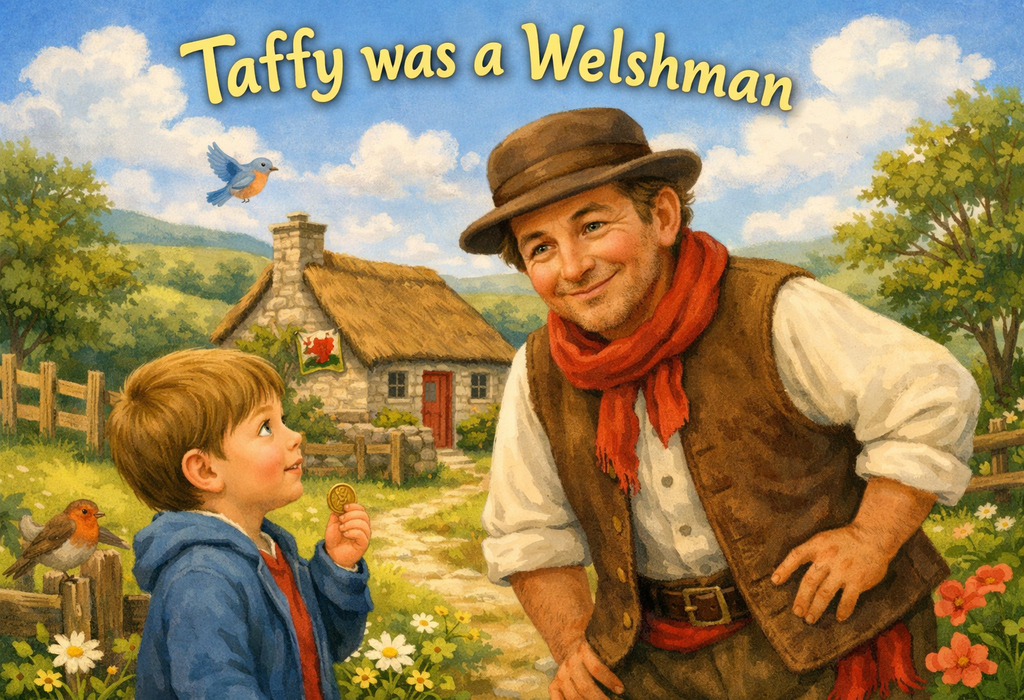
“Taffy was a Welshman” is a traditional nursery rhyme that tells a short and rhythmic story about a character named Taffy and a simple everyday situation. Children enjoy this rhyme because of its catchy rhythm, repetition, and playful tone, which make it easy to remember and fun to recite. The simple structure helps young learners follow along and join in quickly. For early learning, it supports language development, listening skills, and memory building. It also introduces kids to rhyming patterns and new words in an engaging way. Parents and teachers often use it during storytelling or group activities to encourage participation, confidence, and a love for classic nursery rhymes.
Taffy was a Welshman Song Lyrics
Here are the classic Taffy was a Welshman words that children enjoy reciting:
Taffy was a Welshman, Taffy was a thief;
Taffy came to my house and stole a piece of beef;
I went to Taffy’s house, Taffy wasn’t in;
I jumped upon his Sunday hat and poked it with a pin.
Taffy was a Welshman, Taffy was a sham;
Taffy came to my house and stole a piece of lamb;
I went to Taffy’s house, Taffy was away,
I stuffed his socks with sawdust and filled his shoes with clay.
Taffy was a Welshman, Taffy was a cheat,
Taffy came to my house, and stole a piece of meat;
I went to Taffy’s house, Taffy was not there,
I hung his coat and trousers to roast before a fire.
Other Versions of Taffy was a Welshman Song
This rhyme has a few alternate versions that vary slightly in wording and tone.
“Taffy was a Welshman, Taffy was a thief,
Taffy came to my house and stole a piece of beef.
I went to Taffy’s house, Taffy wasn’t in,
Taffy came to my house and stole a silver pin.”
Gestures – How to Teach Taffy was a Welshman to Kids
Teaching this rhyme with actions makes it more fun and helps children remember the words easily. Simple gestures also improve coordination and engagement.
- Pretend to point to a person when saying “Taffy was a Welshman” to help kids connect with the character.
- Act like sneaking or tiptoeing during “Taffy was a thief” to make the idea playful and easy to understand.
- Use a grabbing motion with hands when saying “stole a piece of beef” to show the action clearly.
- Walk in place or pretend to knock on a door while saying “I went to Taffy’s house” to add movement.
- Shake your head and shrug for “Taffy wasn’t home” so children learn expressive gestures.
- Pretend to lie down for “Taffy was in bed” to make the story more visual and engaging.
History & Quick Facts
“Taffy was a Welshman” is an old English nursery rhyme believed to date back to the 18th century. It was first published in collections of traditional rhymes such as Mother Goose’s Melody around the 1700s. The rhyme reflects historical attitudes and stereotypes of that time, which is why some versions are now adapted for children. Over the years, it became popular through oral storytelling and printed rhyme books, eventually becoming a well-known part of nursery rhyme collections worldwide.
Interesting Facts
- This rhyme is considered one of the older traditional nursery rhymes from Britain, dating back several centuries.
- The name “Taffy” was once used as a nickname for Welsh people, reflecting historical cultural references.
- Some modern adaptations change or shorten the rhyme to make it more child-friendly and appropriate.
- The rhyme is often included in classic Mother Goose collections taught in schools and homes.
- It has been translated into different languages, allowing children worldwide to enjoy similar rhythmic patterns.
- The tune is usually simple and repetitive, making it easy for young children to learn and sing along.
Suitable Age & Learnings
This rhyme is best suited for children aged 3 to 7 years, as they can understand simple storytelling and enjoy rhythmic repetition. It is especially useful in early learning settings where language and listening skills are developing.
- Children improve memory skills as they repeat and recall the short lines of the rhyme.
- It helps build vocabulary by introducing simple everyday words like house, beef, and bed.
- Kids learn about rhythm and rhyming patterns, which are important for early reading skills.
- The rhyme encourages listening and speaking skills during group recitation or storytelling time.
- Actions and gestures improve motor skills and coordination when paired with the rhyme.
- It also introduces cultural awareness by exposing children to traditional rhymes from different regions.
FAQs
1. What is the rhyming scheme of Taffy was a Welshman?
The rhyme follows a simple AABB rhyming pattern, where every two lines rhyme together.
2. Is Taffy was a Welshman suitable for young children?
Yes, but some versions may be simplified or softened to ensure they are appropriate for younger audiences.
3. Why is this rhyme still taught today?
It remains popular because of its rhythm, easy memorization, and its role in developing early language and listening skills.
“Taffy was a Welshman” is a classic nursery rhyme that continues to be enjoyed by children across generations. Its simple rhythm and repetitive lines make it easy for young learners to follow and remember. While it has historical roots, modern versions help keep it suitable and engaging for today’s children. Parents and teachers can use it as a fun tool to build language, memory, and coordination skills. Adding gestures and actions makes the learning experience even more interactive and enjoyable. Overall, it remains a valuable part of early childhood learning and a charming addition to any child’s rhyme collection.