
Table of Contents
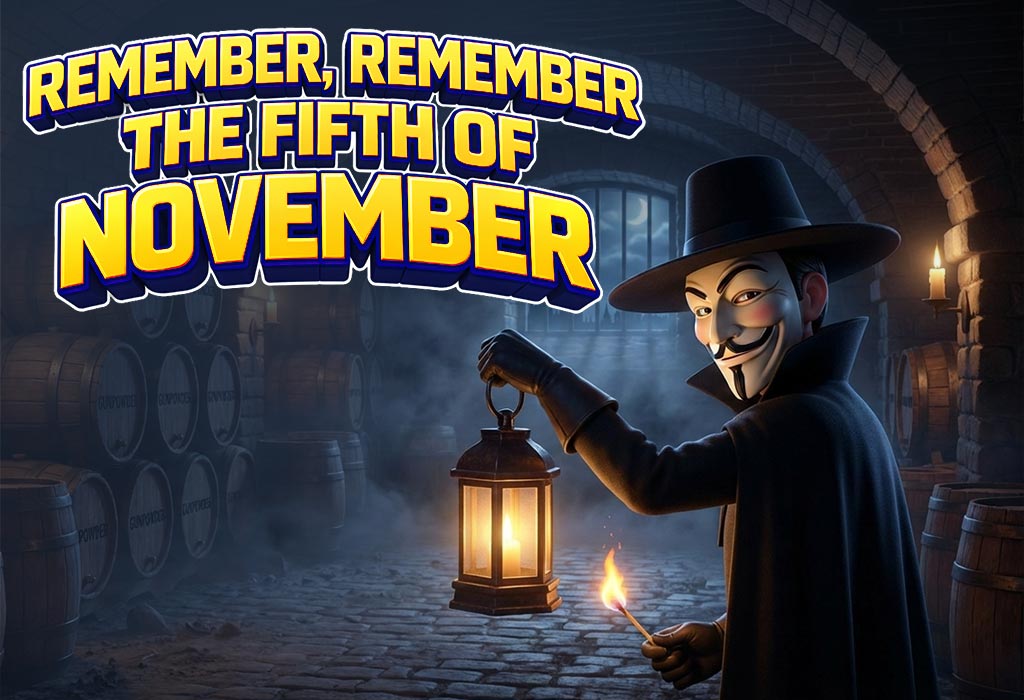
“The Fifth of November” is a traditional English nursery rhyme that talks about Bonfire Night, a historic day remembered in the UK with lights, fireworks, and storytelling. Children enjoy this rhyme because of its strong rhythm, repeated lines, and dramatic storytelling style, which make it easy to remember and fun to recite aloud. The rhyme sparks curiosity as it hints at an important event from history in a simple, sing-song way. For early learners, it helps build listening skills, memory, and an understanding of rhythm and rhyme. Parents and teachers often use it to introduce children to cultural traditions while encouraging clear speech, expressive reading, and confidence through group recitation and playful learning.
The Fifth of November Song Lyrics
These The Fifth of November words are traditionally recited to help children remember the rhyme and its meaning in a simple and rhythmic way.
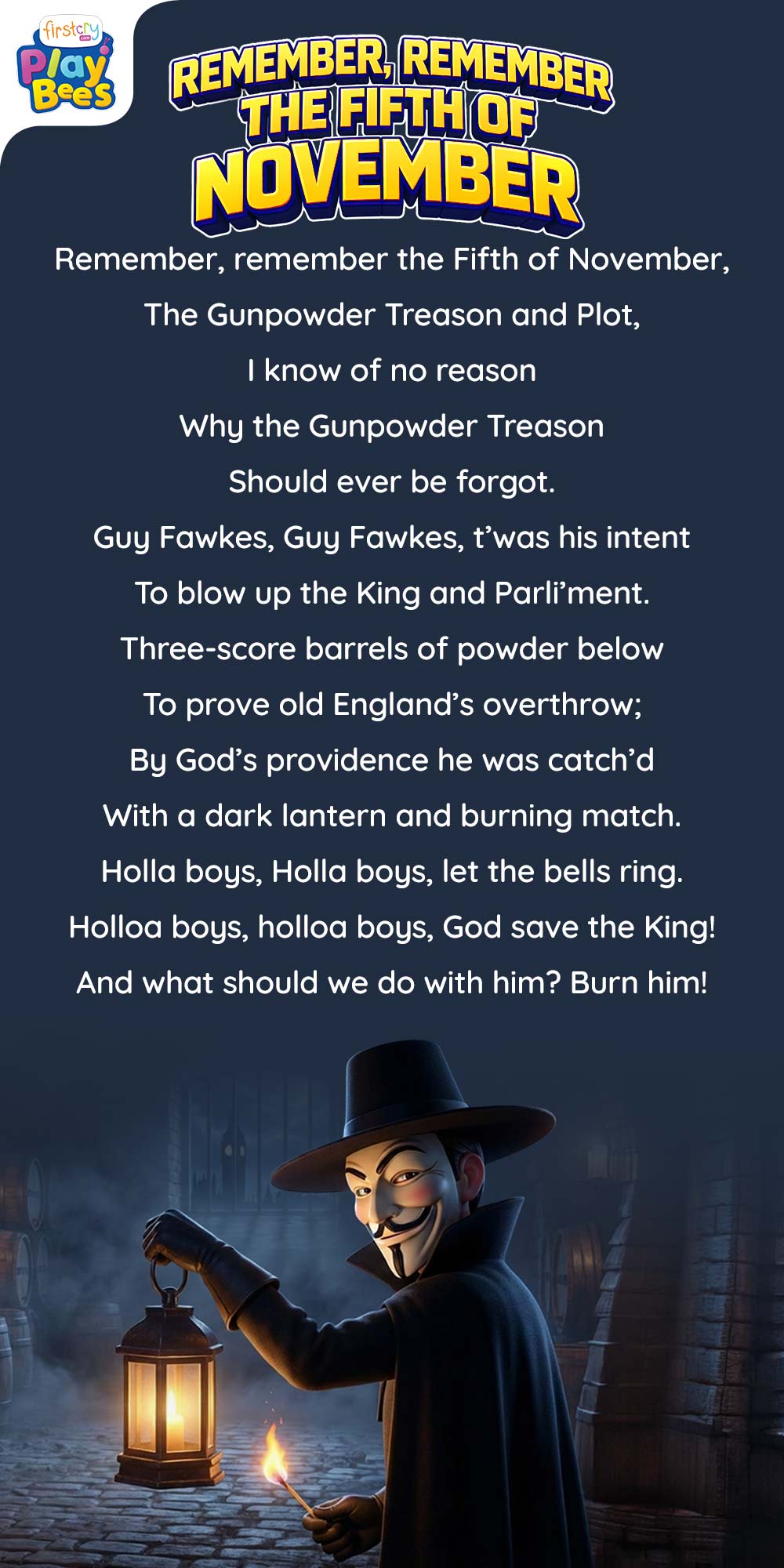
“Remember, Remember the Fifth of November” Lyrics
Remember, remember the Fifth of November,
The Gunpowder Treason and Plot,
I know of no reason
Why the Gunpowder Treason
Should ever be forgot.
Guy Fawkes, Guy Fawkes, t’was his intent
To blow up the King and Parli’ment.
Three-score barrels of powder below
To prove old England’s overthrow;
By God’s providence he was catch’d
With a dark lantern and burning match.
Holla boys, Holla boys, let the bells ring.
Holloa boys, holloa boys, God save the King!
And what should we do with him? Burn him!
“Please to Remember” Original version
Please to remember,
The Fifth of November,
Gunpowder, treason and plot;
I see no reason why gunpowder treason
Should ever be forgot.
A popular children’s version to commemorate the 5th of November
Guy, guy, guy
Poke him in the eye,
Put him on the bonfire,
And there let him die.
Other Versions of the The Fifth of November Song
Over time, this rhyme has been passed down in slightly different forms, especially through oral tradition.
1. Traditional Long Version (Classic Bonfire Rhyme)
This is the most complete and widely recited version, often taught in schools and shared during Bonfire Night celebrations.
The fifth of November,
The Gunpowder Treason and Plot;
I know of no reason
Why the Gunpowder Treason
Should ever be forgot.
Guy Fawkes, Guy Fawkes,
’Twas his intent
To blow up the King and Parliament.
Three-score barrels of powder below,
Poor old England to overthrow.
By God’s providence, he was catch’d
With a dark lantern and burning match.
Holla boys, holla boys, let the bells ring,
Holla boys, holla boys, God save the King.
2. Shortened Children’s Version
This version is often used for younger children as it is easier to remember and recite.
The fifth of November,
The Gunpowder Treason and Plot.
I know of no reason
Why the Gunpowder Treason
Should ever be forgot.
3. Modern Simplified Version
A simplified form sometimes used in classrooms to focus on rhythm rather than history details.
Remember, remember the fifth of November,
Gunpowder, treason, and plot.
We see no reason
Why this old season
Should ever be forgot.
4. Chant Version (Group Recitation)
This version is commonly chanted aloud during Bonfire Night events and group activities.
Remember, remember,
The fifth of November,
Gunpowder, treason, and plot.
Guy Fawkes was caught,
And England forgot not.
Gestures – How to Teach The Fifth of November to Kids
Teaching this rhyme with actions makes it more engaging and easier for children to remember. Simple movements also help improve coordination and listening skills.
- Hold up five fingers while saying “The fifth of November” to help children connect the rhyme with numbers and dates.
- Pretend to ring bells with hand motions during “let the bells ring” to add sound-based movement.
- March in place to represent soldiers or guards, helping children feel the story in motion.
- Cup hands like holding a lantern to act out “dark lantern,” making the words more visual.
- Point downward when saying “barrels of powder below” to show direction and meaning.
- Raise hands happily at “God save the King” to end the rhyme on a positive, energetic note.
History & Quick Facts
“The Fifth of November” rhyme originated in England in the early 17th century after the failed Gunpowder Plot of 1605, a plan to blow up the English Parliament. The rhyme is traditionally linked to Guy Fawkes, one of the plotters. It was passed down orally before appearing in print in later centuries, helping people remember the event year after year. Over time, it became a well-known children’s rhyme, especially recited around Bonfire Night celebrations on November 5th.
Interesting Facts
- The rhyme is closely connected to Bonfire Night, which is still celebrated in the UK with fireworks and bonfires.
- It has been taught to children for generations as a memory rhyme for a historical event.
- Many versions exist because it was shared orally long before being written down.
- The tune is more like a chant than a song, making it easy for group recitation.
- Parts of the rhyme are sometimes shortened for very young children.
- The rhyme has appeared in books, schools, and cultural programs focused on British history.
Suitable Age & Learnings
This rhyme is generally suitable for children aged 4 to 8 years, depending on how it is explained and taught. It works best when paired with simple context and actions.
- Rhyming skills develop as children hear repeated sounds and patterned lines.
- Listening and memory improve when kids recite the rhyme together.
- Historical awareness begins as children learn that the rhyme is based on a real event.
- Vocabulary growth happens with words like lantern, bells, and powder explained simply.
- Confidence building is supported through group singing or recitation.
- Cultural learning helps children understand traditions celebrated in other countries.
FAQs
1. What is the rhyming scheme of The Fifth of November?
The rhyme mainly follows an AABCCB pattern, making it rhythmic and easy to remember.
2. Is The Fifth of November suitable for young children?
Yes, when taught with simple explanations and gestures, it is appropriate for early learners.
3. Why is this rhyme often taught in schools?
It combines rhythm, history, and cultural learning in a short and memorable format.
“The Fifth of November” nursery rhyme is more than just a traditional verse, it is a gentle introduction to history through rhythm and storytelling. Its strong beat and memorable lines make it enjoyable for children to learn and recite. With simple gestures and age-appropriate explanations, parents and teachers can turn it into a fun learning activity. The rhyme supports early language development while sparking curiosity about cultural traditions. Over generations, it has remained popular because of its simplicity and meaning. Sharing this rhyme helps keep a piece of history alive in a way children can understand and enjoy.
Explore Other Rhymes for Kids:
Oh Mr Sun Nursery Rhyme With Lyrics
Solomon Grundy Nursery Rhyme With Lyrics
Sing a Song of Sixpence Nursery Rhyme With Lyrics