
Table of Contents
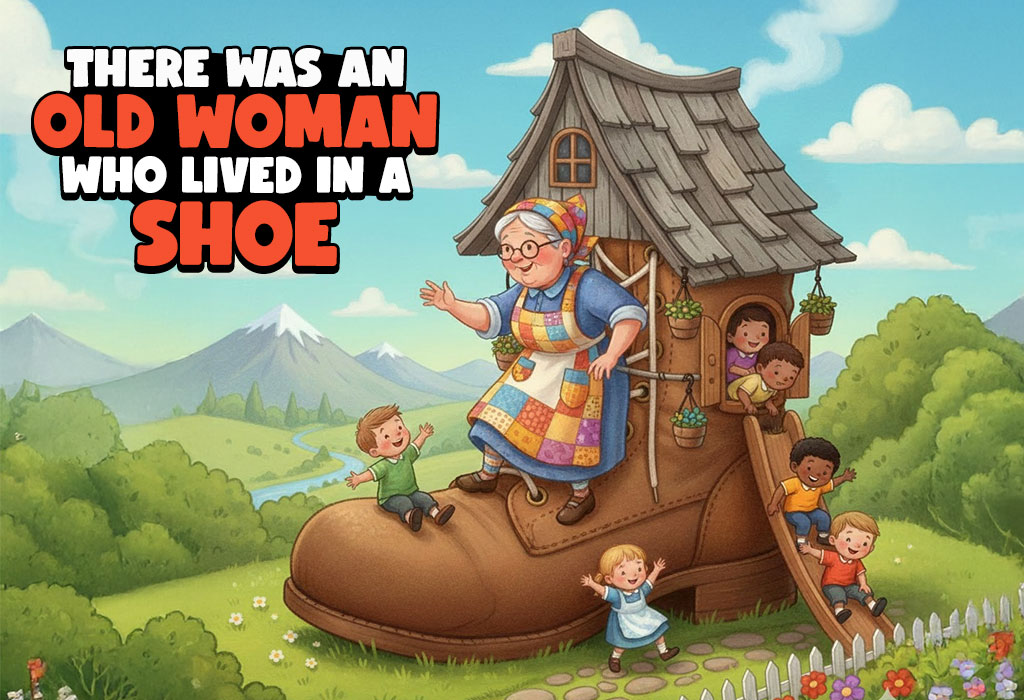
“There was an Old Woman Who Lived in a Shoe” is a classic nursery rhyme that tells a humorous and slightly surprising story of an old woman with many children living together in a shoe. Children enjoy this rhyme because of its playful imagery, easy rhythm, and memorable lines that are fun to repeat aloud. The idea of a shoe being used as a house sparks imagination and makes little ones curious and engaged. For early learners, this rhyme supports listening skills, language development, and early storytelling understanding. Its simple structure helps children recognize patterns in words and sounds, while the story encourages discussion about family, care, and daily routines. Parents and teachers often use this rhyme to introduce rhyming words and expressive reading in a light, enjoyable way.
There was an Old Woman Who Lived in a Shoe Song Lyrics
This well-known rhyme is often shared during story time, and the There was an Old Woman Who Lived in a Shoe words are easy for children to follow and remember.
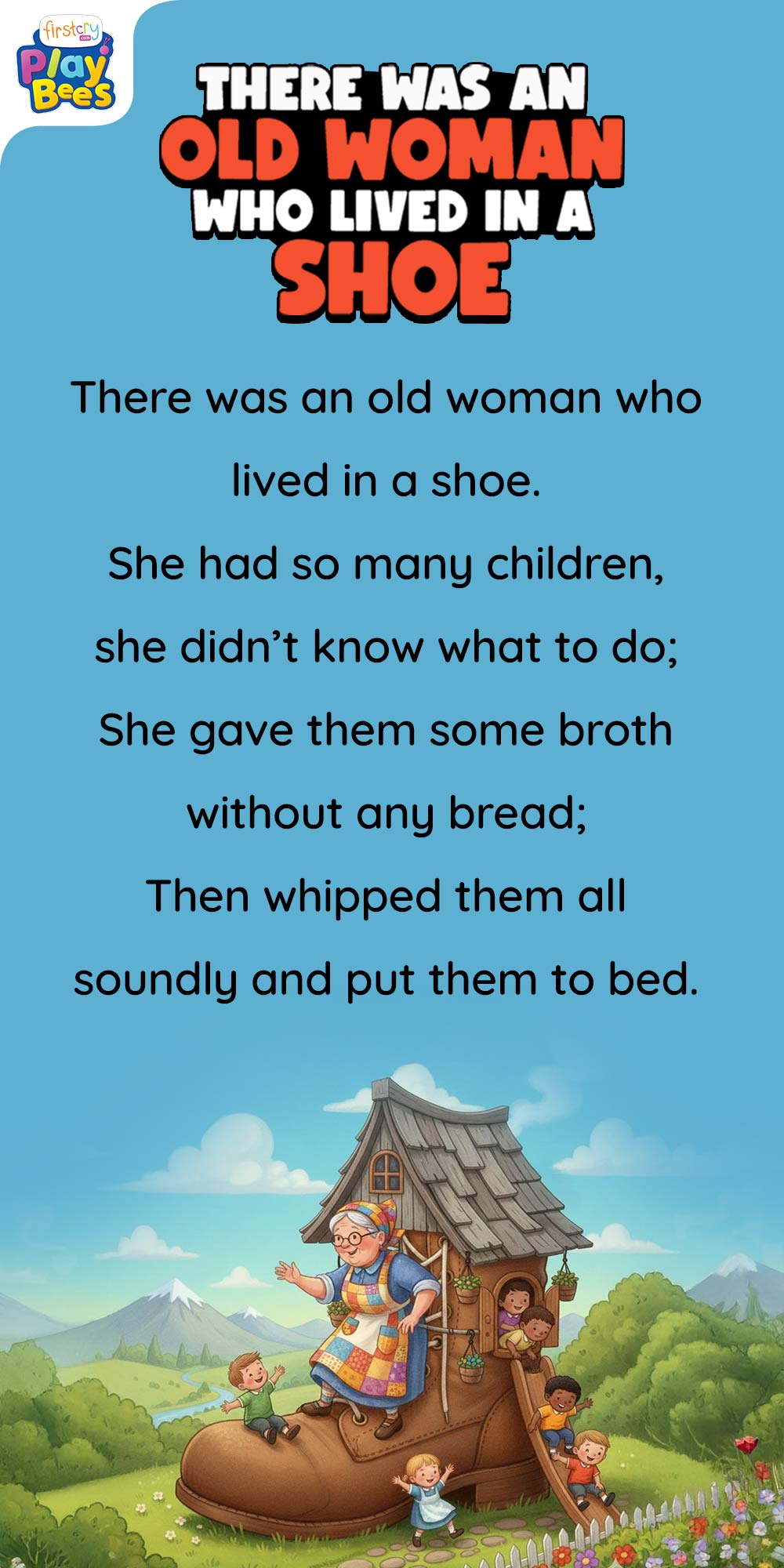
There was an old woman who lived in a shoe.
She had so many children, she didn’t know what to do;
She gave them some broth without any bread;
Then whipped them all soundly and put them to bed.
Other Versions of the There was an Old Woman Who Lived in a Shoe Song
The rhyme has appeared in different versions over the years, with some adaptations softening the ending or adding extra verses to make it more child-friendly for modern audiences.
There was an old woman who lived in a shoe,
She had so many children and knew what to do.
She fed them with soup and plenty of bread,
She tucked them in warmly and sent them to bed.
Gestures – How to Teach There was an Old Woman Who Lived in a Shoe to Kids
Using actions makes the rhyme more engaging and helps children remember the lines through movement and play. Simple gestures also support coordination and active participation during group learning.
- Point downward with both hands to show the “shoe” as a house while saying the opening line.
- Hold up several fingers and look around in a playful way to act out “so many children.”
- Shrug shoulders and spread hands to show “didn’t know what to do.”
- Pretend to stir a bowl and offer it forward to show giving the children broth.
- Gently wag a finger to reflect discipline in a symbolic, non-scary way.
- Place hands together near the cheek and tilt the head to act out going to bed.
History & Quick Facts
“There was an Old Woman Who Lived in a Shoe” is an English nursery rhyme that dates back to the late 18th century. It was first published in 1794 in Gammer Gurton’s Garland, a popular collection of traditional rhymes. Like many nursery rhymes, the author is unknown, and the verse was passed down orally before being printed. Over time, it became widely popular in children’s books and classrooms due to its catchy rhythm and memorable imagery, making it a lasting part of early childhood literature.
Interesting Facts
- The rhyme was first recorded in Gammer Gurton’s Garland, one of the earliest nursery rhyme collections.
- The “shoe house” is believed to represent overcrowded living conditions in older times.
- Many modern versions soften the ending to better suit today’s parenting values.
- The rhyme has been illustrated by numerous famous children’s book artists.
- It has been translated into several languages and shared worldwide.
- The verse is often used to teach rhythm and sequencing in early education.
Suitable Age & Learnings
This rhyme is best suited for children aged 2 to 5 years, as the language and rhythm are simple and engaging for early learners. It supports both fun listening and meaningful learning experiences during early childhood.
- Children improve their ability to focus and follow along as they listen to the rhyme from start to finish.
- The rhyme introduces simple words like broth, whipped, and bed, helping expand everyday vocabulary in a natural way.
- Repeating rhyming words helps children notice sound patterns, supporting early phonics and language development.
- The playful idea of living in a shoe encourages imagination and creative thinking.
- Repetition in the verses helps strengthen memory and recall skills.
- The story gently introduces ideas about family life, care, and routines that children can understand and relate to.
FAQs
1. What is the rhyming scheme of There was an Old Woman Who Lived in a Shoe?
The rhyme follows an AABB rhyming scheme, where pairs of lines rhyme together.
2. Can this rhyme be used in classroom activities?
Yes, it works well for group singing, action-based learning, and discussions about family, routines, and emotions in early classrooms.
“There was an Old Woman Who Lived in a Shoe” remains a timeless nursery rhyme that continues to amuse and teach young children. Its playful story and strong rhythm make it easy for kids to enjoy and remember. Through listening and actions, children build early language and comprehension skills naturally. Parents and educators can also use the rhyme to spark conversations and creative play. Over generations, this simple verse has held a special place in childhood learning. Sharing it today keeps a classic tradition alive while supporting joyful early education.
Explore Other Rhymes for Kids:
This Old Man Nursery Rhyme With Lyrics
The Farmer in the Dell Nursery Rhyme With Lyrics
There Was an Old Lady Who Swallowed a Fly Nursery Rhyme With Lyrics