
Table of Contents
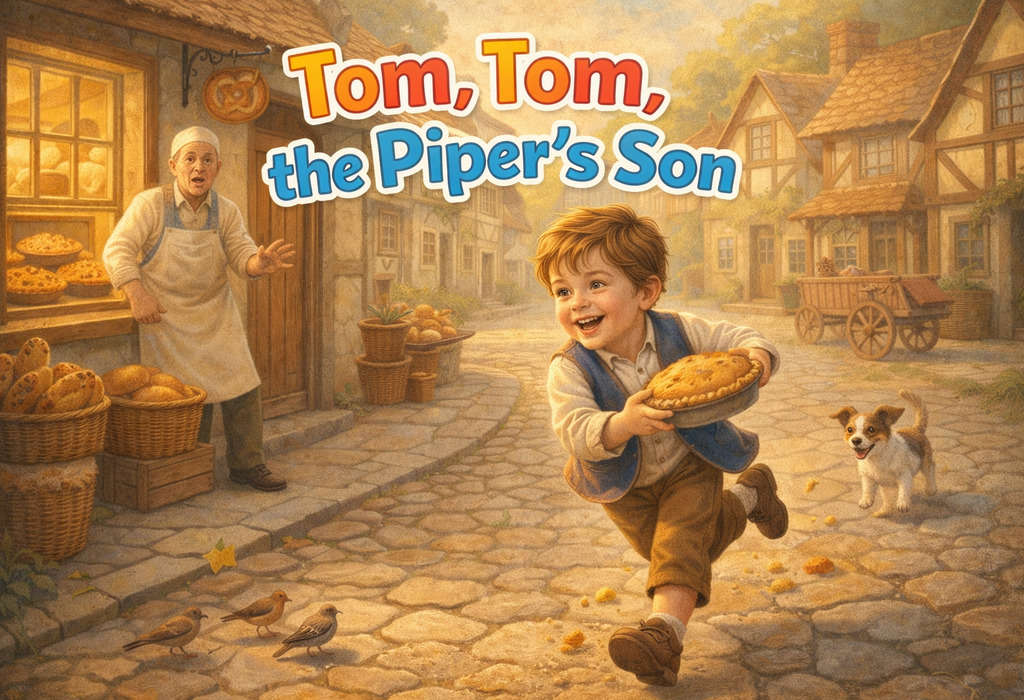
A playful story filled with rhythm and a bit of mischief, this classic nursery rhyme tells the tale of a boy named Tom who takes a pig and runs away. Its catchy tune and simple storyline make it easy for children to remember and enjoy. Young kids are naturally drawn to its repetitive words and lively flow, which makes singing along fun and engaging. For parents and teachers, it offers a gentle way to introduce storytelling, rhythm, and early language skills. The rhyme also sparks imagination as children picture the playful chase. Overall, it is a delightful addition to early learning that combines fun with important developmental benefits.
Tom, Tom, the Piper’s Son Lyrics
This well-known rhyme is loved for its rhythm and storytelling, and here are the Tom, Tom, the Piper’s Son words that children enjoy singing.
Tom, Tom, the piper’s son,
Stole a pig, and away did run;
The pig was eat
And Tom was beat,
And Tom went crying [or “roaring”, or “howling”, in some versions]
Down the street.
Other Versions of Tom, Tom, the Piper’s Son Song
This rhyme has a few alternate versions that vary slightly in wording and ending.
Version 1
Tom, Tom, the piper’s son,
Stole a pig and away did run;
The pig was eat and Tom was beat,
And Tom went crying down the street.
Version 2
Tom, Tom, the piper’s son,
Stole a pig and away he run;
The pig was eat, and Tom was beat,
And Tom went howling down the street.
Gestures – How to Teach Tom, Tom, the Piper’s Son to Kids
Using simple actions can make this rhyme more engaging and easier for children to remember. These gestures help bring the story to life while keeping kids active and involved.
- Pretend to play a pipe by holding hands near the mouth as if playing a flute to introduce Tom the piper’s son.
- Act like sneaking by tiptoeing in place when saying “stole a pig” to show Tom being mischievous.
- Run gently in place when saying “away he run” to match the action in the rhyme.
- Use hands to mimic eating when saying “the pig was eat” to make the line more expressive.
- Lightly tap hands on thighs for “Tom was beat” to show the consequence in a playful, non-scary way.
- Pretend to cry or wipe tears while walking in place during “roaring down the street” to act out the ending.
History & Quick Facts
This traditional English nursery rhyme dates back to at least the early 19th century and is believed to have been part of oral storytelling before being written down. It appeared in early collections of nursery rhymes in Britain, though no single author is credited. The rhyme reflects simple storytelling with a moral hint about consequences for mischief. Over time, it became popular in homes and schools due to its catchy rhythm and easy memorization, making it a lasting favorite in children’s literature.
Interesting Facts
- This rhyme is considered a cautionary tale that gently teaches children about right and wrong through storytelling.
- The character of Tom is often portrayed as playful rather than naughty, making the rhyme light-hearted for kids.
- It has been included in many classic nursery rhyme collections across the UK and beyond.
- The tune is often adapted, so it may sound slightly different depending on where it is sung.
- Variations of the rhyme exist, showing how it has evolved through oral tradition over time.
- It is frequently used in early education to teach rhythm, rhyme patterns, and storytelling basics.
Suitable Age & Learnings
This rhyme is best suited for children aged 2 to 6 years, as its simple words and rhythm are easy for young learners to follow. It supports early childhood development by combining fun actions with language learning.
- Children learn basic storytelling skills as they follow the sequence of events in the rhyme.
- It helps improve listening and memory skills through repetition and rhythm.
- Kids are introduced to new vocabulary like “piper” and “roaring,” expanding their word knowledge.
- The rhyme teaches simple cause-and-effect understanding through Tom’s actions and consequences.
- Action-based learning through gestures improves coordination and motor skills.
- Singing together encourages social interaction and builds confidence in group settings.
FAQs
1. What is the rhyming scheme of Tom, Tom, the Piper’s Son?
The rhyme follows a simple AABB pattern, making it easy for children to recognize and remember.
2. Is Tom, Tom, the Piper’s Son suitable for toddlers?
Yes, it is suitable for toddlers as it has simple words, a short length, and can be made fun with actions.
3. What does the rhyme teach children?
It teaches basic storytelling, rhythm, vocabulary, and a gentle lesson about consequences in a playful way.
Classic nursery rhymes like this one continue to charm children with their simple stories and musical rhythm. The playful tale of Tom captures attention while also encouraging imagination and participation. With easy actions and repeatable lines, it becomes a fun group activity for both home and classroom settings. Parents and teachers can use it as a tool to build language skills and confidence in young learners. Its timeless nature ensures that each new generation can enjoy and learn from it. Overall, it remains a delightful and meaningful rhyme that blends fun with early education.