
Table of Contents
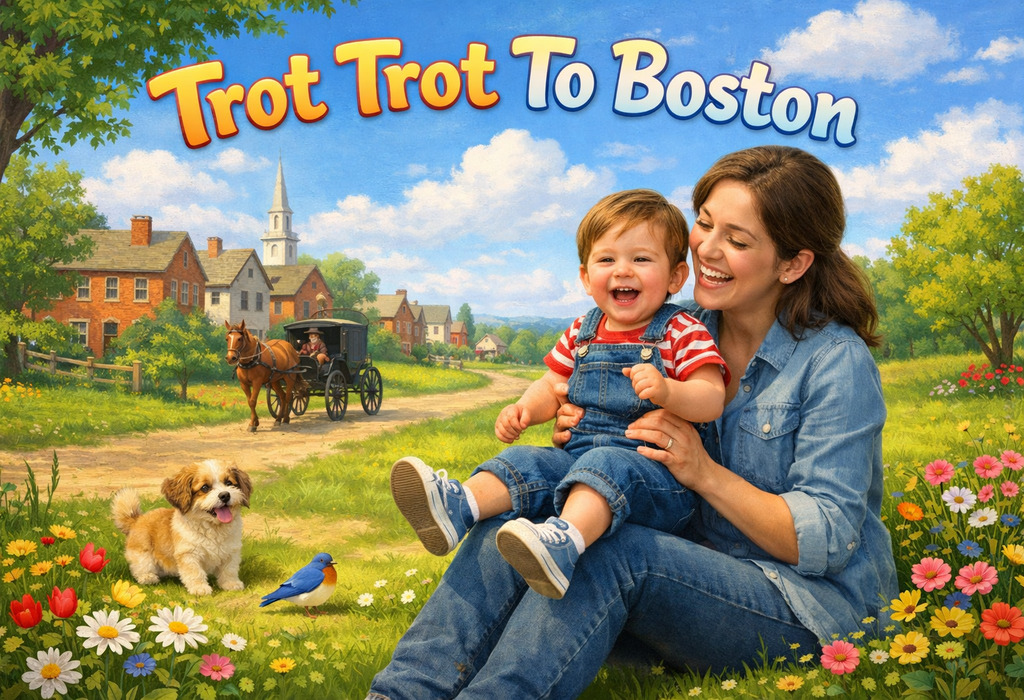
Trot Trot to Boston is a playful and rhythmic nursery rhyme that children love for its gentle bouncing motion and surprise ending. It is often recited while a child sits on a parent’s lap, making it a fun bonding activity filled with giggles. The rhyme tells a simple story of a horse ride to Boston, ending with a playful “fall,” which adds excitement and anticipation. Kids enjoy its repetition and rhythm, which make it easy to remember and recite. For early learners, it supports listening skills, rhythm recognition, and language development. It also encourages interaction, helping children connect words with actions in a joyful and engaging way.
Trot Trot To Boston Song Lyrics
Here are the popular Trot Trot To Boston words that children enjoy reciting with actions:
Trot trot to Boston,
Trot trot to Lynn,
Watch out little baby,
Or you might fall in!
Other Versions of Trot Trot To Boston Song
This rhyme has a few playful variations that change place names or endings slightly.
Trot, trot to Boston,
Trot, trot to Dover,
Watch out, little baby,
Or you might fall over.
Trot, trot to Boston,
Trot, trot to town,
Watch out, little baby,
Or you might fall down.
Gestures – How to Teach Trot Trot To Boston to Kids
Teaching this rhyme with actions makes it more fun and helps children understand the rhythm and meaning. Simple movements keep kids engaged and active.
- Sit the child on your lap and gently bounce your knees up and down to match the rhythm of “trot trot.”
- Hold the child securely and maintain eye contact to make them feel safe and involved during the rhyme.
- Slightly increase the bounce as you say “to Boston” to build excitement in the movement.
- Add a playful tone when saying “watch out” to create anticipation and curiosity.
- Gently tilt the child to one side at “fall in” to create a fun surprise moment.
- Repeat the rhyme a few times so the child can anticipate the actions and try to join in.
History & Quick Facts
Trot Trot to Boston is a traditional English nursery rhyme that has been passed down through generations. Its exact author and date of origin are unknown, as it comes from oral storytelling traditions rather than written records. The rhyme likely developed as a playful lap game used by parents and caregivers to entertain young children. Over time, it became popular in English-speaking countries and was included in collections of nursery rhymes. Its simple structure and interactive nature helped it remain widely loved and used in early childhood learning.
Interesting Facts
- This rhyme is often used as a lap bouncing game, making it both a song and a physical activity.
- The mention of Boston and Lynn reflects real place names, adding a sense of familiarity and geography.
- It is commonly adapted with different town names depending on the region.
- The “fall in” or “fall down” ending creates a playful surprise that children look forward to.
- The rhyme has been passed orally for many years, so there is no single official version.
- It is widely used in early childhood settings like preschools and playgroups for interactive learning.
Suitable age & Learnings
This rhyme is best suited for toddlers and preschoolers aged 1 to 5 years, as it combines movement with simple language. It supports early learning in a fun and engaging way through rhythm and interaction.
- Children develop listening skills as they follow the rhythm and anticipate the ending of the rhyme.
- It improves motor coordination through bouncing and movement-based actions.
- Kids learn basic vocabulary such as place names and action words like “trot” and “fall.”
- The rhyme encourages emotional bonding through close interaction with caregivers.
- Repetition helps strengthen memory and recall abilities in young learners.
- It introduces early rhythm and sound patterns, supporting language development.
FAQs
1. What is the rhyming scheme of Trot Trot To Boston?
The rhyme follows a simple AABB pattern, making it easy for children to remember and recite.
2. Why do kids enjoy Trot Trot To Boston?
Children enjoy it because of the bouncing motion and the playful surprise ending, which creates excitement and laughter.
3. Can this rhyme be used for learning activities?
Yes, it is great for teaching rhythm, coordination, and basic vocabulary while also encouraging parent child bonding.
Trot Trot to Boston is a delightful nursery rhyme that combines rhythm, movement, and fun in a simple yet engaging way. Its interactive nature makes it perfect for bonding moments between parents and children. The playful actions and predictable pattern keep kids interested and eager to participate. Beyond entertainment, it supports important early learning skills like coordination, listening, and memory. Its timeless charm shows how simple rhymes can create meaningful learning experiences. Introducing this rhyme to young children can bring joy, laughter, and valuable developmental benefits.