
Table of Contents
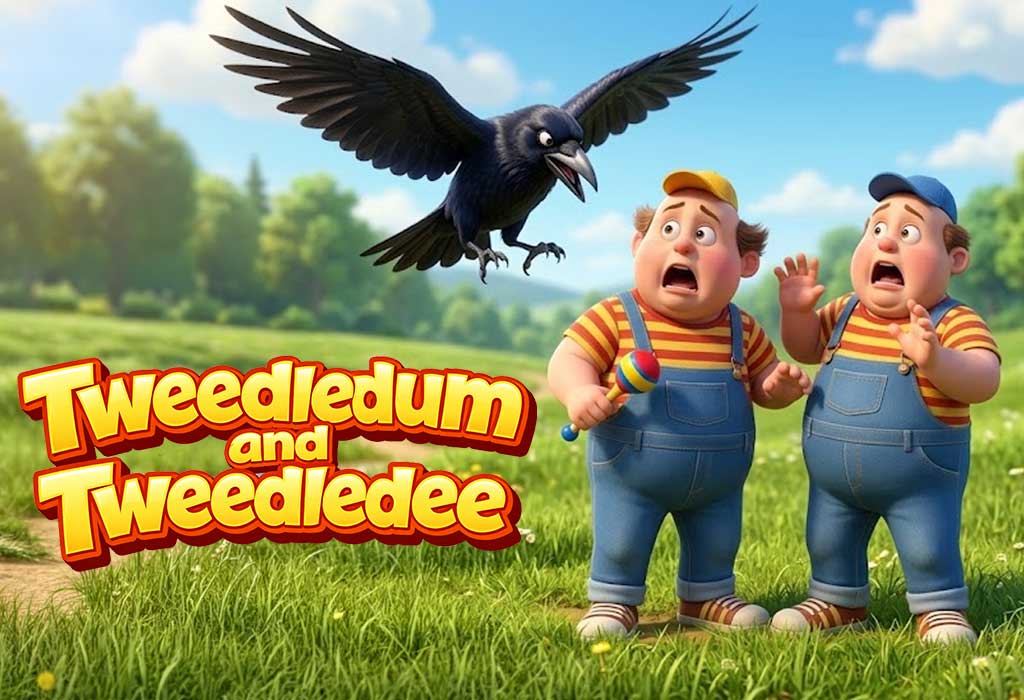
“Tweedledum and Tweedledee” is a playful and rhythmic nursery rhyme about two characters who look alike and often argue with each other. The rhyme follows their funny disagreement that leads to a comical situation involving a crow that interrupts their quarrel. Children enjoy this rhyme because of its lively rhythm, repetitive lines, and amusing storytelling. The characters are easy for kids to imagine, which makes the rhyme fun to act out and perform with gestures. For young learners, this rhyme also introduces simple storytelling, new vocabulary, and listening skills. Parents and teachers often use it during rhyme time to encourage expression, memory building, and rhythm recognition. Its playful tone and short verses make it perfect for group recitation in classrooms, playgroups, and at home.
Tweedledum and Tweedledee Song Lyrics
These classic Tweedledum and Tweedledee words tell a humorous story of two look alike characters who cannot agree with each other.
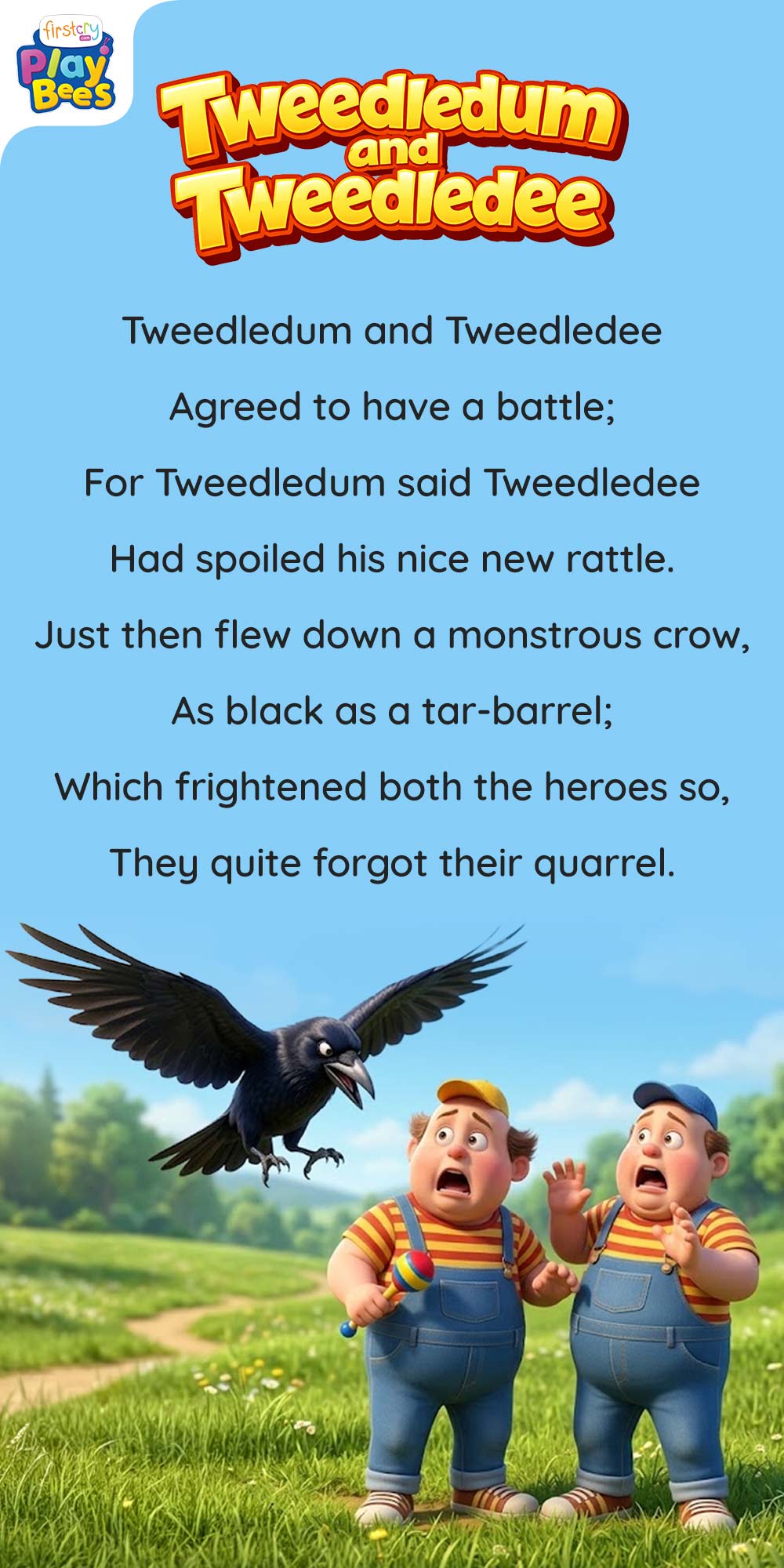
Tweedledum and Tweedledee
Agreed to have a battle;
For Tweedledum said Tweedledee
Had spoiled his nice new rattle.
Just then flew down a monstrous crow,
As black as a tar-barrel;
Which frightened both the heroes so,
They quite forgot their quarrel.
Other Versions of Tweedledum and Tweedledee Song
Some versions of the rhyme include small variations in wording or extra playful lines added during storytelling or classroom singing.
1. Classic Variation of the Rhyme
“Tweedledum and Tweedledee
Resolved to have a battle,
Because Tweedledum said Tweedledee
Had spoiled his pretty rattle.
But when a giant crow flew down
As black as tar or coal,
The frightened pair forgot their fight
And quickly lost control.”
2. Extended Story of the Rhyme
“Tweedledum and Tweedledee
Went out to fight together,
Because they could not both agree
About a tiny feather.
But when the crow came flying down
And flapped its wings so wide,
The two forgot their silly fight
And quickly ran aside.”
Gestures – How to Teach Tweedledum and Tweedledee to Kids
Using simple actions helps children remember the rhyme and makes the story more engaging during rhyme time.
- Point to two friends and say “Tweedledum and Tweedledee” while asking two children to stand side by side and pretend to be the two characters.
- Pretend to argue playfully by gently shaking your finger during the line about agreeing to have a battle to show the disagreement.
- Shake an imaginary rattle in your hand while saying “spoiled his nice new rattle” so children understand the reason for the argument.
- Spread your arms like wings when the crow appears to show the big bird flying down from the sky.
- Act scared and step back to demonstrate how the crow frightened the two characters in the rhyme.
- Smile and shake hands at the end to show how they forgot their quarrel and stopped fighting.
History & Quick Facts
The rhyme “Tweedledum and Tweedledee” is believed to have been inspired by an epigram written by English poet John Byrom in the early 1700s. The rhyme humorously described a musical argument between composers George Frideric Handel and Giovanni Bononcini. Over time, the playful lines evolved into a children’s rhyme and became widely known through nursery rhyme collections. The characters gained even more popularity after appearing in Lewis Carroll’s book Through the Looking Glass in 1871, where Tweedledum and Tweedledee were portrayed as identical twins. Since then, the rhyme has remained a favorite in children’s literature and storytelling.
Interesting Facts
- The rhyme originally referred to a real musical debate between two famous composers in the 18th century.
- Tweedledum and Tweedledee later became well known characters in Lewis Carroll’s famous Alice stories.
- The rhyme is often used in storytelling because it shows how silly arguments can quickly disappear.
- Many schools use this rhyme for acting games where two children play the characters.
- The characters are usually shown wearing matching outfits to emphasize how similar they are.
- The rhyme has been translated and adapted in many countries for children’s books and songs.
Suitable Age & Learnings
“Tweedledum and Tweedledee” is most suitable for children between 3 and 7 years old, as the rhyme is short, rhythmic, and easy to remember. It supports early learning through storytelling, rhythm, and imaginative play.
- Listening skills improve as children follow the short story and understand what happens in each line.
- Vocabulary development happens when kids learn new words such as quarrel, battle, and rattle.
- Memory skills grow when children repeat the rhyme and remember the sequence of events.
- Story comprehension develops as kids learn how the problem begins and how it ends.
- Creative expression increases when children act out the characters and the crow in the rhyme.
- Social learning occurs when kids understand that arguments can sometimes end quickly and peacefully.
FAQs
1. What is the rhyming scheme of Tweedledum and Tweedledee?
The rhyme follows an A B A B pattern, where alternating lines rhyme with each other.
2. Why do kids enjoy the Tweedledum and Tweedledee rhyme?
Children enjoy the rhyme because it tells a funny story with simple characters and playful rhythm that is easy to act out.
3. How can parents make this rhyme more engaging for kids?
Parents can use gestures, funny voices, and simple role play so children can pretend to be Tweedledum, Tweedledee, and the crow.
“Tweedledum and Tweedledee” is a charming nursery rhyme that combines humor, rhythm, and storytelling in a way children easily enjoy. The simple story of two characters arguing and then forgetting their quarrel makes the rhyme entertaining and memorable. With its playful tone, it encourages kids to listen carefully and imagine the scene in their minds. Adding gestures and role play makes the learning experience even more interactive. The rhyme also introduces children to storytelling and new vocabulary in a gentle way. Because of its short length and fun characters, it remains a favorite choice for parents, teachers, and early learners.
Explore Other Rhymes for Kids:
Ten In The Bed Nursery Rhyme With Lyrics
One, Two, Buckle My Shoe Nursery Rhyme With Lyrics
Five Little Monkeys Swinging in a Tree Nursery Rhyme With Lyrics