
Table of Contents
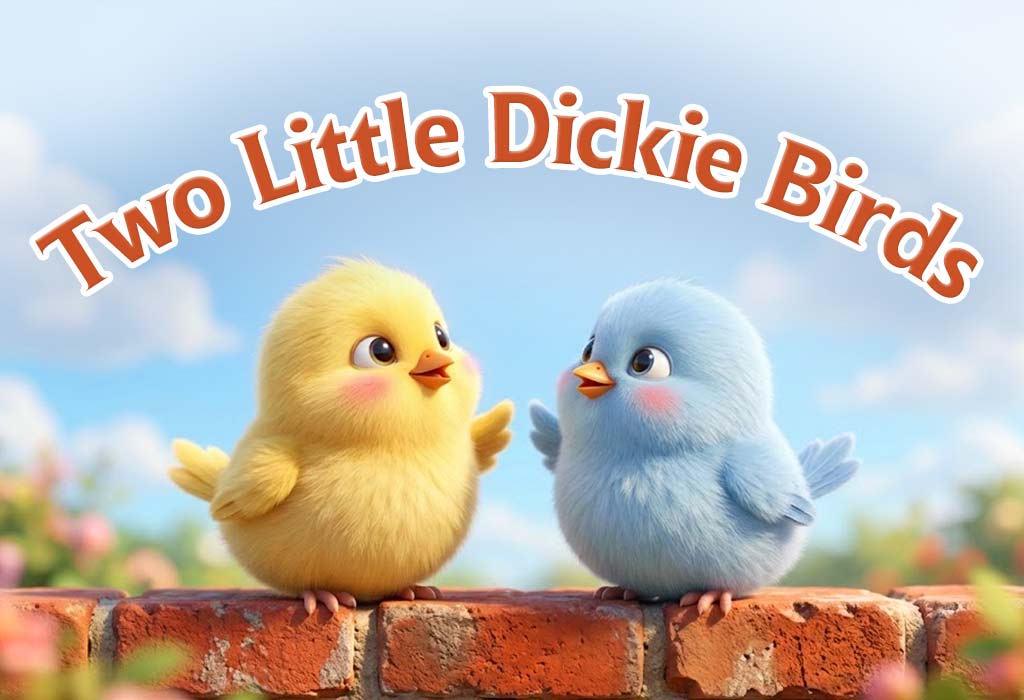
Two Little Dickie Birds is a sweet and simple nursery rhyme about two little birds sitting on a wall and flying away one by one. With easy actions and repeating lines, it quickly captures children’s attention and makes them giggle. Little ones love using their fingers to act as the birds, which turns the rhyme into a fun hand play activity. The gentle rhythm and repetition make it easy to remember and recite. For parents and teachers, this rhyme is a wonderful early learning tool. It helps children improve listening skills, hand eye coordination, and memory. It also introduces simple concepts like opposites and basic vocabulary. Short, playful, and interactive, this rhyme remains a favorite for toddlers and preschoolers.
Two Little Dickie Birds Song Lyrics
Enjoy singing the classic Two Little Dickie Birds words with your little ones as you follow along with the actions below.
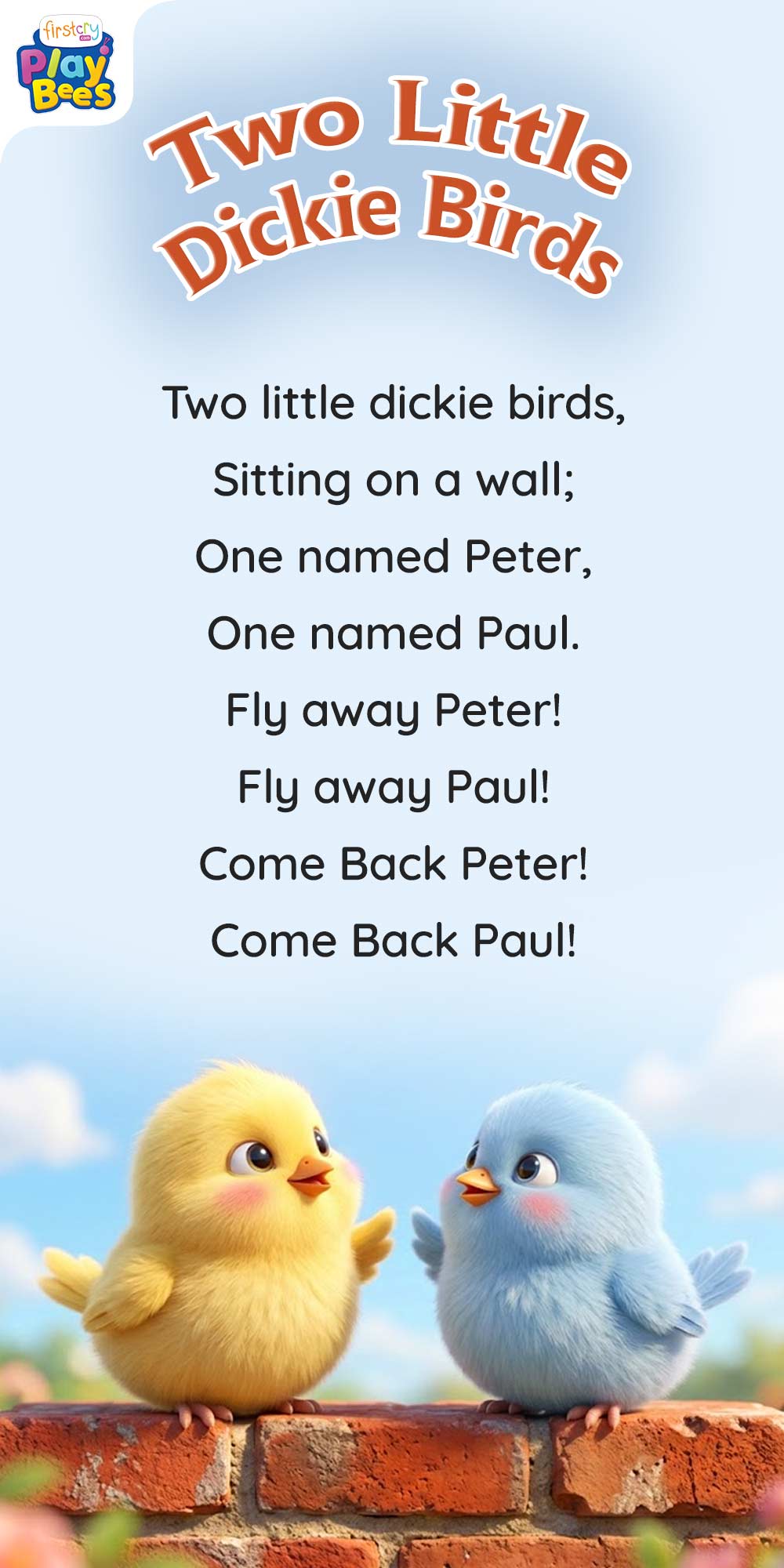
Two little dickie birds,
Sitting on a wall;
One named Peter,
One named Paul.
Fly away Peter!
Fly away Paul!
Come Back Peter!
Come Back Paul!
Other Versions of Two Little Dickie Birds Song
Many playful versions of this rhyme replace the birds’ names or the wall to make it more exciting for children.
1. Two Little Dickie Birds Sitting on a Cloud
Two little dickie birds sitting on a cloud,
One named Soft, one named Loud,
Fly away Soft,
Fly away Loud,
Come back Soft,
Come back Loud.
2. Two Little Dickie Birds Sitting on a Gate
Two little dickie birds sitting on a gate,
One named Early, one named Late,
Fly away Early,
Fly away Late,
Come back Early,
Come back Late.
3. Two Little Dickie Birds Sitting on a Tree
Two little dickie birds sitting on a tree,
One named Fast, one named Slow,
Fly away Fast,
Fly away Slow,
Come back Fast,
Come back Slow.
4. Two Little Dickie Birds Sitting on a Hill
Two little dickie birds sitting on a hill,
One named Jack, one named Jill,
Fly away Jack,
Fly away Jill,
Come back Jack,
Come back Jill.
Gestures – How to Teach Two Little Dickie Birds to Kids
This rhyme becomes even more enjoyable when children act it out with simple hand movements. Using gestures keeps young learners engaged and makes the words easier to remember.
- Hold up both index fingers in the air and wiggle them gently to represent the two little birds.
- Move your fingers side by side and pretend they are sitting quietly on an imaginary wall.
- When saying “Fly away Peter,” hide one hand behind your back to show the bird flying away.
- When saying “Fly away Paul,” hide the other hand behind your back as well.
- Bring one hand back in front when saying “Come back Peter” to show the bird returning.
- Finally, bring the second hand back when saying “Come back Paul” and wiggle both fingers again happily.
History & Quick Facts
Two Little Dickie Birds is a traditional English nursery rhyme that dates back to the nineteenth century. Like many classic rhymes, its exact author is unknown. It was commonly shared through oral storytelling before appearing in printed nursery rhyme collections in the late 1800s. The rhyme became popular because it is short, easy to remember, and perfect for finger play activities. Over time, teachers and parents used it in homes and classrooms to help young children develop coordination and listening skills. Today, it remains a well loved rhyme across many English speaking countries.
Interesting Facts
- The rhyme is often used as a finger play activity, which helps children connect movement with words.
- The names Peter and Paul are traditional choices, but many families change them for fun.
- It is commonly taught in preschools because it supports memory through repetition.
- The rhyme has been translated into different languages while keeping the same actions.
- Many parents use it as a quick warm up song before story time or lessons.
- Its simple tune allows it to be sung in different melodies depending on regional preferences.
Suitable Age & Learnings
Two Little Dickie Birds is ideal for toddlers and preschoolers aged 2 to 5 years. The simple words and actions make it perfect for early learners who are just starting to speak and follow instructions.
- Children develop fine motor skills as they move and control their fingers during the actions.
- Listening skills improve because kids must pay attention to know when each bird flies away and comes back.
- Memory strengthens as children repeat the short and rhythmic lines.
- Vocabulary grows with words like wall, fly, come, and names used in the rhyme.
- Understanding of opposites expands when alternate versions introduce pairs like fast and slow.
- Social skills improve when children perform the rhyme together in groups.
FAQs
1. What is the rhyming scheme of Two Little Dickie Birds?
The rhyme follows an AABB pattern, where wall rhymes with Paul and Peter rhymes with later repeated sounds in the structure.
2. Why is Two Little Dickie Birds good for toddlers?
It combines simple language with hand movements, which helps toddlers improve coordination and listening skills.
3. Can I change the names in the rhyme?
Yes, you can easily replace Peter and Paul with other names or opposite words to make learning more playful and personalized.
Two Little Dickie Birds is a timeless nursery rhyme that continues to bring smiles to young children. Its short length and repetitive pattern make it easy for little learners to follow along. The finger play actions add movement, laughter, and hands on fun to the experience. Parents and teachers appreciate how it supports memory, vocabulary, and coordination in a natural way. With creative alternate versions, the rhyme can be refreshed again and again. Simple yet meaningful, this classic rhyme remains a delightful part of early childhood learning.
Explore Other Rhymes for Kids:
Itsy Bitsy Spider Nursery Rhyme With Lyrics
Little Bunny Foo Foo Nursery Rhyme With Lyrics
Five Little Speckled Frogs Nursery Rhyme With Lyrics