
Table of Contents
“Two Little Hands” is a gentle nursery rhyme that celebrates the everyday actions children do using their hands. The song talks about simple movements like clapping, waving, and helping, which makes it easy for young kids to understand and enjoy. Children love this rhyme because it is interactive, rhythmic, and encourages movement while singing. Parents and teachers often use it during playtime or circle time to keep kids engaged. Beyond fun, the rhyme supports early learning by improving listening skills, coordination, and basic vocabulary. It also introduces positive habits such as helping others and using hands for useful tasks. With its repetitive structure and cheerful tone, “Two Little Hands” becomes a comforting learning tool that builds confidence and encourages active participation.
Two Little Hands Song Lyrics
These Two Little Hands words celebrate how little ones can clap, pray, wave, and help, making the rhyme a joyful way to teach actions, kindness, and daily habits.
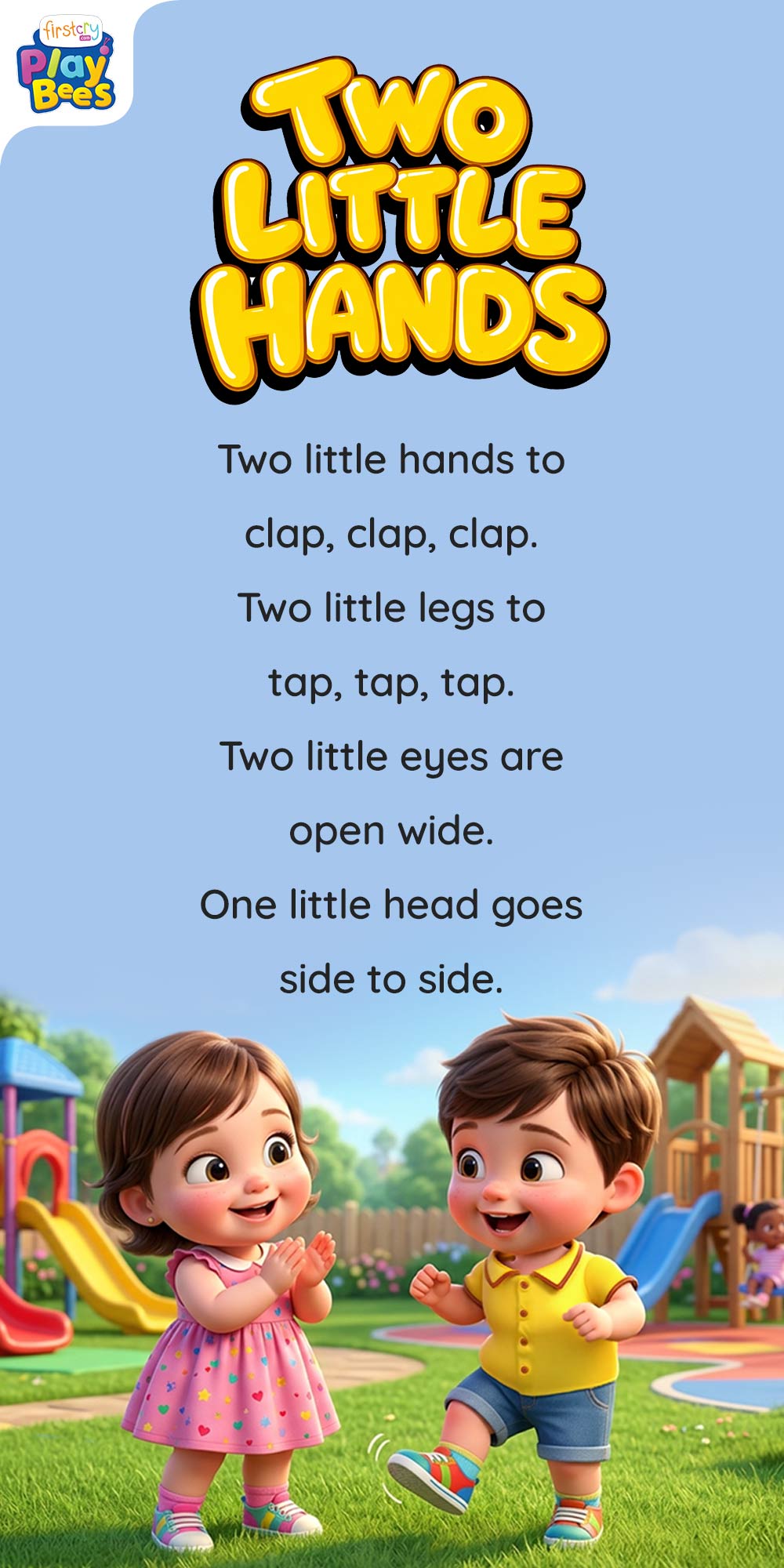
Two little hands to clap, clap, clap.
Two little legs to tap, tap, tap.
Two little eyes are open wide.
One little head goes side to side.
Other Versions of Two Little Hands Song
Many classrooms and parenting groups use slightly different lines to match local actions or teaching goals.
1. Helping at Home
Two little hands to brush my hair,
Two little hands to show I care.
Two little hands to wash my face,
Two little hands to keep things in place.
Two little hands to clean my room,
Two little hands to hold a broom.
Two little hands to clap with glee,
Thank you, hands, for helping me!
2. Brushing & Eating Routine
Two little hands to brush my teeth,
Up and down and underneath.
Two little hands to hold my spoon,
Eating breakfast, lunch, and noon.
Two little hands to wash and dry,
Keeping clean as time goes by.
Two little hands so good and strong,
Helping me the whole day long!
3. Slow Lullaby (Toddler-Friendly)
Two little hands go clap, clap, clap,
Then they rest in mama’s lap.
Two little hands wave night-night,
As the stars begin to shine bright.
Two little hands so warm and sweet,
Tired little fingers, tiny feet.
Close your eyes and softly sleep,
Dreams of love your hands will keep.
4. Action & Counting Classroom
One little hand, two little hands,
Wave them high and make big plans!
Three little claps, four little taps,
Pat your knees and give small snaps.
Five little fingers wiggle fast,
Six little jumps, not too fast!
Seven, eight, nine, then ten,
Let’s count and start again!
5. Musical Performance
Two little hands play the drum,
Boom-boom-boom, here we come!
Two little hands shake a bell,
Ring it loud and ring it well.
Two little hands tap tambourine,
Making music bright and clean.
Clap your hands and sing along,
Two little hands make a song!
Gestures – How to Teach Two Little Hands to Kids
Using gestures makes the rhyme more interactive and helps children connect words with movement. Simple actions also improve memory and coordination.
- Clap both hands together when the rhyme mentions clapping so children connect sound with action.
- Wave hands side to side to show greeting gestures like hello or goodbye.
- Point to different objects while singing about helping to demonstrate real-life use of hands.
- Pretend to pick up toys or clean to reinforce responsibility through play.
- Stretch hands forward when showing kindness or sharing actions in the rhyme.
- End by placing hands on the heart to represent caring and positive behaviour.
History & Quick Facts
“Two Little Hands” is a traditional action rhyme commonly used in preschools rather than a formally authored poem. Its exact writer and first publication date are unclear, as it evolved through oral teaching in early childhood education settings. The rhyme became popular because teachers needed simple songs that combined movement with learning. Over time, it spread across classrooms, parenting platforms, and educational apps. Today it is widely used in activity-based learning and early development programs worldwide.
Interesting Facts
- The rhyme is often used during morning circle time to warm up children for learning activities.
- Many cultures adapt the lines to include local daily routines and manners.
- It is frequently translated into regional languages so children can learn actions in their native tongue.
- Teachers sometimes add background music or instruments to make the rhyme more engaging.
- The tune is simple and repetitive, which helps toddlers remember movements easily.
- It remains popular in digital learning apps that focus on motor skills and early vocabulary.
Suitable age & Learnings
This rhyme is best suited for toddlers and preschoolers aged about 1.5 to 5 years. It works well during early development stages when children learn through imitation and movement.
- Motor skills improve as children clap, wave, and perform guided hand movements.
- Listening skills develop because kids follow verbal cues to perform each action.
- Social behaviour is encouraged through gestures related to helping and kindness.
- Vocabulary grows with simple action words like clap, wave, help, and clean.
- Memory strengthens through repetition and predictable rhyme patterns.
- Confidence builds as children perform actions independently during group singing.
FAQs
1. What is the rhyming scheme of Two Little Hands?
The rhyming scheme of Two Little Hands is AABB.
2. How can parents make this rhyme more engaging?
Parents can add gestures, props, or real-life tasks like picking up toys to connect the rhyme with daily routines.
3. Why is this rhyme good for toddlers?
It combines movement, repetition, and simple vocabulary, which supports early brain development and coordination.
“Two Little Hands” is a beautiful example of how simple songs can support meaningful learning. Its focus on everyday actions makes it relatable and easy for young children to understand. The rhyme encourages movement, kindness, and independence through playful interaction. Parents and teachers appreciate how it blends fun with developmental benefits like coordination and language growth. With gestures and variations, the song can be adapted for different learning environments. Whether sung at home or in class, it creates joyful learning moments that children remember. Over time, this small rhyme helps build big habits of helping, sharing, and confident participation.
Explore Other Rhymes for Kids:
Finger Family Nursery Rhyme With Lyrics
Patty Cake Song Nursery Rhyme With Lyrics
Head, Shoulders, Knees and Toes Nursery Rhyme With Lyrics