
Table of Contents
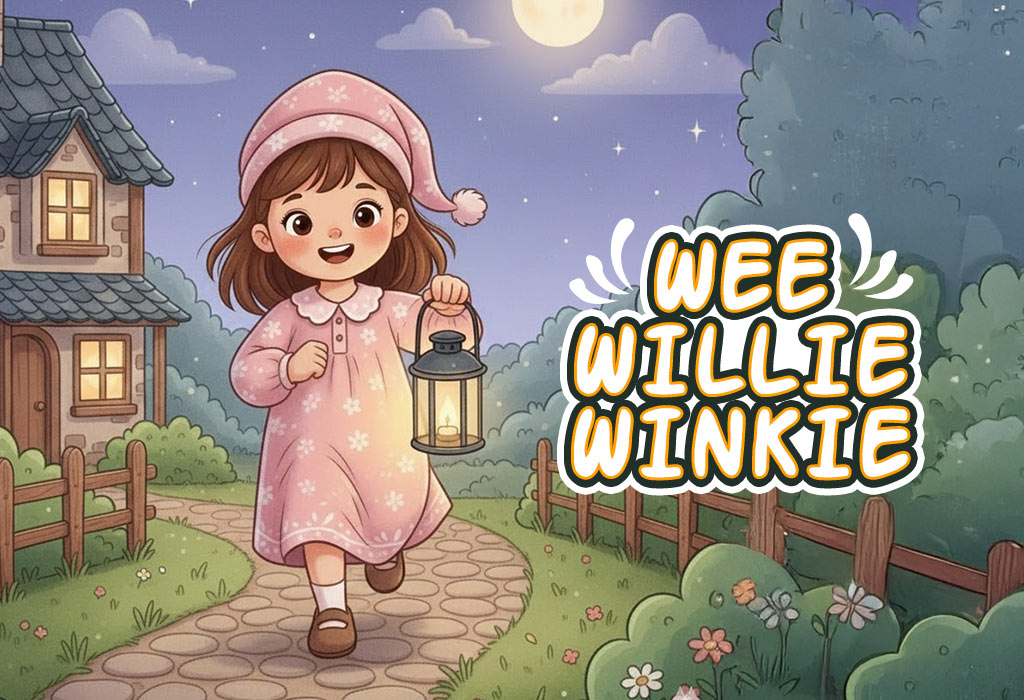
Wee Willie Winkie is a gentle bedtime nursery rhyme that takes children on a quiet nighttime walk through the town as everyone is expected to be tucked into bed. The rhyme follows a playful character who checks whether children are asleep, making it both comforting and imaginative. Kids enjoy the soft rhythm, simple language, and repeated lines, which make the rhyme easy to listen to and remember. Parents often use it as a calming song before sleep because it creates a sense of routine and security. From an early learning perspective, the rhyme supports listening skills, memory building, and early language development. The steady beat helps children recognize rhythm and patterns in words, while the storyline encourages imagination. Overall, Wee Willie Winkie remains a timeless favorite that blends storytelling, learning, and a soothing bedtime mood for young children.
Wee Willie Winkie Song Lyrics
This classic bedtime rhyme shares the familiar Wee Willie Winkie words that generations of children have enjoyed before sleep.
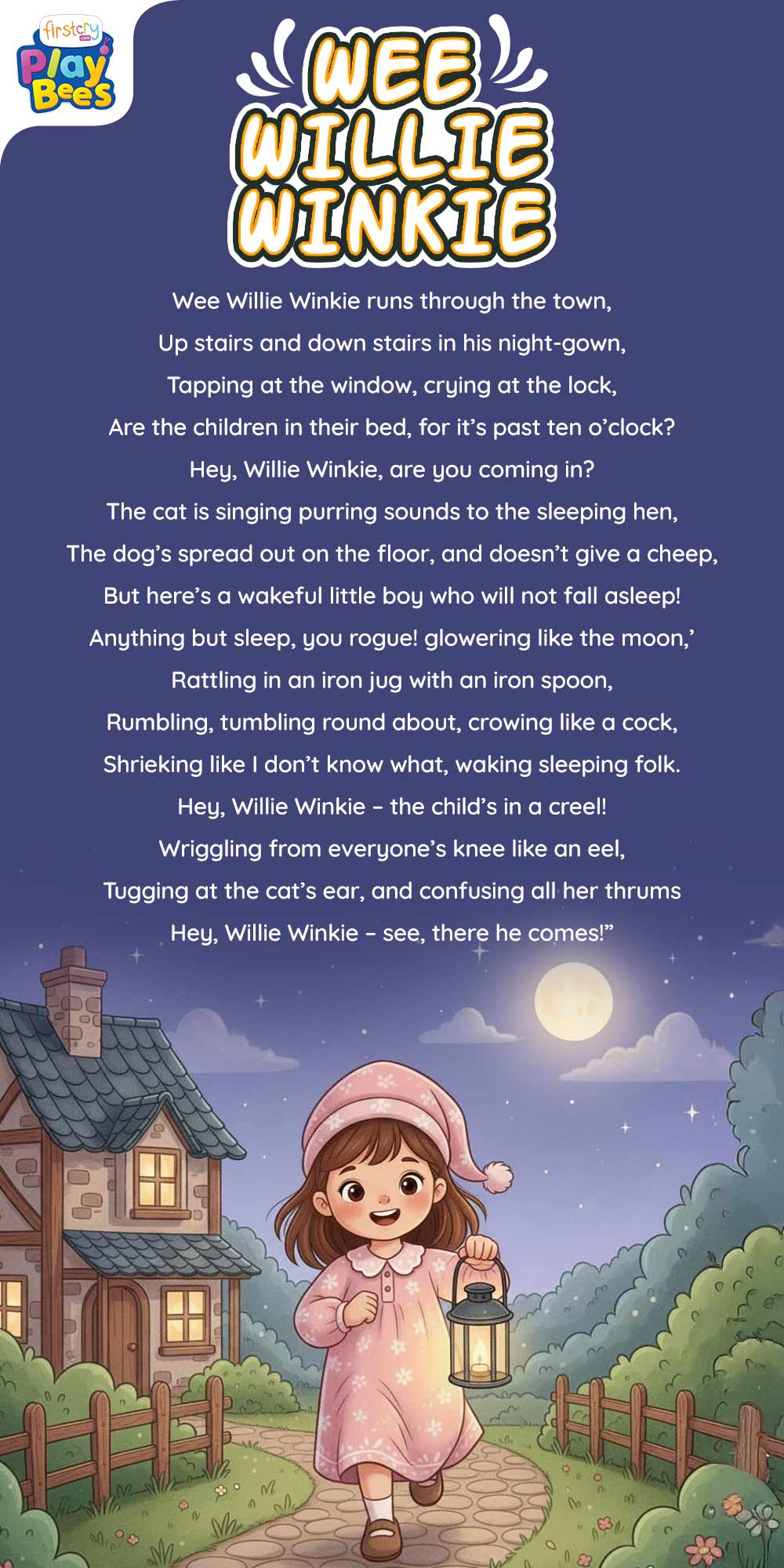
Wee Willie Winkie runs through the town,
Up stairs and down stairs in his night-gown,
Tapping at the window, crying at the lock,
Are the children in their bed, for it’s past ten o’clock?
Hey, Willie Winkie, are you coming in?
The cat is singing purring sounds to the sleeping hen,
The dog’s spread out on the floor, and doesn’t give a cheep,
But here’s a wakeful little boy who will not fall asleep!
Anything but sleep, you rogue! glowering like the moon,’
Rattling in an iron jug with an iron spoon,
Rumbling, tumbling round about, crowing like a cock,
Shrieking like I don’t know what, waking sleeping folk.
Hey, Willie Winkie – the child’s in a creel!
Wriggling from everyone’s knee like an eel,
Tugging at the cat’s ear, and confusing all her thrums
Hey, Willie Winkie – see, there he comes!”
Weary is the mother who has a dusty child,
A small short little child, who can’t run on his own,
Who always has a battle with sleep before he’ll close an eye
But a kiss from his rosy lips gives strength anew to me.
Other Versions of the Wee Willie Winkie Song
Over time, this rhyme has been shared in slightly different ways while keeping its bedtime theme intact.
Some modern versions shorten the verses for toddlers, while others use simplified language or add a gentle lullaby-style tune to make it easier for young children to follow.
Wee Willie Winkie walks so slow,
Through the house on tiptoe,
Time for children to sleep in bed,
Dreamy thoughts inside each head.
Lights are low and stars shine bright,
Willie whispers softly, “Good night”,
Eyes are closed and blankets tight,
Sleep till morning’s gentle light.
Gestures – How to Teach Wee Willie Winkie to Kids
Simple actions help children understand the rhyme and stay engaged while learning it together. These gestures make the song more interactive and fun for young learners.
- Walk fingers across the air to show Wee Willie Winkie running through the town and checking on children at night.
- Move hands up and down to act out going upstairs and downstairs as mentioned in the rhyme.
- Pretend to knock gently in the air to show Wee Willie Winkie rapping at the windows.
- Point to an imaginary clock to help children understand that it is bedtime.
- Place hands together near the cheek to act out sleeping and resting quietly.
- Shake a finger playfully to remind children that it is time to settle down and go to bed.
History & Quick Facts
The Wee Willie Winkie rhyme was written by Scottish poet William Miller and was first published in 1841. It originally appeared as a short poem meant to reflect bedtime routines for children. The character of Wee Willie Winkie became symbolic of sleep and nighttime discipline, gently reminding children to go to bed. Over the years, the rhyme spread beyond Scotland and became popular in English-speaking countries. Its simple structure and calming theme helped it remain a bedtime favorite across generations.
Interesting Facts
- The rhyme was first published in the 19th century and is now in the public domain.
- Wee Willie Winkie is often described as an early “bedtime guardian” character.
- The rhyme has been translated into several languages worldwide.
- Many versions use a slow, lullaby-style tune for bedtime singing.
- The character appears in children’s books and nursery rhyme collections.
- The rhyme remains popular in preschools and bedtime routines today.
Suitable Age & Learnings
This rhyme is best suited for children aged 2 to 6 years, especially as part of a bedtime routine. It supports early learning through rhythm, repetition, and gentle storytelling.
- Children develop listening and attention skills by carefully following the rhyme from beginning to end.
- The rhyme helps build early vocabulary by introducing simple, descriptive, and repetitive words.
- Repeated lines support memory and recall by encouraging children to remember familiar phrases.
- The steady rhythm helps children recognize basic sound patterns in language.
- The bedtime theme teaches children about daily routines and the importance of sleep.
- The storyline encourages imagination by helping children picture characters and nighttime scenes.
FAQs
1. What is the rhyming scheme of Wee Willie Winkie?
The rhyme mainly follows a simple AABB rhyming pattern that is easy for children to recognize.
2. Why is Wee Willie Winkie often used at bedtime?
The calm rhythm and sleep-related theme make it ideal for soothing children before bed.
Wee Willie Winkie continues to charm families with its soft rhythm and comforting bedtime message. The rhyme blends storytelling and learning in a way that feels natural and calming for young children. Its simple words and gentle flow make it easy for parents and teachers to share with little ones. As a timeless nursery rhyme, it remains a warm and reassuring part of early childhood learning and bedtime routines.
Explore Other Rhymes for Kids:
Sight Words for Kindergarten
Daisy Bell Nursery Rhyme With Lyrics
Down by the Bay Nursery Rhyme With Lyrics
Humpty Dumpty Nursery Rhyme With Lyrics