
Table of Contents
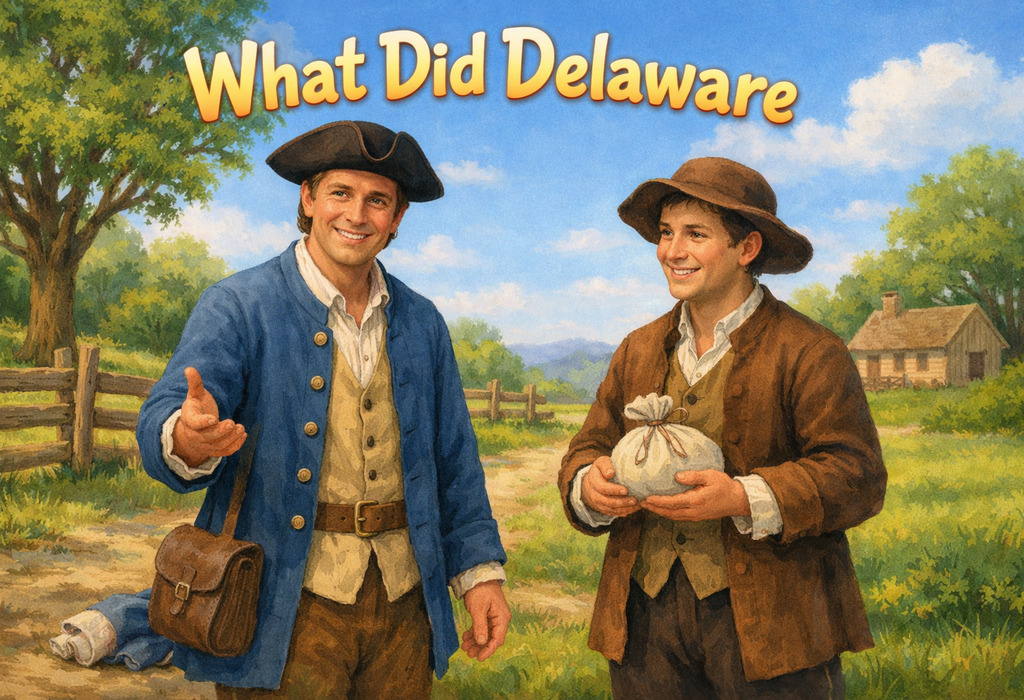
“What Did Delaware” is a playful and pun-filled nursery rhyme that makes children giggle while learning about words and sounds. The rhyme uses clever wordplay with U.S. state names to create funny sentences that sound like everyday phrases. Kids enjoy it because it feels like a fun guessing game, and the silly lines are easy to remember and repeat. For parents and teachers, this rhyme is a great tool for early language development. It helps children recognize rhyming words, understand phonics, and improve listening skills. The humor keeps young learners engaged, while the repetition builds confidence in speaking. Overall, it is a lighthearted and educational rhyme that blends fun with learning perfectly.
What Did Delaware Song Lyrics
Here are the popular What Did Delaware words that children love to recite and enjoy:
Oh, what did Delaware, boys? Oh, what did Delaware?
Oh, what did Delaware, boys? Oh, what did Delaware?
Oh, what did Delaware, boys? Oh, what did Delaware?
I ask you now as a personal friend, what did Delaware?
She wore her New Jersey, boys. She wore her New Jersey.
She wore her New Jersey, boys. She wore her New Jersey.
She wore her New Jersey, boys. She wore her New Jersey.
I tell you now as a personal friend, she wore her New Jersey.
Oh, what does Iowa? She weighs a Washington.
Oh, what does Idaho? She hoes her Maryland.
Oh, what does Tennessee? She sees what Arkansas.
Oh, where has Oregon? She’s gone to Oklahoma.
Oh, what did Massa-chew? She chewed her Connecti-cud.
Oh, how did Flori-die? She died in Missouri.
Other Versions of What Did Delaware Song
Some playful variations of this rhyme exist, adding new lines or changing phrases to keep it fresh and funny.
1. Extended State Fun
What did Alaska?
I’ll ask her later.
What did Hawaii?
She waved goodbye.
What did Utah?
You taught her well.
What did Nevada?
Nevada mind.
2. Simple & Kid-Friendly
What did Delaware?
I wore a New Jersey.
What did Texas?
She text us quick.
What did Florida?
She floored ya!
What did Maine?
She made it rain.
3. Classroom Creative
What did California?
She called ya for ya.
What did Georgia?
She جورج ya! (playful sound)
What did Montana?
She مونتانا bananas!
What did Kansas?
Can she dance? Yes!
4. Make-Your-Own Style
What did (state name)?
(Create your own funny phrase!)
Example:
What did Arizona?
A rose on ya!
Gestures – How to Teach What Did Delaware to Kids
Teaching this rhyme with actions makes it more engaging and helps children remember the lines better. Simple movements can turn the rhyme into a fun activity.
- Point to your clothes when saying “What did Delaware?” to show you are talking about wearing something.
- Pretend to wear a shirt or jacket during “I wore a New Jersey” to connect actions with words.
- Nod your head or repeat a gesture for “The same as Arkansas” to show similarity.
- Use a playful shrug for “What did Mississippi?” to keep the tone light and fun.
- Make a weighing motion with your hands for “She weighed a ton” to visually explain the meaning.
- Spin around gently during “She Oregon around” so kids can connect movement with the phrase.
History & Quick Facts
“What Did Delaware” is a traditional American nursery rhyme that became popular as a humorous wordplay song rather than a formally authored poem. Its exact origin and author are unknown, but it likely emerged in the early 20th century as part of oral storytelling and classroom fun activities. The rhyme gained popularity because of its clever use of state names that sound like everyday phrases, making it both educational and entertaining. Over time, teachers and parents passed it down to children, helping it remain a favorite in early learning environments.
Interesting Facts
- This rhyme is based on puns, where state names sound like common phrases, making it fun and educational.
- It is often used in classrooms to teach phonics and listening skills through humor.
- The rhyme has no fixed version, so people often add their own creative lines.
- It helps children become familiar with U.S. state names in a playful way.
- The tune is usually spoken or chanted rather than sung, making it easy for all children to follow.
- Its popularity comes from its simplicity and the laughter it brings to group activities.
Suitable Age & Learnings
This rhyme is best suited for children aged 3 to 7 years, as they begin to understand sounds, words, and simple humor. It supports early learning by combining language skills with fun wordplay.
- Children learn rhyming and phonetic awareness as they notice how words sound similar.
- It improves listening skills because kids need to hear carefully to understand the jokes.
- The rhyme builds vocabulary by introducing new words and state names.
- It encourages memory development through repetition and playful recitation.
- Kids gain confidence in speaking as they repeat lines aloud in a group or individually.
- It sparks creativity since children can invent their own funny versions of the rhyme.
FAQs
1. What is the rhyming scheme of What Did Delaware?
The rhyme uses a playful and irregular pattern based on puns rather than a strict rhyming scheme, focusing more on sound-alike words.
2. Is What Did Delaware a song or a poem?
It is both, as it can be chanted like a poem or sung in a rhythmic, playful way.
3. Why is this rhyme good for young children?
It helps children learn sounds, improve vocabulary, and enjoy language through humor and repetition.
“What Did Delaware” is a delightful nursery rhyme that blends humor with learning in a very natural way. Its clever wordplay keeps children entertained while quietly building important language skills. The rhyme is easy to teach, easy to remember, and perfect for group activities at home or in the classroom. With simple gestures and repetition, it becomes even more engaging for young learners. Parents and teachers appreciate how it introduces phonics and vocabulary without feeling like a lesson. Most importantly, it creates joyful learning moments that children remember. This timeless rhyme proves that learning can be both simple and fun.