
Table of Contents
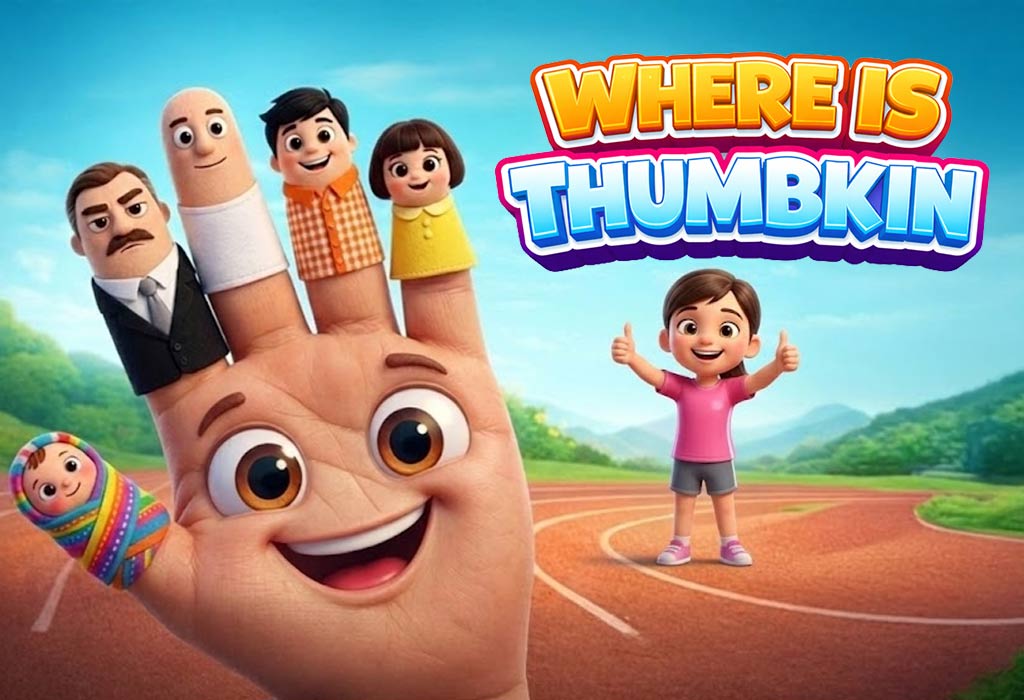
“Where is Thumbkin” is a playful finger rhyme that children love to sing while moving their hands and fingers. The rhyme introduces kids to different fingers while encouraging simple actions and interaction. As children sing and hide their fingers behind their backs, they enjoy the surprise of bringing them out at the right moment. This small activity turns learning into a fun game. Parents and teachers often use this rhyme to help young children recognize body parts, follow simple instructions, and develop coordination. Because the lyrics are repetitive and easy to remember, even toddlers can quickly join in. The cheerful rhythm also keeps children engaged during circle time or playtime. Overall, “Where is Thumbkin” supports early learning by combining music, movement, and playful discovery in a way that young kids naturally enjoy.
Where is Thumbkin Song Lyrics
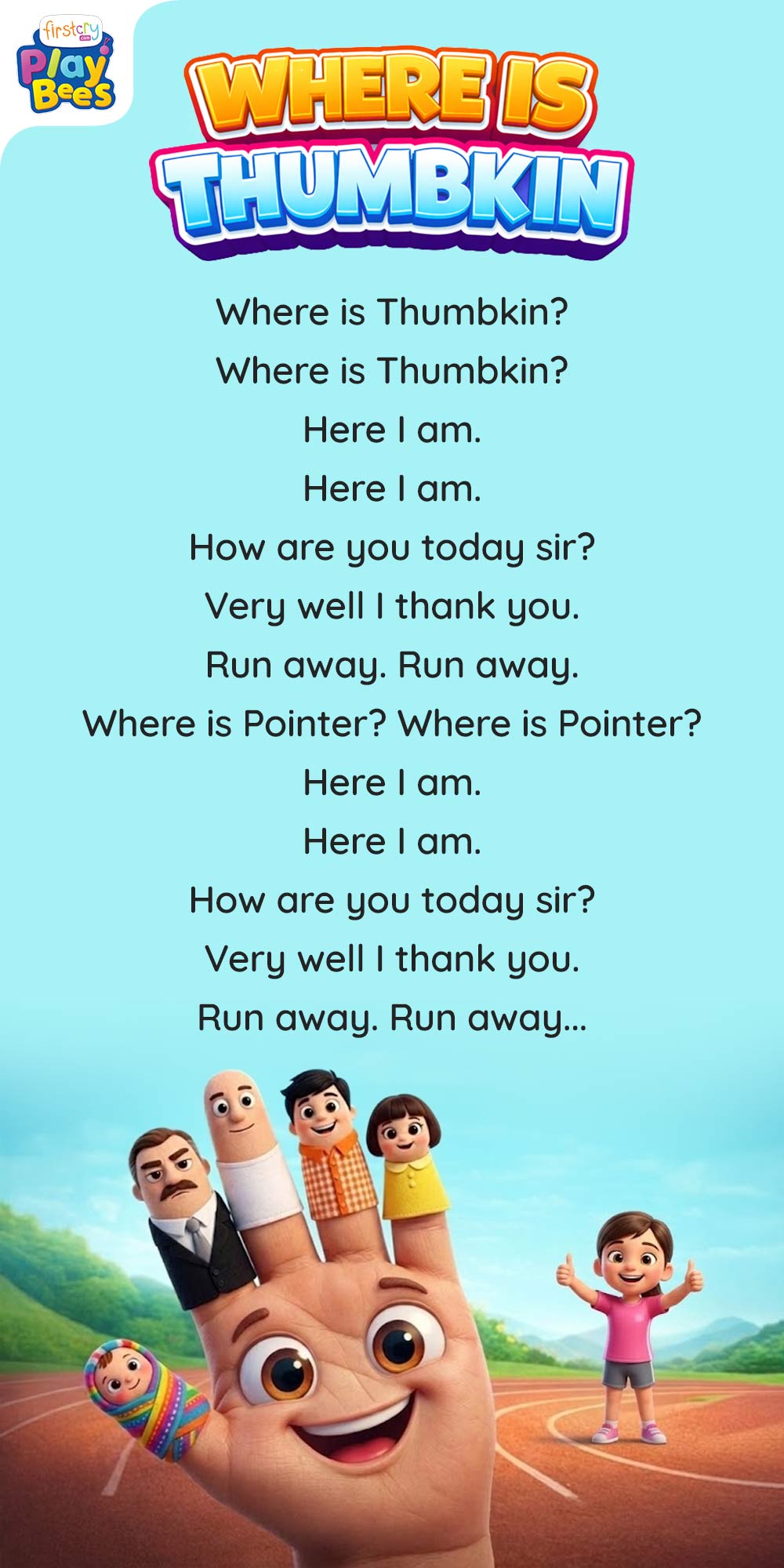
These Where is Thumbkin words are simple, repetitive, and perfect for singing along with finger movements.
Where is Thumbkin?
Where is Thumbkin?
Here I am.
Here I am.
How are you today sir?
Very well I thank you.
Run away. Run away.
Where is Pointer? Where is Pointer?
Here I am.
Here I am.
How are you today sir?
Very well I thank you.
Run away. Run away.
Where is Tallman? Where is Tallman?
Here I am.
Here I am.
How are you today sir?
Very well I thank you.
Run away. Run away.
Where is Ringman? Where is Ringman?
Here I am.
Here I am.
How are you today sir?
Very well I thank you.
Run away. Run away.
Where is Pinky? Where is Pinky?
Here I am.
Here I am. How are you today sir?
Very well I thank you.
Run away. Run away.
Where’s the whole family? Where’s the whole family?
Here we are.
Here we are. How are you today sir?
Very well we thank you.
Run away. Run away.
Other Versions of Where is Thumbkin Song
Several playful versions of the rhyme exist, often changing the finger names or adding new characters to make the song even more engaging for children.
1. Family Version
Where is Daddy?
Where is Daddy?
Here I am!
Here I am!
How are you today, sir?
Very well, I thank you.
Run away!
Run away!
Where is Mommy?
Where is Mommy?
Here I am!
Here I am!
How are you today, ma’am?
Very well, I thank you.
Run away!
Run away!
Where is Brother?
Where is Brother?
Here I am!
Here I am!
How are you today, friend?
Very well, I thank you.
Run away!
Run away!
Where is Sister?
Where is Sister?
Here I am!
Here I am!
How are you today, friend?
Very well, I thank you.
Run away!
Run away!
2. Animal Version
Where is Bunny?
Where is Bunny?
Here I am!
Here I am!
How are you today, Bunny?
Very well, I thank you.
Hop away!
Hop away!
Where is Kitty?
Where is Kitty?
Here I am!
Here I am!
How are you today, Kitty?
Very well, I thank you.
Run away!
Run away!
Gestures – How to Teach Where is Thumbkin to Kids
This rhyme becomes much more enjoyable when children act out the lyrics with their fingers. Simple hand movements help kids remember the song while improving coordination and participation.
- Ask children to hide both hands behind their backs while singing “Where is Thumbkin?” so the finger appears to be missing.
- Bring the thumb forward when singing “Here I am!” so children can see the finger pop up happily.
- Gently wiggle the thumb while singing “How are you today, sir?” to show the finger talking.
- Nod the thumb slightly during “Very well, I thank you” to act out the polite response.
- Move the thumb back behind the back when singing “Run away!” so it disappears again.
- Repeat the same gestures with each finger such as the pointer finger, middle finger, ring finger, and pinky so kids learn all their finger names.
History & Quick Facts
“Where is Thumbkin” is a traditional nursery rhyme that has been sung by children for many generations. The exact author of the rhyme is unknown, which is common for many old folk rhymes passed down through oral storytelling. The melody is believed to be adapted from the French tune “Frère Jacques,” a well known children’s song that dates back to the 18th century. Over time, educators and parents adopted the rhyme as a finger play activity to teach children the names of their fingers and encourage movement with music. Because it is simple, repetitive, and interactive, the rhyme became popular in preschools and homes around the world.
Interesting Facts
- The rhyme is often sung to the same tune as the famous French children’s song “Frère Jacques.”
- It is considered a classic “finger play” rhyme because children act out the lyrics with their fingers.
- The rhyme helps children learn the names of each finger in a fun and memorable way.
- Teachers frequently use this rhyme during preschool circle time to encourage participation.
- The song has been translated into many languages and is enjoyed by children worldwide.
- Many modern versions include family members or animals instead of finger names to create new variations.
Suitable Age & Learnings
“Where is Thumbkin” is ideal for toddlers and preschoolers, usually between the ages of 2 and 5 years. The rhyme combines singing and finger movements, making it a great early learning activity for young children.
- Finger recognition: Children learn the names of different fingers such as thumb, pointer, and pinky while singing the rhyme.
- Motor skills: The finger movements help strengthen fine motor skills and hand coordination.
- Listening skills: Kids learn to follow simple instructions as they hide and show their fingers during the song.
- Language development: The repetitive lyrics help children practice pronunciation and simple conversational phrases.
- Social interaction: Singing the rhyme together encourages group participation and confidence.
- Memory building: The repeated pattern in the song helps children remember lyrics and actions easily.
FAQs
1. What is the rhyming scheme of Where is Thumbkin?
The rhyme mainly follows a simple repeating pattern with paired lines and rhythmic repetition, making it easy for children to remember and sing along.
2. Why is Where is Thumbkin popular in preschools?
It combines music, finger movements, and repetition, which helps young children stay engaged while learning basic concepts.
3. How does the rhyme help children learn?
It supports early learning by teaching finger names, improving coordination, and encouraging listening and participation during group activities.
“Where is Thumbkin” is a delightful nursery rhyme that combines music, movement, and simple learning. Its playful finger actions make it especially engaging for young children who enjoy interactive songs. The rhyme gently introduces kids to finger names while strengthening coordination and listening skills. Because the lyrics are short and repetitive, toddlers and preschoolers can quickly learn and participate. Parents and teachers often use this rhyme during playtime, circle time, or early learning activities. With its cheerful tune and easy gestures, “Where is Thumbkin” continues to be a timeless favorite that makes learning fun for little ones.
Explore Other Rhymes for Kids:
Finger Family Nursery Rhyme With Lyrics
Two Little Hands Nursery Rhyme With Lyrics
One Little Finger Nursery Rhyme With Lyrics