
Table of Contents
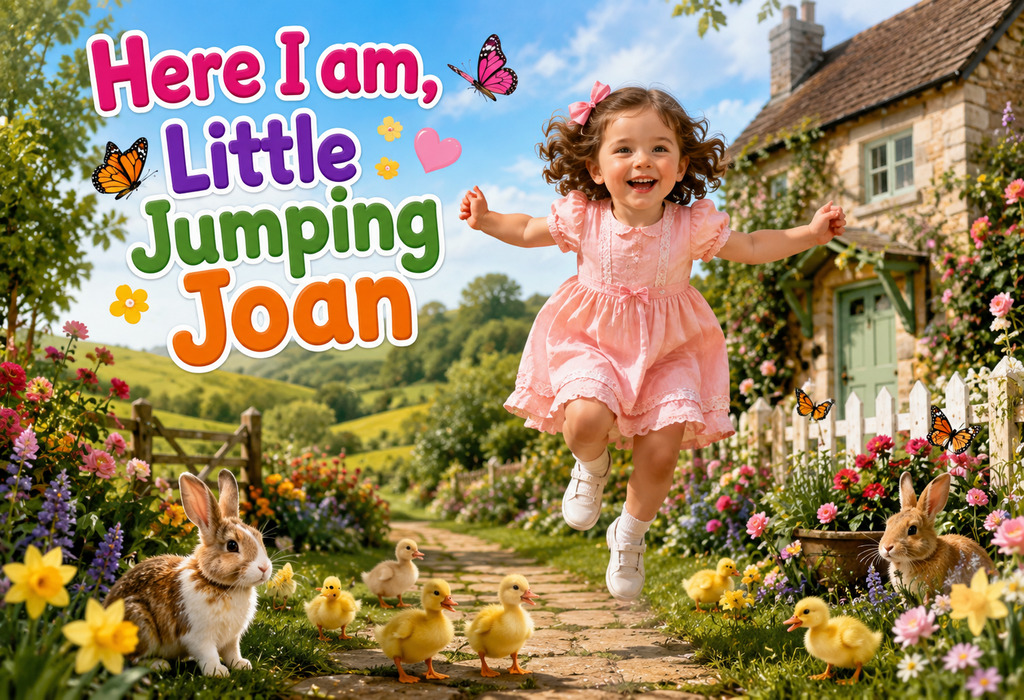
“Here I am, Little Jumping Joan” is a cheerful traditional nursery rhyme that children love for its playful words and fun actions. The rhyme follows a lively character named Jumping Joan who keeps moving and dancing, making it exciting for young kids to sing along. Its catchy rhythm and repetitive lines help children remember the words easily while building listening and speaking skills. Parents and teachers often use this rhyme during playtime, circle time, or action-song activities because it encourages movement and participation. Singing the rhyme also helps children improve coordination, confidence, and imagination. With its simple language and energetic style, “Here I am, Little Jumping Joan” remains a favorite rhyme for introducing toddlers and preschoolers to music, rhythm, and early learning in a joyful way.
Here I am, Little Jumping Joan Song Lyrics
Children enjoy singing along to the playful and rhythmic Here I am, Little Jumping Joan words because the rhyme is easy to remember and full of fun actions.
Here am I, little jumping Joan;
When nobody’s with me,
I’m always alone.
Other Versions of Here I am, Little Jumping Joan Song
Many families and teachers sing slightly different versions of this rhyme by changing a few action words or adding playful movements.
- Some versions replace “dance” with “jump” or “skip” to make the rhyme more active for children.
- In a few traditional versions, children clap hands or spin around while singing the “round and round” lines.
- Certain classroom versions add extra verses about laughing, hopping, or playing games with friends.
- Some parents sing the rhyme slowly for toddlers and faster for older children to make it more exciting.
- Regional versions may slightly change the wording while keeping the same cheerful rhythm and playful style.
Gestures – How to Teach Here I am, Little Jumping Joan to Kids
This rhyme becomes more enjoyable when children use simple body movements while singing. Easy gestures help kids remember the words better and keep them active and engaged throughout the rhyme.
- Raise both hands and point to yourself when singing “Here I am” so children connect the words with themselves.
- Do small jumps in place during “little jumping Joan” to make the rhyme lively and energetic.
- Pretend to dance by swaying side to side when the rhyme mentions dancing and singing.
- Make a circle shape with your fingers during “play with my ring” to show the ring action clearly.
- Spin one hand in the air for “round and round and round she goes” so children can follow the circular movement.
- End with a fun shrug and smile during “Where she stops nobody knows” to keep the activity playful and exciting.
History & Quick Facts
“Here I am, Little Jumping Joan” is a traditional English nursery rhyme that has been passed down orally for many generations. Like many old folk rhymes, its exact author and original publication date are unknown. The rhyme became popular because of its catchy rhythm, simple language, and playful actions that children could easily follow. It was commonly sung in homes, schools, and playgrounds as part of singing games and movement activities. Over time, teachers and parents adapted the rhyme with small wording changes to suit different age groups. Today, it remains a classic nursery rhyme used around the world to encourage music, movement, and early language learning in young children.
Interesting Facts
- The rhyme is considered a traditional folk nursery rhyme that has been shared across generations by word of mouth.
- Children often enjoy acting out the rhyme with jumping, spinning, and dancing movements while singing.
- The words are simple and repetitive, which makes the rhyme easy for toddlers and preschoolers to remember.
- Some schools use the rhyme during music and movement sessions to improve coordination and rhythm skills.
- Different countries and classrooms sometimes use slightly different lyrics while keeping the same playful tune.
- The rhyme continues to stay popular because it combines singing, imagination, and physical activity in a fun way for children.
Suitable Age & Learnings
“Here I am, Little Jumping Joan” is best suited for children between 2 and 6 years old because the rhyme uses simple words and easy actions. It supports early childhood learning by improving listening, movement, language, and social interaction skills in a playful environment.
- Children learn rhythm and musical awareness by singing along with the rhyme’s steady beat and repeating lines.
- The rhyme helps improve memory skills because kids remember the repeated phrases and sequence of actions.
- Simple jumping and spinning actions help children develop balance, coordination, and motor skills.
- Kids build confidence and social skills when they sing and perform the rhyme together in groups.
- The rhyme introduces vocabulary words such as “dance,” “sing,” “round,” and “ring” in an easy and playful way.
- Children also improve listening and following directions while matching gestures with the lyrics of the rhyme.
FAQs
1. What is the rhyming scheme of Here I am, Little Jumping Joan?
The rhyme uses a simple repeating rhyme pattern with rhythmic lines that make it easy and enjoyable for children to sing and remember.
2. Why do children enjoy Here I am, Little Jumping Joan?
Children enjoy the rhyme because it includes fun actions like jumping, dancing, and spinning while using catchy and easy-to-learn words.
3. How can parents teach this rhyme at home?
Parents can teach the rhyme by singing slowly, using gestures, repeating lines together, and encouraging children to act out the movements while singing.
“Here I am, Little Jumping Joan” is a delightful nursery rhyme that brings music, movement, and laughter together for young children. Its playful rhythm and simple lyrics make it easy for toddlers and preschoolers to enjoy during playtime or learning activities. The rhyme encourages children to move their bodies, build confidence, and improve language skills in a natural and fun way. Parents and teachers appreciate how easily it can be combined with gestures and group activities to keep kids engaged. Even after many generations, the rhyme continues to remain a favorite because of its cheerful and interactive style. Sharing classic rhymes like this helps create joyful learning moments and happy memories for children everywhere.
Explore Other Rhymes for Kids:
Hokey Cokey Nursery Rhyme With Lyrics
Here We Go Looby Loo Nursery Rhyme With Lyrics
If You Are Happy And You Know It Nursery Rhyme With Lyrics