
Table of Contents
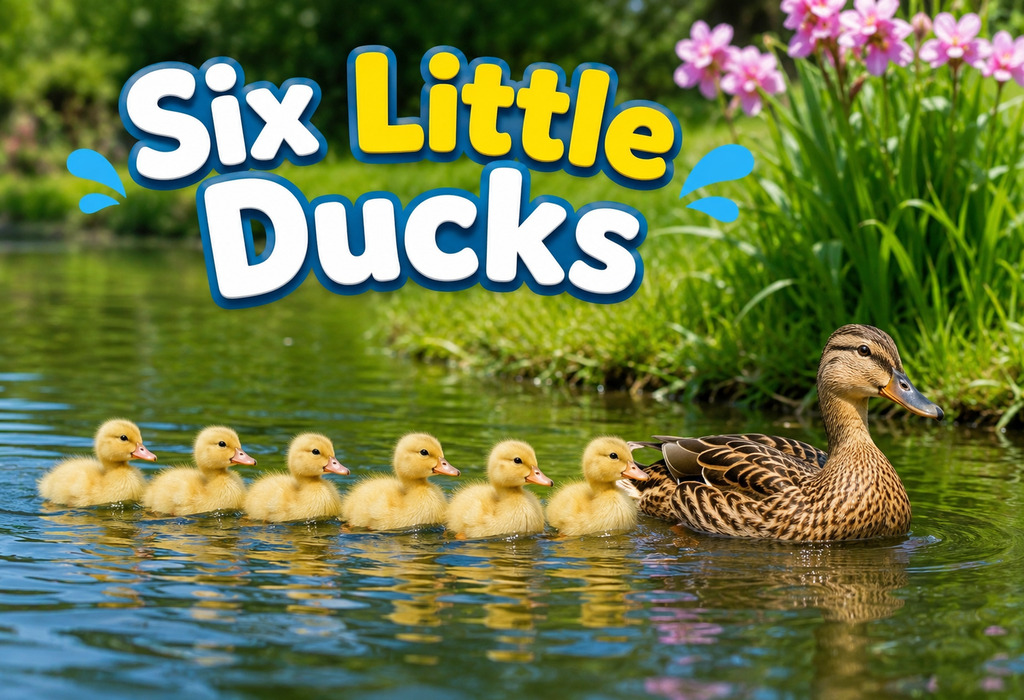
Six Little Ducks is a cheerful nursery rhyme about a group of playful ducks led by one special little duck with a feather on its back. The song takes children on a fun adventure as the ducks waddle to the river and back while happily quacking along. Kids enjoy this rhyme because of its catchy tune, repetitive words, and easy-to-follow actions. Parents and teachers love it because it encourages movement, imagination, and participation. The playful “wibble wobble” and “quack quack” sounds make singing even more exciting for young learners. Along with entertainment, the rhyme helps children develop language skills, listening abilities, memory, and rhythm. It also introduces simple animal vocabulary and encourages counting and observation, making it a delightful choice for early childhood learning.
Six Little Ducks Song Lyrics
Enjoy singing these classic Six Little Ducks words with children as they waddle, quack, and play along.
Six little ducks that I once knew.
Proud ones, happy ones, silly ones, too.
But the one little duck with the feather on her back.
She led the others with a quack, quack, quack.
Quack, quack, quack. Quack, quack, quack.
She led the others with a quack, quack, quack.
Wibble wobble wibble wobble,
Wibble wobble wibble wobble,
Wibble wobble wibble wobble,
Quack quack quack.
Down to the river they would go.
Wibble wobble. Wibble wobble. To and fro.
But the one little duck with the feather on her back.
She led the others with a quack, quack, quack.
Quack, quack, quack. Quack, quack, quack.
She led the others with a quack, quack, quack.
Wibble wobble wibble wobble,
Wibble wobble wibble wobble,
Wibble wobble wibble wobble,
Quack quack quack.
Home from the river they would come.
Wibble wobble. Wibble wobble. Ho hum hum.
But the one little duck with the feather on her back.
She led the others with a quack, quack, quack.
Quack, quack, quack. Quack, quack, quack.
She led the others with a quack, quack, quack.
Wibble wobble wibble wobble,
Wibble wobble wibble wobble,
Wibble wobble wibble wobble,
Quack quack quack.
Wibble wobble wibble wobble,
Wibble wobble wibble wobble,
Wibble wobble wibble wobble,
Quack quack quack.
Wibble wobble wibble wobble,
Wibble wobble wibble wobble,
Wibble wobble wibble wobble,
Quack quack quack.
Other Versions of Six Little Ducks Song
Children around the world enjoy different versions of Six Little Ducks, with small changes in the words, tune, and actions to suit local traditions and teaching styles.
- Traditional Folk Version: The original folk song features six little ducks and a special duck with a feather on its back, leading the others with a cheerful “quack, quack, quack.”
- Action Song Version: Many preschool teachers add movements like waddling, flapping wings, and pretending to swim to make the rhyme more interactive.
- Counting Version: Some adaptations change the number of ducks to help children practice counting forwards and backwards.
- Classroom Learning Version: Educational versions include extra verses about colors, directions, or animal sounds to support early learning.
- Animated Version: Modern children’s channels and educational platforms have created animated adaptations with bright visuals and catchy music for young audiences.
- Regional Variations: Different countries and cultures may slightly change the lyrics while keeping the playful duck theme and repetitive chorus.
Gestures – How to Teach Six Little Ducks to Kids
Simple actions make Six Little Ducks more fun and help children remember the words. These easy movements encourage participation, coordination, and imaginative play.
- Show six ducks: Hold up six fingers or count on both hands to represent the six little ducks at the beginning of the song.
- Flap your wings: Move your arms like duck wings whenever the ducks are walking or playing.
- Pretend to waddle: Take small side-to-side steps to copy the funny waddling motion of the ducks.
- Point to the leader duck: Place one hand on your back like a feather and point to yourself when singing about the little duck with the feather on her back.
- Make quacking motions: Open and close your hands like a duck’s beak while saying, “Quack, quack, quack.”
- March to the river and back: Walk in place or around the room to act out the ducks going to the river and returning home.
History & Quick Facts
Six Little Ducks is a traditional folk nursery rhyme that has been passed down through generations in English-speaking countries. The exact author is unknown, as the song developed through oral storytelling and community singing rather than being written by one person. It is believed to have roots in traditional British and Irish folk music from the late nineteenth or early twentieth century. Over time, teachers, parents, and musicians created their own versions of the rhyme, helping it spread around the world. Today, it is widely used in preschools and early learning programs because of its simple melody, repetitive lyrics, and playful actions.
Interesting Facts
- The rhyme is based on a traditional folk tune that has been enjoyed by families for many generations.
- The little duck with the feather on its back is the main character and helps children follow the story easily.
- Many educational versions include fun actions like waddling and quacking to keep children engaged.
- The song has been translated and adapted into different languages while keeping its playful duck theme.
- Preschool teachers often use the rhyme to teach counting, rhythm, and animal vocabulary through music.
- Animated versions of Six Little Ducks have introduced the classic nursery rhyme to children around the world through digital learning platforms.
Suitable Age & Learnings
Six Little Ducks is best suited for children aged 2 to 6 years, although older children also enjoy singing and acting it out. The rhyme supports early childhood development by combining music, movement, and storytelling.
- Counting skills: Children can count the ducks and follow the sequence of the story to strengthen early math concepts.
- Language development: The repeated words and phrases help build vocabulary and improve pronunciation.
- Animal vocabulary: Kids learn simple words such as duck, feather, river, and quack while singing.
- Listening and memory: Repeating the verses helps children improve attention and recall important details.
- Motor skills: Waddling, flapping, and other actions encourage balance, coordination, and body movement.
- Social and emotional learning: Singing together teaches cooperation, confidence, and the joy of participating in group activities.
FAQs
1. What is the rhyming scheme of Six Little Ducks?
The rhyme follows a simple and repetitive pattern with easy end rhymes and repeated choruses, making it easy for young children to remember and sing along.
2. Why is Six Little Ducks good for preschool children?
The rhyme combines music, movement, and repetition to help develop language, counting, listening, and motor skills in a fun way.
3. How can parents make Six Little Ducks more interactive?
Parents can encourage children to waddle like ducks, flap their arms, count the ducks, and make quacking sounds while singing the song.
Six Little Ducks is a timeless nursery rhyme that brings smiles to children and families alike. Its catchy tune, playful story, and easy actions make it a favorite for singing and learning. The rhyme helps young children build important skills such as counting, listening, language, and coordination. Parents and teachers can use simple gestures to make the experience even more enjoyable and memorable. With its rich folk history and many fun adaptations, the song continues to entertain new generations of young learners. Whether at home or in the classroom, Six Little Ducks is a wonderful way to combine music, movement, and early education.
Explore Other Rhymes for Kids:
Five Little Ducks Nursery Rhyme With Lyrics
Alle meine Entchen Nursery Rhyme With Lyrics
Five Little Speckled Frogs Nursery Rhyme With Lyrics