
Table of Contents
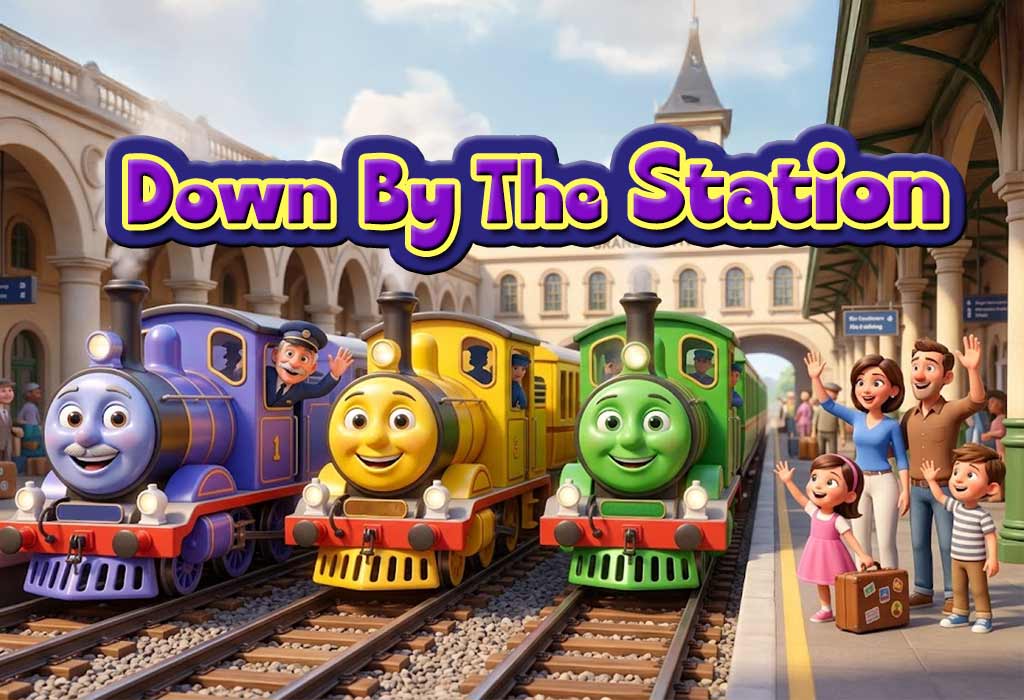
“Down by The Station” is a cheerful nursery rhyme that takes children on a fun journey to a busy train station filled with little trains getting ready to go. Kids love the rhyme because of its lively rhythm, playful sounds, and the exciting idea of trains moving along the tracks. It sparks imagination while keeping young learners engaged through repetition and simple actions. For parents and teachers, this rhyme is a wonderful tool to support early learning. It helps children improve listening skills, build vocabulary, and understand sequencing through storytelling. The rhyme also encourages movement and interaction, making learning active and enjoyable. With its catchy tune and easy words, it quickly becomes a favorite among toddlers and preschoolers.
Down by The Station Song Lyrics
Enjoy singing along with the fun and rhythmic Down by The Station words that children love to repeat and act out.
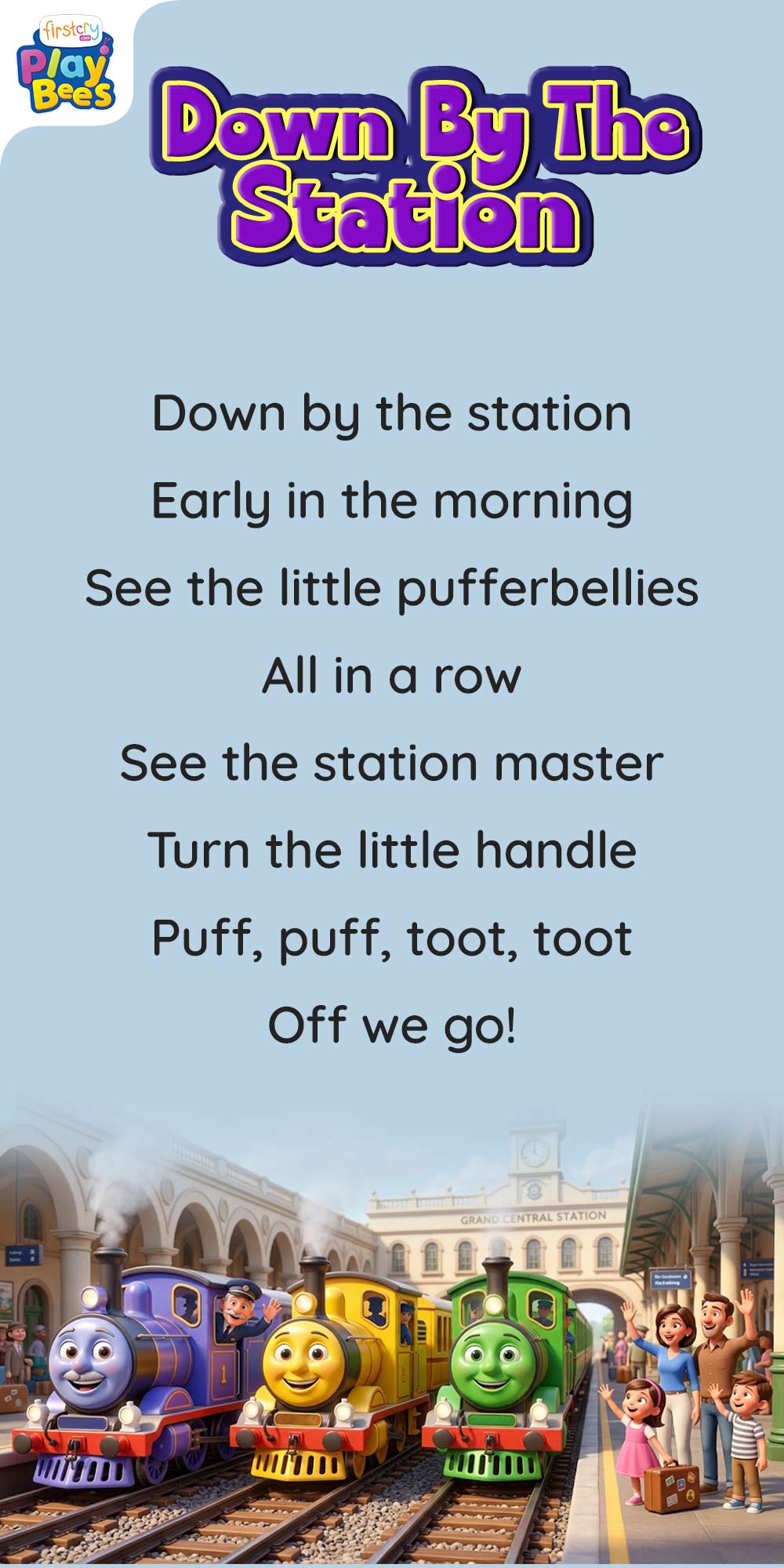
Down by the station
Early in the morning
See the little pufferbellies
All in a row
See the station master
Turn the little handle
Puff, puff, toot, toot
Off we go!
Other Versions of Down by The Station Song
This rhyme has a few playful variations that add new actions and sounds for kids to enjoy.
Version 1:
Down by the station, early in the morning,
See the little engines all in a row.
See the station master turn the little handle,
Chug, chug, toot, toot, off we go!
Version 2 (Action-Based Version):
Down by the station, early in the morning,
All the little trains are ready to go.
Start up the engine, slowly, slowly moving,
Chug, chug, toot, toot, off we go!
Version 3: (Extended Play Version):
Down by the station, early in the morning,
See the busy trains all in a row.
Stop and start and speed along the tracks now,
Chug, chug, toot, toot, off we go!
Gestures – How to Teach Down by The Station to Kids
Using simple actions makes this rhyme more engaging and helps children remember the words easily. These gestures also encourage movement and coordination.
- Children can sit or stand in a line to act like trains waiting at the station.
- For “early in the morning,” kids can stretch their arms wide as if waking up.
- When singing “little pufferbellies,” they can place hands on their waist and sway gently like trains.
- For “turn the little handle,” children can rotate one hand over the other as if turning a wheel.
- On “puff, puff,” kids can pretend to blow steam using their hands near their mouth.
- For “toot, toot, off we go,” children can move forward in a line while making train sounds.
History & Quick Facts
“Down by The Station” is believed to have originated in the United States and became popular in the early 20th century. The rhyme does not have a clearly identified author, which is common for traditional nursery rhymes. It gained popularity through oral storytelling and was later included in children’s song collections and school activities. Over time, it became widely used in preschools and early education settings because of its simple lyrics and engaging actions. Its train theme made it especially appealing during a time when railways were an exciting part of everyday life.
Interesting Facts
- The rhyme is often used in classrooms to introduce children to transportation concepts in a fun way.
- The word “pufferbellies” refers to steam engines, making the rhyme a gentle introduction to old-style trains.
- It is commonly paired with actions, making it both a song and a movement activity.
- The rhyme has been translated into different languages, helping children worldwide enjoy it.
- Teachers sometimes use toy trains or props to make the rhyme more interactive.
- Its simple and repetitive structure makes it easy for toddlers to memorize quickly.
Suitable age & Learnings
This rhyme is best suited for children aged 2 to 6 years as it matches their learning pace and interest in movement-based activities. It supports early development by combining music, rhythm, and simple storytelling.
- Children learn new vocabulary such as station, engine, and handle through repeated listening.
- The rhyme improves listening skills as kids follow along with the sequence of actions.
- It encourages motor skills development through gestures and coordinated movements.
- Kids understand sequencing by following the order of events in the rhyme.
- The rhythm helps develop early language and phonetic awareness.
- It builds imagination as children pretend to be trains and act out the story.
FAQs
1. What is the rhyming scheme of Down by The Station?
The rhyme follows a simple and catchy pattern with end rhymes like “morning” and “row,” and “handle” and “go,” making it easy for children to remember.
2. Why do children enjoy this rhyme so much?
Children enjoy it because of its fun train theme, rhythmic sounds, and the opportunity to act out movements while singing.
3. Can this rhyme be used in classroom activities?
Yes, it is widely used in classrooms for teaching rhythm, coordination, and basic vocabulary in an interactive way.
“Down by The Station” is a delightful nursery rhyme that brings together music, movement, and imagination in a way children truly enjoy. Its simple words and engaging rhythm make it easy for young learners to follow and remember. Through playful actions and repetition, it supports early development in a natural and enjoyable way. Parents and teachers can use this rhyme to create fun learning moments at home or in the classroom. It also helps children build confidence as they sing and act along. Most importantly, it turns learning into a joyful experience filled with laughter and creativity.
Explore Other Rhymes for Kids:
The Wheels on the Bus Nursery Rhyme With Lyrics
Engine Engine Number 9 Nursery Rhyme With Lyrics
Hurry, Hurry, Drive the Fire Truck Nursery Rhyme With Lyrics