
Table of Contents
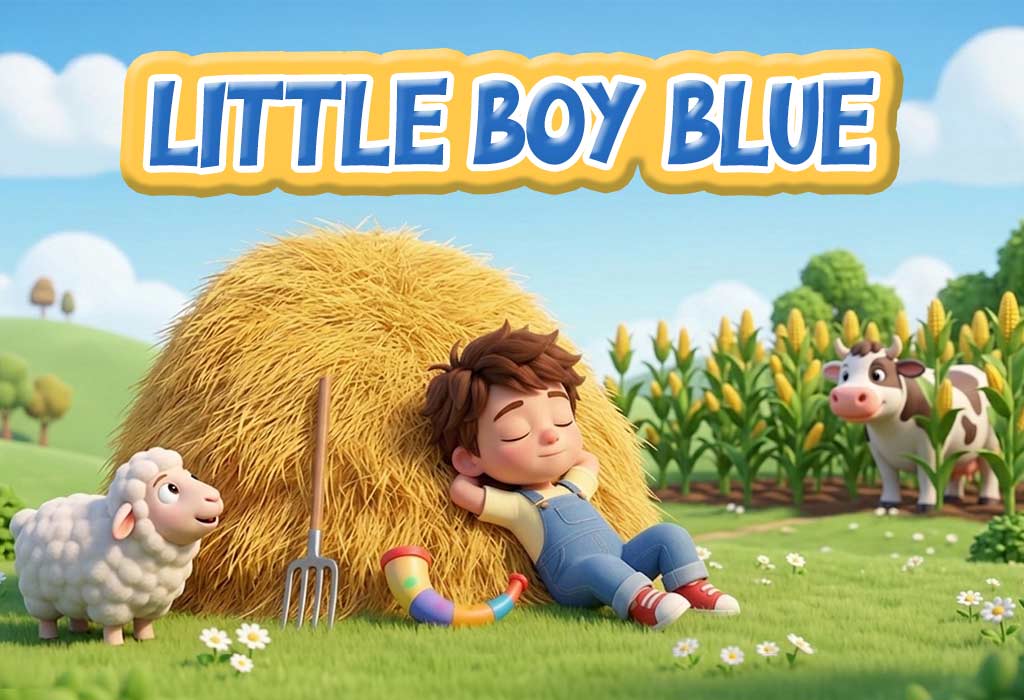
Little Boy Blue is a gentle and classic nursery rhyme about a young shepherd who falls asleep while his sheep wander away. The simple story and soft rhythm make it easy for children to listen, remember, and recite. Kids enjoy the playful imagery of animals and the idea of a sleepy boy, which often brings smiles and laughter. For parents, it is a great way to introduce storytelling, rhythm, and basic vocabulary. The rhyme also helps children understand responsibility in a light and friendly way. Its short lines and repetitive sounds support early language development, listening skills, and memory. Overall, Little Boy Blue remains a comforting and engaging rhyme for young learners.
Little Boy Blue Song Lyrics
Here are the Little Boy Blue words that children enjoy reciting and singing along to:
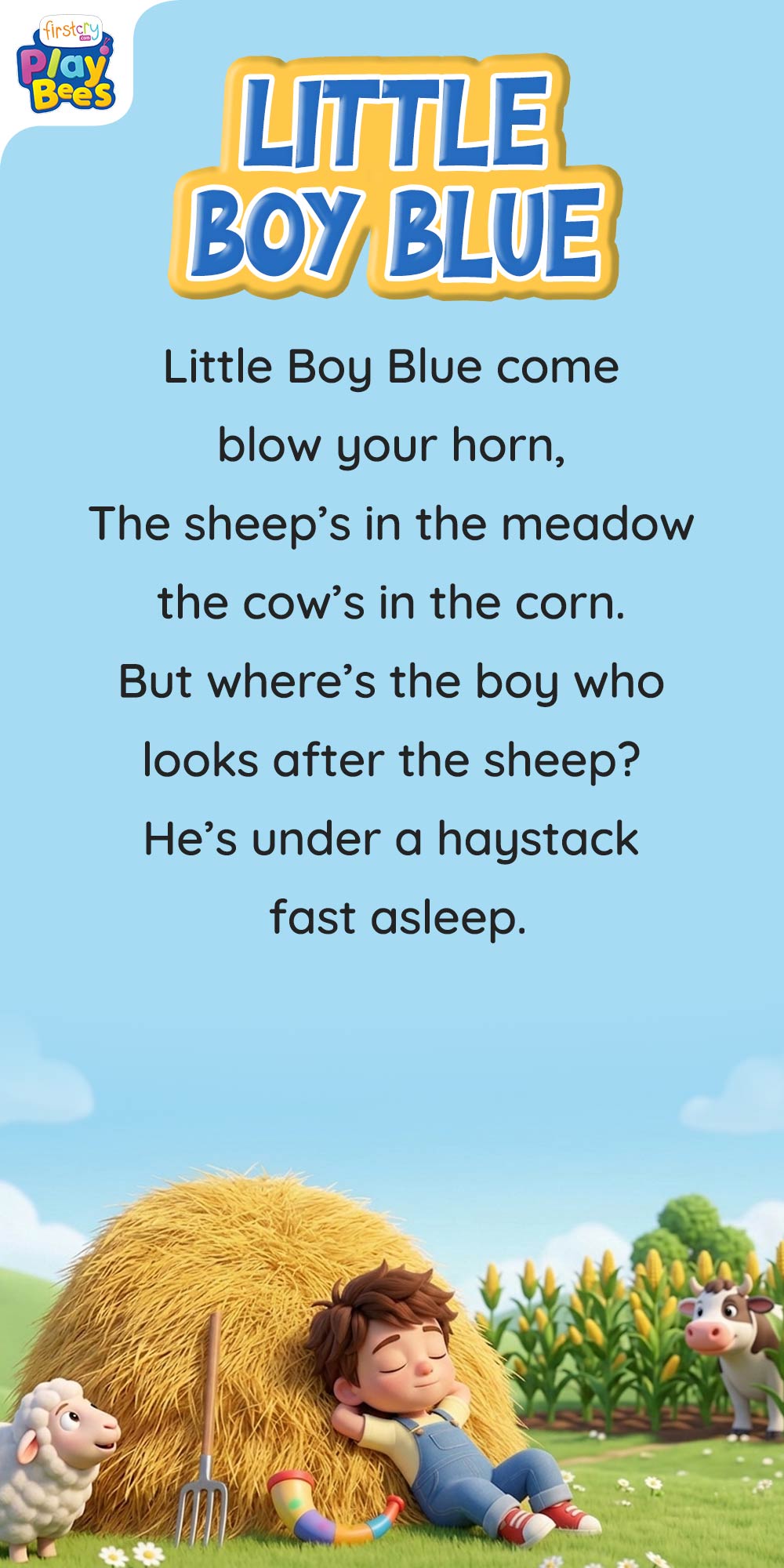
Little Boy Blue come blow your horn,
The sheep’s in the meadow the cow’s in the corn.
But where’s the boy who looks after the sheep?
He’s under a haystack fast asleep.
Will you wake him? No, not I – for if I do, he’s sure to cry.
Other Versions of Little Boy Blue Song
Some versions of this rhyme include slight variations in wording while keeping the same meaning and rhythm.
Little Boy Blue, come blow your horn,
The sheep’s in the meadow, the cow’s in the corn.
Where is the boy who looks after the sheep?
He’s under the haystack, fast asleep.
Will you wake him? No, not I,
For if I do, he’s sure to cry.
Gestures – How to Teach Little Boy Blue to Kids
Using simple actions can make the rhyme more fun and help children remember it better. Try these easy gestures while reciting the rhyme.
- Pretend to blow a horn by placing your hands near your mouth when saying “come blow your horn” to make the action lively.
- Use your hands to show animals by pointing around for “sheep in the meadow” and “cow in the corn” to create visual understanding.
- Shade your eyes with your hand and look around when saying “Where is the boy” to act out searching.
- Point downwards for “under the haystack” to show the boy’s hiding place.
- Rest your head on your hands and close your eyes during “fast asleep” to mimic sleeping.
- Gently pretend to wake someone up to add interaction and make the rhyme more engaging.
History & Quick Facts
Little Boy Blue is a traditional English nursery rhyme that dates back to the 18th century. It was first published in Tommy Thumb’s Pretty Song Book around 1744, making it one of the oldest known nursery rhymes. The author is unknown, which is common for many folk rhymes passed down through generations. Over time, it became popular in households and schools because of its simple language and relatable theme. The rhyme reflects rural life, where children often helped care for animals, making it meaningful in earlier times. Today, it continues to be widely shared across the world.
Interesting Facts
- The rhyme is believed to reflect old countryside life where young boys were responsible for herding animals.
- It has been included in many classic nursery rhyme collections for over 200 years.
- The character of Little Boy Blue appears in stories, poems, and even cartoons inspired by nursery rhymes.
- The tune used today has changed over time and may vary depending on region or performance.
- It is often used in early childhood education due to its short and simple structure.
- The rhyme has been translated into several languages, helping it reach children worldwide.
Suitable age & Learnings
This rhyme is best suited for children aged 2 to 5 years as it is short, easy to understand, and fun to repeat. It supports early learning by combining storytelling, rhythm, and simple vocabulary.
- Children learn about responsibility as the boy is expected to take care of animals.
- It improves listening skills since kids follow the short and clear storyline.
- The rhyme helps build memory through repetition and rhythmic patterns.
- Kids develop vocabulary by learning words like meadow, corn, and haystack.
- It encourages imagination by helping children picture scenes of animals and fields.
- The rhyme also supports speech development through simple and repetitive sounds.
FAQs
1. What is the rhyming scheme of Little Boy Blue?
The rhyming scheme is AABB, where “horn” rhymes with “corn” and “sheep” rhymes with “asleep.”
2. What is the message of Little Boy Blue rhyme?
The rhyme gently highlights responsibility and the importance of staying attentive to duties.
3. Why is Little Boy Blue popular among children?
It is short, rhythmic, and easy to remember, making it enjoyable for young learners.
Little Boy Blue is a timeless nursery rhyme that continues to charm children and parents alike. Its simple storyline, gentle rhythm, and playful imagery make it perfect for early learning. The rhyme not only entertains but also introduces important ideas like responsibility in a light way. With actions and gestures, it becomes even more engaging and interactive for kids. Its long history shows how meaningful and adaptable it has been across generations. Whether read, sung, or acted out, Little Boy Blue remains a delightful addition to every child’s learning journey.
Explore Other Rhymes for Kids:
Baa, Baa, Black Sheep Nursery Rhyme With Lyrics
The Farmer in the Dell Nursery Rhyme With Lyrics
Old Macdonald Had A Farm Nursery Rhyme With Lyrics