

Table of Contents
Simple Simon is a classic nursery rhyme about a cheerful but naive boy who visits a pie shop and has a series of amusing encounters. The rhyme is light, playful, and filled with funny moments that make children smile and giggle. Kids enjoy its rhythm, repetition, and easy-to-follow storyline, which keeps them engaged from start to finish. For parents and teachers, it is a helpful learning tool that builds listening skills, memory, and early language development. The simple words and rhymes also introduce children to basic storytelling and sequencing. Overall, Simple Simon is a delightful way to combine fun and learning, making it a favorite choice for early childhood education and bonding time.
Simple Simon Song Lyrics
A playful rhyme full of humor and rhythm, these Simple Simon words are easy for kids to learn and enjoy together.
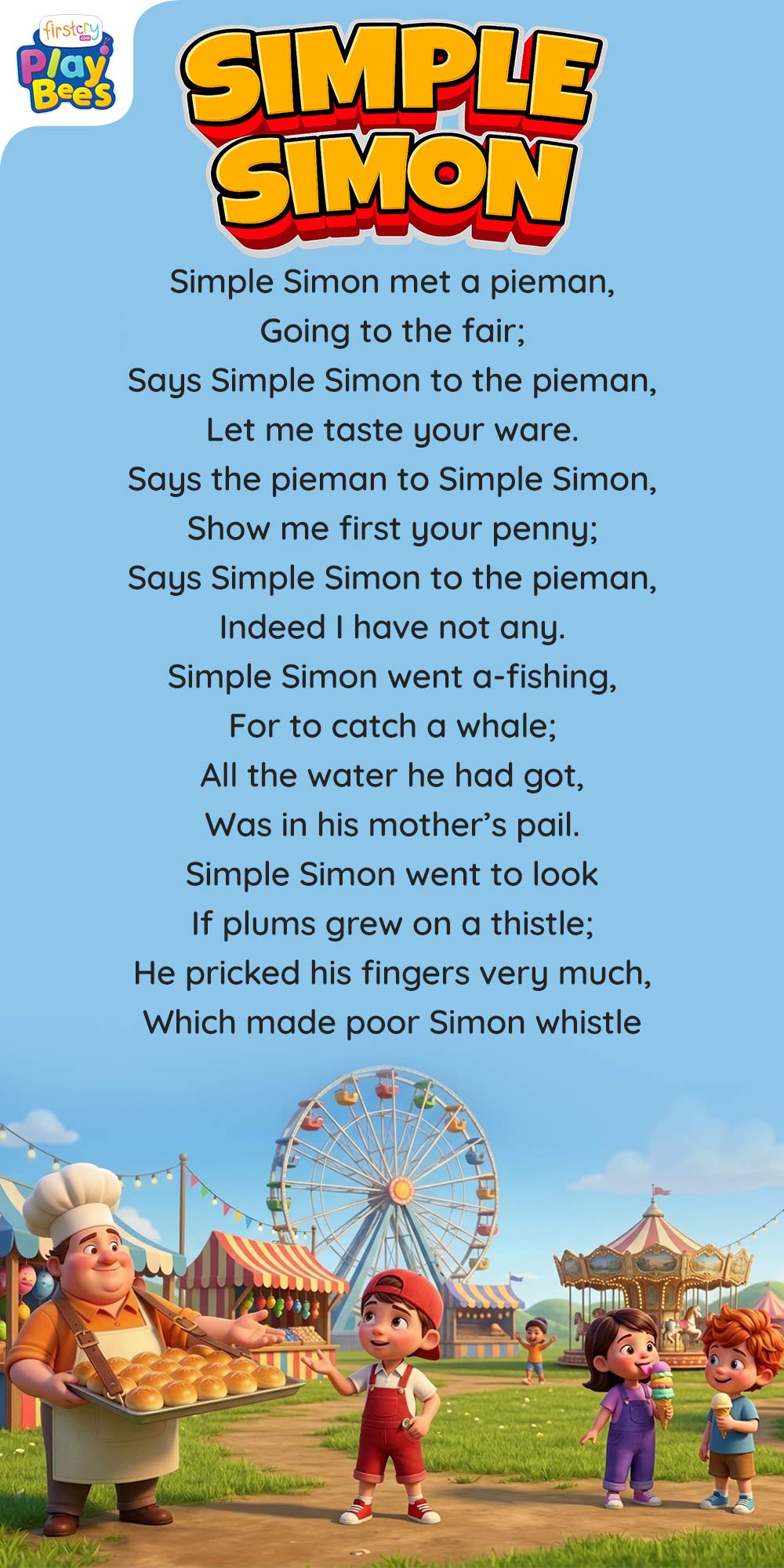
Simple Simon met a pieman,
Going to the fair;
Says Simple Simon to the pieman,
Let me taste your ware.
Says the pieman to Simple Simon,
Show me first your penny;
Says Simple Simon to the pieman,
Indeed I have not any.
Simple Simon went a-fishing,
For to catch a whale;
All the water he had got,
Was in his mother’s pail.
Simple Simon went to look
If plums grew on a thistle;
He pricked his fingers very much,
Which made poor Simon whistle
Other Versions of Simple Simon Song
This rhyme has a few playful variations that add extra verses or slightly change wording while keeping the same fun theme.
Some versions include additional silly adventures of Simple Simon, such as meeting different people or trying more impossible tasks. Others simplify the lyrics for younger children by shortening the rhyme or repeating key lines. In some adaptations, modern language replaces older words to make it easier for kids to understand. Despite these small differences, the main story and humor remain the same across versions.
Gestures – How to Teach Simple Simon to Kids
Using simple actions makes the rhyme more engaging and helps children remember the story better while having fun.
- Pretend to walk in place while saying “met a pieman” to show Simon going on a journey.
- Hold your hands out like offering something when saying “Let me taste your ware” to act out the request.
- Tap your palm as if looking for money during “Show me first your penny” to demonstrate the idea clearly.
- Use a fishing motion with both hands for “went a-fishing” to make the scene lively and easy to follow.
- Wiggle your fingers and make a surprised face when saying “pricked his fingers” to show the reaction.
- Pretend to hold a sieve and let imaginary water fall through your fingers to act out the final verse.
History & Quick Facts
Simple Simon is a traditional English nursery rhyme that dates back to the 18th century. It was first published in collections of nursery rhymes around the 1700s, though its exact author remains unknown. Like many folk rhymes, it was passed down orally before appearing in print. The character of Simple Simon represents innocence and curiosity, often used to gently teach children about common sense through humor. Over time, the rhyme became widely popular in homes and schools, especially in English-speaking countries, and continues to be shared across generations.
Interesting Facts
- Simple Simon is considered a folk rhyme, meaning it was shared by people over time rather than written by a single known author.
- The rhyme often teaches small life lessons through funny mistakes made by Simon.
- It has been included in many classic nursery rhyme collections and children’s books.
- Some versions of the rhyme add new verses to make the story longer and more entertaining.
- The tune used for Simple Simon can vary, as it is often sung differently in different regions.
- The rhyme has been adapted into songs, animations, and classroom activities worldwide.
Suitable Age & Learnings
Simple Simon is best suited for children aged 2 to 6 years, as its simple language and rhythm are easy for young learners to follow. It supports early childhood development by combining storytelling with repetition and fun actions.
- Children learn basic vocabulary such as everyday words like “penny,” “pie,” and “water,” which builds language skills.
- The rhyme improves listening and memory as kids repeat lines and recall the sequence of events.
- It introduces cause and effect through Simon’s actions and their humorous outcomes.
- Kids develop imagination by visualizing the funny situations in the story.
- The rhythm and rhyme pattern support early phonics and sound recognition.
- Acting out gestures helps improve motor skills and coordination in a playful way.
FAQs
1. What is the rhyming scheme of Simple Simon?
The rhyme mostly follows a simple AABB pattern, making it easy for children to recognize and repeat.
2. What is the message of Simple Simon rhyme?
The rhyme gently highlights the importance of thinking carefully and learning from mistakes in a fun way.
3. How can I make Simple Simon more engaging for my child?
You can add actions, use expressive storytelling, and encourage your child to repeat lines or act out scenes.
Simple Simon is a timeless nursery rhyme that brings together humor, rhythm, and simple storytelling in a way children truly enjoy. Its playful nature keeps little ones engaged while quietly teaching valuable lessons about thinking and learning from experiences. Parents and teachers appreciate how easily it fits into daily routines, whether during playtime or learning sessions. With actions and repetition, it becomes even more interactive and memorable for young minds. The rhyme also helps build early language and listening skills in a natural and enjoyable way. Overall, Simple Simon remains a charming and meaningful addition to every child’s early learning journey.
Explore Other Rhymes for Kids:
Jack Sprat Nursery Rhyme With Lyrics
Georgie Porgie Nursery Rhyme With Lyrics
Little Jack Horner Nursery Rhyme With Lyrics