Other Versions of Noche de paz Song
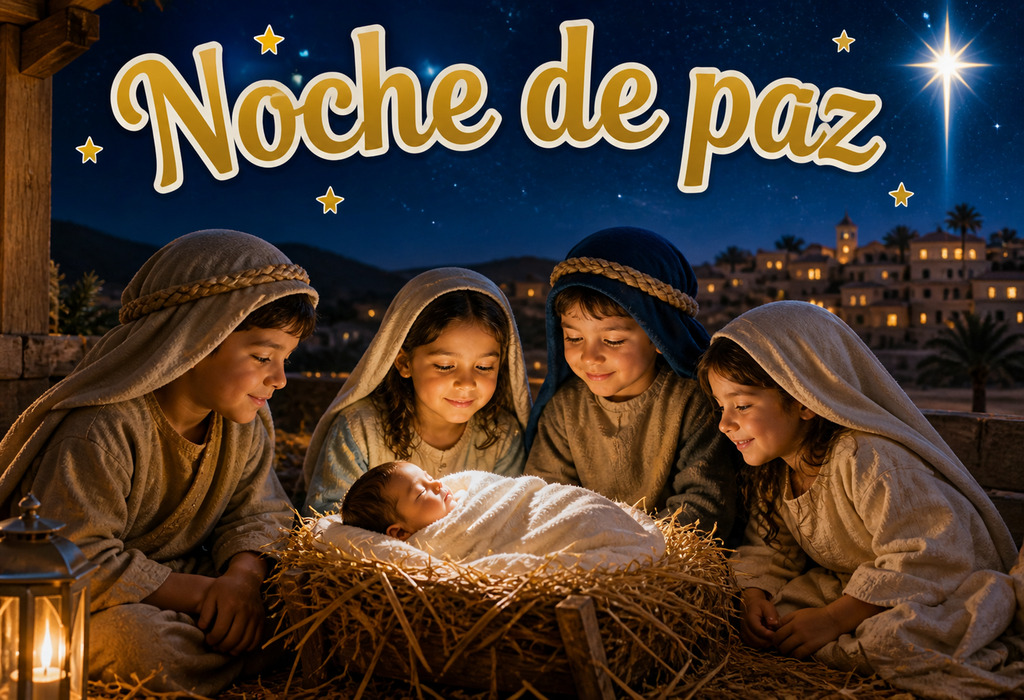
“Noche de paz” is loved across the world, and it exists in many beautiful versions in different languages and styles.
1. German Version – “Stille Nacht” (Original)
Stille Nacht, heilige Nacht,
Alles schläft, einsam wacht,
Nur das traute hochheilige Paar,
Holder Knabe im lockigen Haar,
Schlaf in himmlischer Ruh,
Schlaf in himmlischer Ruh.
2. English Version – “Silent Night”
Silent night, holy night,
All is calm, all is bright,
Round yon Virgin, Mother and Child,
Holy Infant so tender and mild,
Sleep in heavenly peace,
Sleep in heavenly peace.
3. Simple Kids Version (Short & Easy)
Silent night, peaceful night,
Stars are shining bright,
Baby sleeps so calm and still,
Moonlight glowing on the hill,
Dreams so soft and sweet,
Dreams so soft and sweet.
4. Lullaby-Style Version (Soft Adaptation)
Silent night, gentle light,
Everything feels right,
Close your eyes and drift away,
Till the dawn of a new day,
Rest in calm and peace,
Rest in calm and peace.
Gestures – How to Teach Noche de paz to Kids
Teaching “Noche de paz” with actions makes it more engaging and helps children remember the rhyme better. Simple gestures can turn this calm song into a fun and interactive experience.
- Gently place your hands together and rest them near your cheek to show “sleep,” helping children connect with the peaceful mood of the song.
- Slowly wave your hands side to side like twinkling stars to represent the night sky and create a calming visual.
- Point upwards with one finger to show the “star,” encouraging kids to follow the motion and stay engaged.
- Rock your arms like holding a baby to represent baby Jesus, making the story element easy to understand.
- Open your arms wide to show love and warmth, helping children express emotions through movement.
- End by placing hands on the heart and smiling softly, reinforcing the feeling of peace and comfort.
History & Quick Facts
“Noche de paz” is the Spanish version of the famous Christmas carol “Silent Night,” which was originally written in German as “Stille Nacht.” The lyrics were written by Joseph Mohr in 1816, and the melody was composed by Franz Xaver Gruber in 1818 in Austria. It was first performed on Christmas Eve in a small church in Oberndorf. Over time, the song spread across Europe and then the world, becoming one of the most beloved Christmas carols ever. The Spanish version was later translated to help more people connect with the song, and today it is widely sung in Spanish-speaking countries during festive celebrations.
Interesting Facts
- “Noche de paz” is sung in over 300 languages, making it one of the most translated songs in the world.
- The original song was first performed with a guitar instead of an organ, which was unusual for church music at that time.
- It is considered a symbol of peace and was even sung during moments of truce in history.
- The melody is simple and soothing, which is why it is often used as a lullaby for children.
- Many famous singers and choirs have recorded their own versions of the song over the years.
- The song is recognized globally as a cultural and musical treasure, especially during Christmas celebrations.
Suitable age & Learnings
“Noche de paz” is suitable for children aged 2 to 8 years, as its calm rhythm and simple words are easy for young learners to follow. It is especially helpful for early childhood development through music and language exposure.
- Children learn new Spanish vocabulary words like “paz” (peace) and “amor” (love), helping build early language skills.
- The rhyme improves listening and memory skills as kids repeat the soothing lines.
- It introduces cultural awareness by exposing children to global traditions and songs.
- The calm melody helps develop emotional understanding and relaxation habits.
- Singing along improves pronunciation and confidence in speaking new words.
- The story element teaches values like kindness, peace, and love in a simple way.
FAQs
1. What is the rhyming scheme of Noche de paz?
The rhyme follows a gentle and flowing pattern, often using repeating sounds at the end of lines, making it easy and musical for children to remember.
2. Is Noche de paz suitable for bedtime?
Yes, its slow and soothing melody makes it perfect as a lullaby to help children relax and fall asleep.
3. Why should kids learn Noche de paz?
It helps children learn new words, understand different cultures, and enjoy music in a calm and meaningful way.
“Noche de paz” is more than just a song—it’s a peaceful and comforting experience for children and families. Its soft melody and simple words make it easy for young learners to enjoy and remember. Through this rhyme, kids not only learn music but also values like love, calmness, and kindness. It introduces them to a global tradition in a gentle and engaging way. Parents can use it as a bonding moment during bedtime or quiet time. Adding gestures and storytelling makes the learning even more fun. Overall, “Noche de paz” is a timeless rhyme that brings warmth, learning, and joy into every child’s world.
Explore Other Rhymes for Kids:
Silent Night Nursery Rhyme With Lyrics
O Holy Night Nursery Rhyme With Lyrics
Hark! The Herald Angels Sing Nursery Rhyme With Lyrics