
Table of Contents
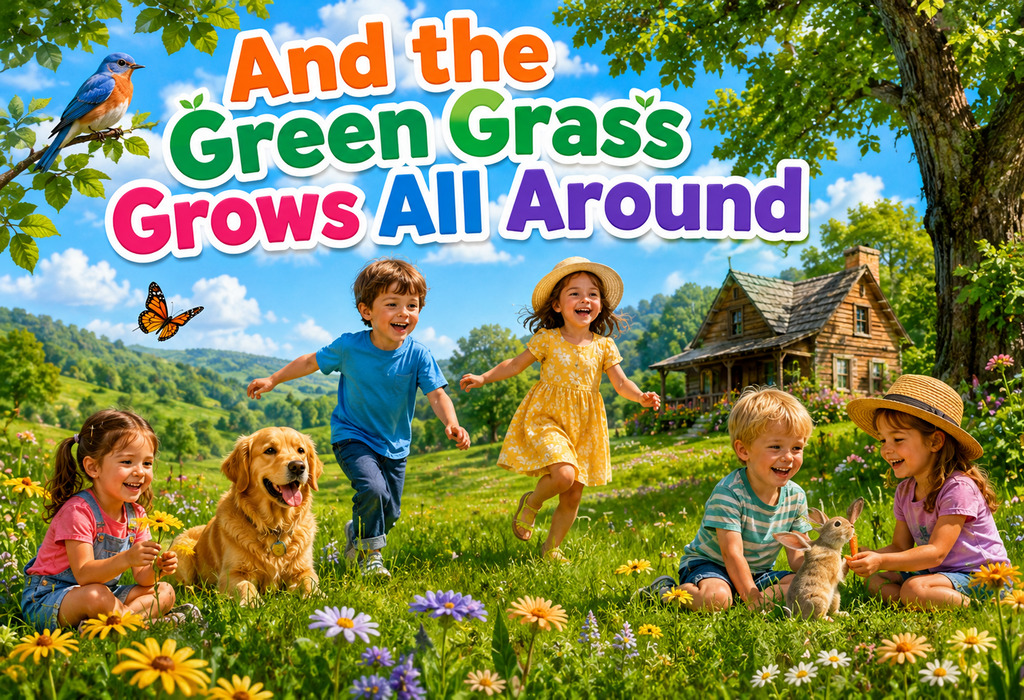
“And the Green Grass Grows All Around” is a cheerful and repetitive nursery rhyme that takes children on a fun storytelling journey through nature. The rhyme builds line by line, making it exciting for kids to sing along and remember each part of the story. Children enjoy its catchy rhythm, playful repetition, and easy tune that encourages participation and laughter. Parents and teachers often use this rhyme during group singing sessions because it keeps young learners engaged and active. Along with entertainment, the song also supports early learning by improving memory, listening skills, sequencing, and vocabulary development. The nature-themed lyrics introduce children to simple words related to trees, birds, nests, and everyday surroundings in a fun and musical way that makes learning enjoyable for little ones.
And the Green Grass Grows All Around Song Lyrics
Here are the popular And the Green Grass Grows All Around words that children love to sing along with during fun rhyme time.
… Oh in the woods there was a tree
The prettiest tree
You ever did see
And the tree was in the ground
And the green grass grew all around, all around, and the green grass grew all around
… And on that tree
There was a limb
The prettiest limb
That you ever did see
And the limb was on the tree
And the tree in the ground
And the green grass grew all around, all around, and the green grass grew all around
… And on that limb
There was a branch
The prettiest branch
That you ever did see
And the branch was on the limb,
And the limb was on the tree,
And the tree was in the ground
And the green grass grew all around, all around, and the green grass grew all around
… And on that branch
There was a nest
The prettiest nest
That you ever did see
And the nest was on the branch
And the branch was on the limb
And the limb was on the tree
And the tree was in the ground
And the green grass grew all around, all around, and the green grass grew all around
… And in that nest
There was an egg
The prettiest egg
That you ever did see
And the egg was in the nest
And the nest was on the branch
And the branch was on the limb
And the limb was on the tree
And the tree was in the ground
And the green grass grew all around, all around, and the green grass grew all around
… And in that egg
There was a bird
The prettiest bird
That you ever did see
And the bird was in the egg
And the egg was in the nest
And the nest was on the branch
And the branch was on the limb
And the limb was on the tree
And the tree was in the ground
And the green grass grew all around, all around, and the green grass grew all around
Other Versions of And the Green Grass Grows All Around Song
Many regions and schools sing slightly different versions of this classic rhyme while keeping the same repetitive storytelling style.
1. Animal Version
In this version, children replace the bird and nest with playful animals like frogs, ducks, bees, or bugs to create a funny and imaginative story.
And on that branch there was a bee,
The prettiest bee that you ever did see,
And the bee was on the branch,
And the branch was on the tree,
And the tree was in the hole,
And the hole was in the ground,
And the green grass grows all around, all around,
And the green grass grows all around.
2. Classroom Short Version
Teachers often use a shorter version for toddlers by stopping after the branch or nest verse so younger children can follow the sequence more easily.
There was a tree in the middle of the ground,
The prettiest tree that you ever did see,
And the tree was in the hole,
And the hole was in the ground,
And the green grass grows all around, all around,
And the green grass grows all around.
3. Campfire Action Version
Camp groups sometimes sing the rhyme with claps, stomps, and funny actions while adding extra verses for more excitement and laughter.
And on that bird there was a feather,
The prettiest feather that you ever did see,
And the feather was on the bird,
And the bird was in the egg,
And the egg was in the nest,
And the nest was on the branch,
And the branch was on the tree,
And the tree was in the hole,
And the hole was in the ground,
And the green grass grows all around, all around,
And the green grass grows all around.
Gestures – How to Teach And the Green Grass Grows All Around to Kids
This rhyme becomes even more enjoyable when children use simple hand movements and actions while singing. Fun gestures help kids remember the sequence of the song and stay actively involved during learning time.
- Stretch both arms upward like a tall tree whenever the word “tree” appears in the rhyme.
- Make a round shape with your hands to show the “hole” in the ground during the song.
- Pretend to hold a small branch by extending one arm sideways like a tree branch.
- Cup both hands together gently to act out the “nest” sitting on the branch.
- Form a small oval shape with your fingers to represent the “egg” in the nest.
- Flap both arms softly like wings whenever the little bird appears in the rhyme.
History & Quick Facts
“And the Green Grass Grows All Around” is a traditional folk nursery rhyme that has been passed down through generations for many years. The rhyme is believed to have originated in the United States and became popular as a cumulative folk song sung in homes, schools, and camps. Since it was shared orally for a long time, there is no confirmed single writer connected to the song. Versions of the rhyme appeared in folk music collections during the early twentieth century, helping it spread to classrooms and children’s music albums. Its repetitive structure and easy melody made it especially popular among teachers and parents who wanted a fun learning activity for young children. Over time, the rhyme became widely recognized as a classic children’s song enjoyed in many English-speaking countries.
Interesting Facts
- The rhyme is called a cumulative song because each verse repeats all the previous lines in sequence.
- Many preschool teachers use this rhyme to help children improve memory and listening skills through repetition.
- The song has been adapted into different languages in several countries around the world.
- Camp groups and children’s choirs often sing the rhyme with actions and clapping games to make it more exciting.
- The nature theme in the rhyme introduces children to simple outdoor vocabulary like tree, branch, nest, and bird.
- Different folk singers have created their own musical versions of the rhyme while keeping the original storytelling pattern.
Suitable age & Learnings
“And the Green Grass Grows All Around” is best suited for children between the ages of 2 and 7 years. Its repetitive lyrics, simple tune, and nature-based storytelling make it perfect for early childhood learning and classroom activities.
- Children learn sequencing skills because each verse builds on the previous part of the story in order.
- The rhyme improves memory and recall as kids repeat longer verses again and again.
- Young learners develop listening skills by carefully following the growing pattern of the song.
- Kids expand their vocabulary with simple nature words such as tree, branch, nest, egg, and bird.
- Singing the rhyme with actions supports coordination and movement-based learning during playtime.
- Group singing encourages confidence, participation, and social interaction among children in classrooms or at home.
FAQs
1. What is the rhyming scheme of And the Green Grass Grows All Around?
The rhyme mainly follows a repetitive and cumulative pattern rather than a strict rhyming scheme. Its repeated phrases and rhythm make it easy for children to remember and sing.
2. Why do children enjoy singing this rhyme?
Children enjoy the rhyme because it has catchy repetition, simple words, and fun storytelling that grows with every verse.
3. How does this rhyme help in early learning?
The rhyme supports memory, vocabulary, listening skills, sequencing, and participation through music and repetition.
“And the Green Grass Grows All Around” continues to be a favorite nursery rhyme for young children because of its joyful rhythm and playful storytelling. The repetitive verses make it easy for little learners to sing along and remember each new part of the song. Parents and teachers appreciate how naturally the rhyme supports memory, listening, and vocabulary development during everyday learning activities. Its simple nature theme also introduces children to familiar outdoor elements in a fun and engaging way. Adding gestures and actions can make the experience even more interactive and enjoyable for kids. Whether sung at home, in preschool, or during group activities, this classic rhyme brings smiles, music, and learning together in a delightful way.
Explore Other Rhymes for Kids:
The Ants Go Marching Nursery Rhyme With Lyrics
Oats Peas Beans and Barley Grow Nursery Rhyme With Lyrics
This Is the House That Jack Built Nursery Rhyme With Lyrics