
Table of Contents
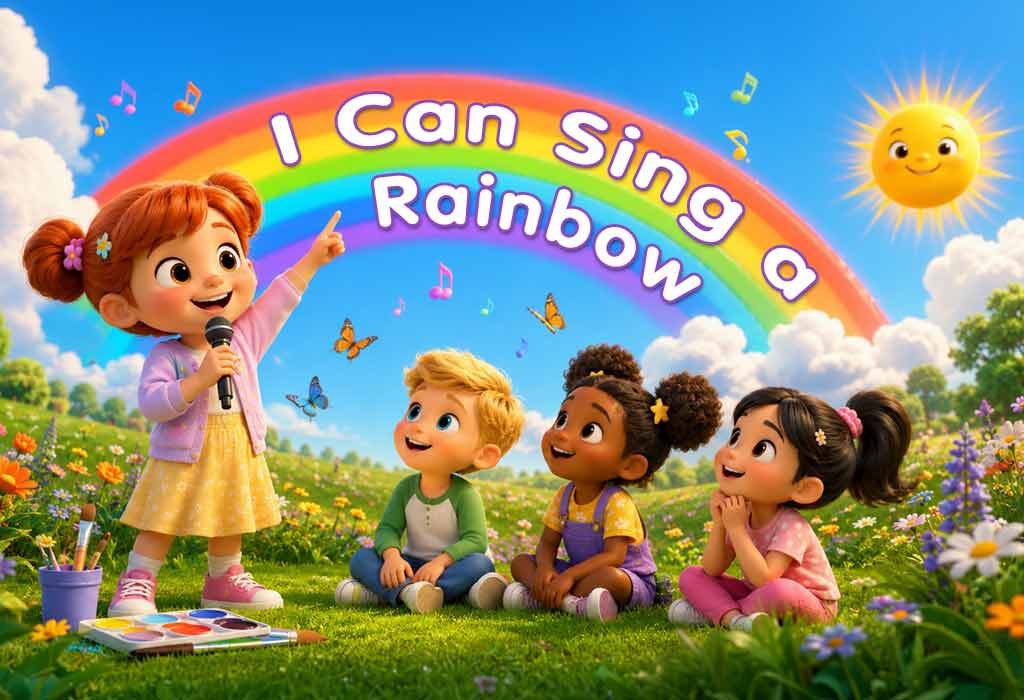
Colors make learning exciting for young children, and the classic I Can Sing a Rainbow nursery rhyme is a wonderful way to introduce them to different shades through music. This gentle and catchy rhyme encourages kids to recognize colors while singing along in a calm and playful way. Children enjoy the soothing tune, simple words, and repetitive pattern that make it easy to remember. Parents and teachers often use this rhyme during preschool activities, circle time, and early learning sessions because it helps improve listening, pronunciation, and memory skills. Singing the rhyme also supports language development and builds confidence in speaking and singing. With its cheerful rhythm and educational value, I Can Sing a Rainbow remains a favorite learning song for toddlers and preschoolers around the world.
I Can Sing a Rainbow Song Lyrics
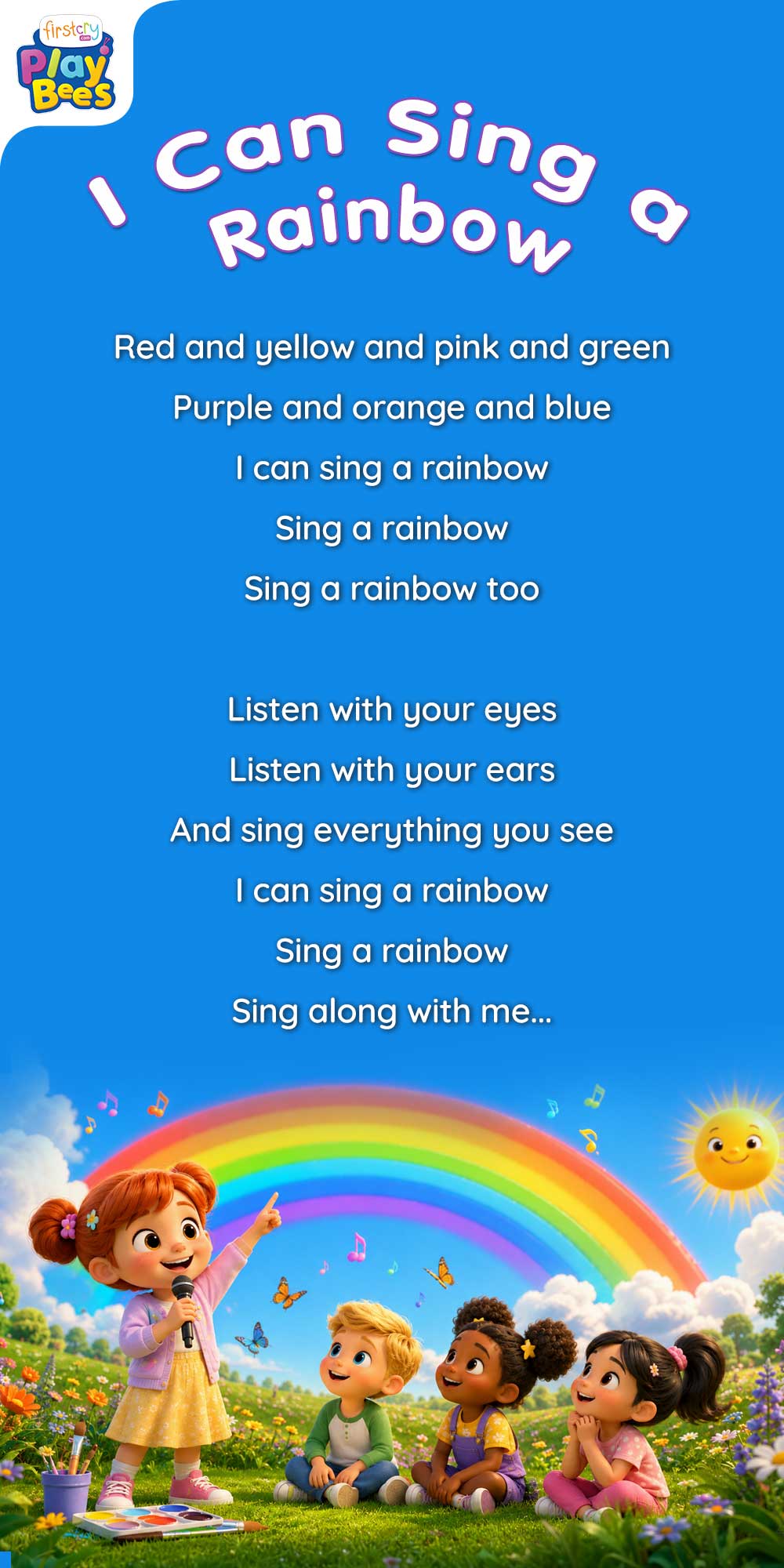
Children love singing along to the colorful I Can Sing a Rainbow words because the rhyme is simple, relaxing, and easy to remember.
Red and yellow and pink and green
Purple and orange and blue
I can sing a rainbow
Sing a rainbow
Sing a rainbow too
Listen with your eyes
Listen with your ears
And sing everything you see
I can sing a rainbow
Sing a rainbow
Sing along with me
Red and yellow and pink and green
Purple and orange and blue
I can sing a rainbow
Sing a rainbow
Sing a rainbow too
Other Versions of I Can Sing a Rainbow Song
Many teachers and parents enjoy using alternate versions of this rhyme to make color learning more fun and interactive for children.
1. Slow Learning Version
Red and yellow,
Pink and green,
Purple and orange,
And blue.
I can sing a rainbow,
Sing a rainbow,
Sing a rainbow too.
This version is sung slowly so toddlers can clearly hear and repeat each color name.
2. Action and Dance Version
Red and yellow, clap your hands,
Pink and green, now turn around,
Purple and orange, tap your feet,
Blue so bright without a sound.
I can sing a rainbow,
Sing a rainbow,
Dance along with me.
This playful version adds simple movements and actions to make learning more interactive.
3. Classroom Object Version
Red like apples,
Yellow like the sun,
Pink like flowers,
Green for fun.
Purple grapes and orange balls,
Blue sky over you,
I can sing a rainbow,
Sing a rainbow too.
Teachers often use this version to help children connect colors with everyday objects around them.
4. Multilingual Learning Version
Red, rojo, rouge and rot,
Yellow, amarillo too,
Colors sound so wonderful,
When we sing with you.
I can sing a rainbow,
Sing a rainbow,
Learn the colors too.
This adaptation introduces children to color names in different languages while singing.
5. Fast Musical Version
Red, yellow, pink and green,
Purple, orange, blue,
Jump and sing and clap along,
There’s a rainbow too!
I can sing a rainbow,
Sing a rainbow,
Come and sing it too.
This energetic version is commonly used during music and movement activities for preschoolers.
Gestures – How to Teach I Can Sing a Rainbow to Kids
Teaching this rhyme with gestures makes the learning experience more exciting and memorable for children. Simple actions help kids connect movement with color recognition and improve their listening skills.
- Raise both hands like a rainbow shape in the air while singing the opening line to help children visualize a rainbow.
- Point to colorful objects, flashcards, or clothes around the room whenever a color name is mentioned in the song.
- Cup one hand around the ear during the line “Listen with your ears” to encourage active listening.
- Place fingers gently near the eyes during “Listen with your eyes” to teach children to observe carefully.
- Sway side to side slowly while singing the repeated rainbow lines to match the calm rhythm of the tune.
- Invite children to clap softly at the end of each line so they stay involved and follow the rhythm easily.
History & Quick Facts
I Can Sing a Rainbow is a well known children’s song written by Arthur Hamilton, an American composer and songwriter. The song was originally created in the 1950s and later became widely popular after being featured in children’s music programs and nursery collections. It was especially loved in preschools and kindergartens because it helped children learn colors in a simple musical format. Over time, the rhyme spread across many countries through educational television shows, classroom activities, and children’s albums. Its calm melody and easy lyrics made it a favorite among parents, teachers, and young learners.
Interesting Facts
- The rhyme is mainly used to teach children the names of colors through music and repetition in a fun way.
- Many schools include the song during preschool circle time because the tune is soft, calming, and easy for toddlers to sing.
- The rhyme has been translated into different languages so children around the world can enjoy learning colors through singing.
- Several animated videos and classroom performances of the song are available online, making it popular across generations.
- The melody is gentle and repetitive, which helps young children remember both the tune and the color sequence easily.
- Parents often combine the rhyme with art activities such as rainbow drawing, coloring games, and matching exercises for interactive learning.
Suitable age & Learnings
This colorful nursery rhyme is best suited for toddlers and preschoolers between the ages of 2 and 6 years. The song supports early childhood learning by combining music, listening, movement, and vocabulary building in a simple way.
- Children learn to identify and remember basic color names through repetition and singing.
- The rhyme improves listening skills because kids pay attention to both the melody and the spoken words.
- Singing along helps children develop clearer pronunciation and stronger speaking confidence.
- The repetitive pattern strengthens memory and helps young learners recall sequences more easily.
- Kids build coordination skills when gestures and hand movements are added during singing time.
- Children also learn simple descriptive vocabulary words related to colors, observation, and sound.
FAQs
1. What is the rhyming scheme of I Can Sing a Rainbow?
The rhyme uses a simple and gentle rhyming pattern with repeated phrases and musical repetition rather than strong end rhymes, making it easier for young children to sing and remember.
2. Why is I Can Sing a Rainbow good for preschoolers?
The rhyme helps preschoolers learn color names, improve listening skills, and build memory through repetition, music, and playful interaction.
3. Can I use actions while teaching I Can Sing a Rainbow?
Yes, adding simple hand gestures, pointing activities, and movement makes the rhyme more engaging and helps children understand colors more effectively.
I Can Sing a Rainbow is a timeless nursery rhyme that brings together music, colors, and early learning in a joyful way. Its calm tune and repetitive lyrics make it easy for toddlers and preschoolers to follow along with confidence. Parents and teachers love using the rhyme because it supports listening, speaking, and memory development while keeping children entertained. The song also encourages creativity through gestures, movement, and color recognition activities. Whether sung at home, in classrooms, or during playtime, it creates a warm and interactive learning experience for young children. With its simple educational value and cheerful melody, this classic rhyme continues to brighten childhood learning for generations.
Explore Other Rhymes for Kids:
A for Apple Nursery Rhyme With Lyrics
Alphabet Song Nursery Rhyme With Lyrics
The Fruits Song Nursery Rhyme With Lyrics