
Table of Contents
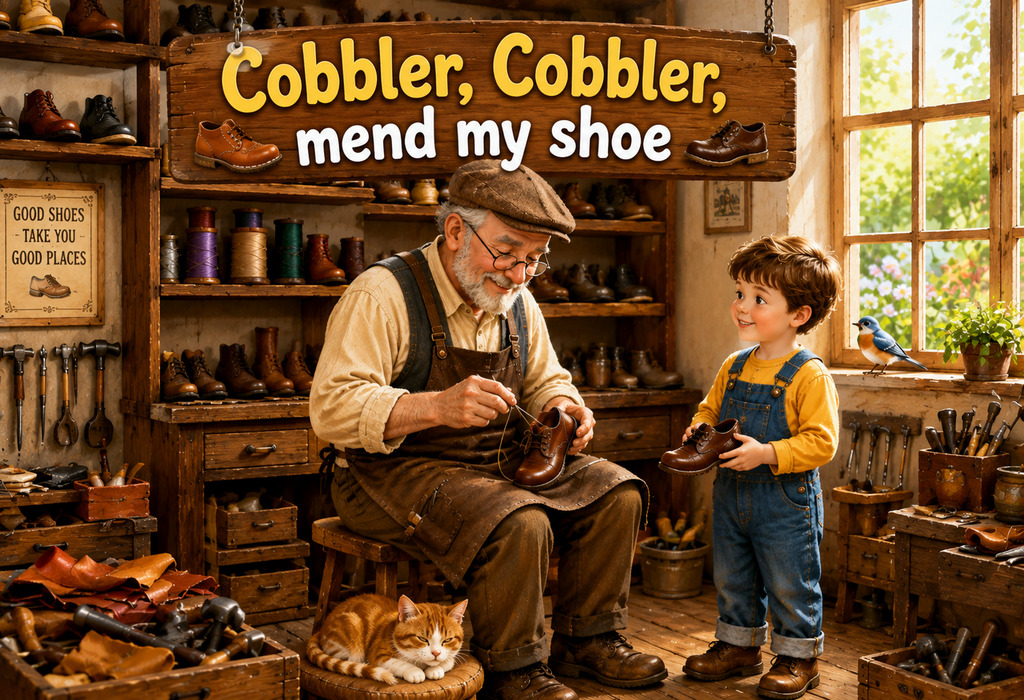
“Cobbler Cobbler, mend my shoe” is a short and cheerful nursery rhyme that children love for its catchy rhythm and playful words. The rhyme talks about a cobbler, a person who repairs shoes, and introduces kids to simple daily-life professions in a fun way. Young children enjoy repeating the lines because they are easy to remember and fun to sing aloud. Parents and teachers often use this rhyme during playtime, circle time, or action-song activities to keep little learners engaged. It also supports early language development by improving listening, pronunciation, memory, and rhythm skills. The repetitive structure helps children build confidence while speaking and singing. Simple rhymes like this create joyful learning moments and encourage kids to explore language through music and movement.
Cobbler Cobbler, mend my shoe Song Lyrics
Here are the popular Cobbler Cobbler, mend my shoe words that children enjoy singing during rhyme time.
Cobbler, cobbler, mend my shoe.
Get it done by half past two.
Half past two is much too late.
Get it done by half past eight.
Stitch it up and stitch it down.
And I’ll give you half a crown.
Other Versions of Cobbler Cobbler, mend my shoe Song
Many schools and parents sing slightly different versions of this rhyme to make it more playful and engaging for children.
“Cobbler, cobbler, mend my shoe,
Get it done by half past two;
Stitch it up and make it neat,
So I can walk along the street.”
Another commonly heard variation is:
“Cobbler, cobbler, mend my shoe,
Have it ready by half past two;
If half past two is far too late,
You may bring it round by eight.”
Gestures – How to Teach Cobbler Cobbler, mend my shoe to Kids
Using simple hand actions and movements makes this rhyme more exciting and easier for children to remember. Fun gestures also help kids improve coordination, listening, and participation while singing together.
- Pretend to point at your shoe when saying “mend my shoe” so children connect the words with the action.
- Show sewing motions with both hands as if stitching a shoe while singing about the cobbler working.
- Tap your wrist like checking a watch when saying “half past two” to introduce the idea of time.
- Shake your head gently during “much too late” to help children understand the meaning through expression.
- Clap softly to the rhythm of the rhyme so kids can follow the beat and timing of the song.
- End with happy marching movements to make the activity energetic and enjoyable for young learners.
History & Quick Facts
“Cobbler Cobbler, mend my shoe” is a traditional English nursery rhyme that has been passed down orally for many generations. Like many old nursery rhymes, the exact author and original publication date are unknown. The rhyme likely became popular during the 18th or 19th century when cobblers were common workers in towns and villages, repairing shoes by hand for families. Because of its simple rhythm and easy wording, the rhyme was widely used in homes, schools, and early childhood classrooms. Over time, different versions appeared in children’s songbooks and learning collections across English-speaking countries. Today, it remains a popular nursery rhyme used to teach rhythm, vocabulary, and everyday occupations to young children.
Interesting Facts
- The rhyme introduces children to the traditional job of a cobbler, a person who repairs shoes by hand.
- “Cobbler Cobbler, mend my shoe” is often used in preschool classrooms because of its short and easy structure.
- The rhyme helps children learn about time phrases like “half past two” in a playful way.
- Different countries and schools sing slightly different versions of the rhyme while keeping the same rhythm.
- Teachers often combine the rhyme with pretend play activities where children act like shoemakers.
- The song has remained popular for generations because its repetitive wording is simple for toddlers to memorize.
Suitable age & Learnings
“Cobbler Cobbler, mend my shoe” is best suited for children between the ages of 2 and 6 years. The rhyme is simple, rhythmic, and ideal for early learning activities at home or in preschool classrooms.
- Children improve listening and memory skills by repeating the short and rhythmic lines regularly.
- The rhyme helps kids learn new vocabulary words such as “cobbler,” “mend,” and “late.”
- Singing along supports better pronunciation and speech development in young learners.
- The rhythm and repetition encourage children to understand patterns and rhyming sounds.
- Action-based teaching with gestures improves motor skills and body coordination during learning.
- The rhyme also teaches children about everyday community helpers and their important jobs.
FAQs
1. What is the rhyming scheme of Cobbler Cobbler, mend my shoe?
The rhyme follows a simple AABB rhyming pattern where “shoe” rhymes with “two” and “late” rhymes with “eight.”
2. Why do children enjoy singing Cobbler Cobbler, mend my shoe?
Children enjoy the rhyme because it is short, catchy, easy to repeat, and fun to act out with gestures.
3. What does the rhyme teach young kids?
The rhyme teaches rhythm, vocabulary, listening skills, and introduces children to the occupation of a cobbler.
“Cobbler Cobbler, mend my shoe” is a timeless nursery rhyme that continues to entertain and educate young children. Its simple words, catchy rhythm, and playful theme make it perfect for early learners. Children enjoy singing the rhyme while using actions and expressions that make learning more interactive. Parents and teachers appreciate how easily the rhyme supports language development, listening skills, and memory building. The rhyme also introduces children to everyday professions in a fun and meaningful way. Whether sung at home, in classrooms, or during playtime, this classic nursery rhyme remains a joyful part of childhood learning experiences.
Explore Other Rhymes for Kids:
Simple Simon Nursery Rhyme With Lyrics
Old Mother Hubbard Nursery Rhyme With Lyrics
One, Two, Buckle My Shoe Nursery Rhyme With Lyrics