
Table of Contents
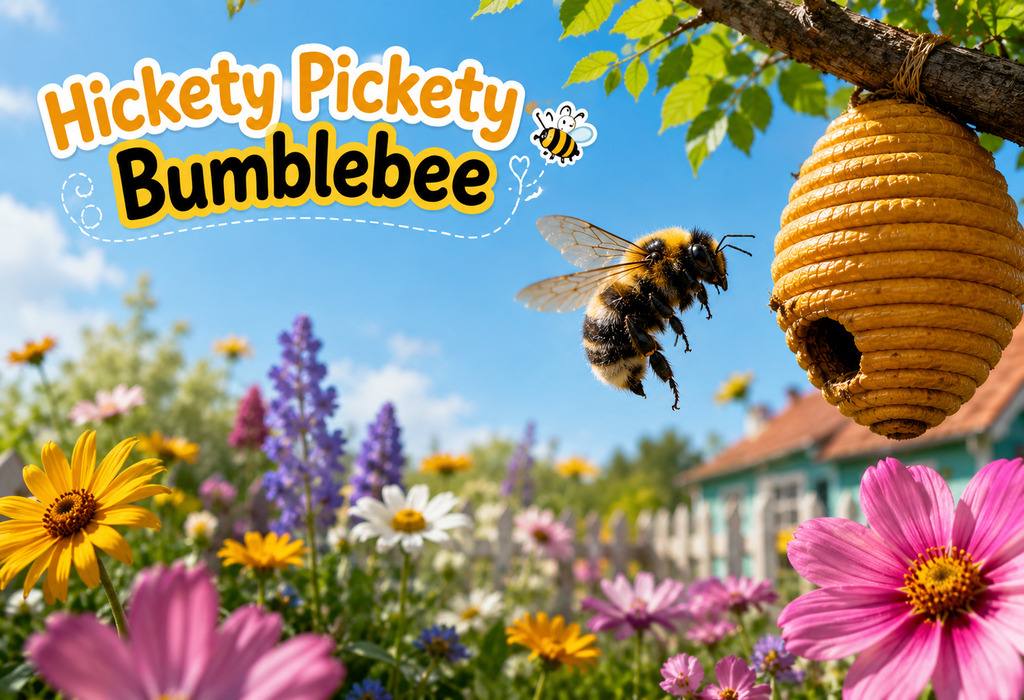
“Hickety Pickety Bumblebee” is a playful nursery rhyme that children love for its fun rhythm, silly sounds, and interactive actions. The rhyme is often used as a name game where kids happily say or clap along while learning to recognize names and sounds. Its catchy tune makes it easy for young children to remember and repeat, helping build listening and speaking skills in a joyful way. Parents and teachers enjoy using this rhyme during circle time, playgroups, and preschool activities because it keeps children engaged and active. The rhyme also encourages social interaction, confidence, and movement through simple gestures and repetition. With its cheerful words and lively pattern, “Hickety Pickety Bumblebee” is a wonderful early learning rhyme for toddlers and preschoolers.
Hickety Pickety Bumblebee Song Lyrics
Here are the popular Hickety Pickety Bumblebee words that children enjoy singing during fun learning and action activities.
Hickety pickety bumblebee,
Can you sing your name for me?
(One child) My name is “…”
(All together) Your name is “…”
Other Versions of Hickety Pickety Bumblebee Song
Many teachers and parents use different playful versions of this rhyme to make learning names and sounds even more exciting for children.
Version 1
Hickety Pickety Bumblebee,
Can you clap your hands with me?
Clap them high,
Clap them low,
Clap them fast,
Clap them slow!
Version 2
Hickety Pickety Bumblebee,
Can you jump around with me?
Jump up high,
Touch the ground,
Turn around,
Without a sound!
Version 3
Hickety Pickety Bumblebee,
Can you spell your name for me?
(Child spells their name aloud)
Gestures – How to Teach Hickety Pickety Bumblebee to Kids
This rhyme becomes more exciting when children use simple hand movements and body actions while singing. Using gestures also helps kids remember the words, stay active, and enjoy group participation.
- Point to yourself while saying the rhyme title so children understand the rhyme is about talking and introducing themselves.
- Tap the child gently on the shoulder when asking them to say their name to encourage participation and confidence.
- Cup hands around the mouth while saying “Say it loud!” to help children understand voice volume.
- Place a finger on the lips while saying “Say it soft!” to demonstrate speaking quietly.
- Move hands quickly in the air during “Say it fast!” so children connect movement with speed.
- Stretch arm movements slowly during “Say it slow!” to help kids understand slower pacing and rhythm.
History & Quick Facts
“Hickety Pickety Bumblebee” is a traditional children’s rhyme commonly used in preschools and early childhood classrooms. Unlike many classic nursery rhymes, it does not have a clearly known author or exact publication date. The rhyme likely developed as part of oral teaching traditions where educators used songs and chants to help children learn names, speaking patterns, and social interaction. Over time, it became popular in daycare centers, nursery schools, and playgroups because of its interactive style and simple repetitive structure. The rhyme is especially loved during circle time activities, where children can actively participate by saying their names aloud. Today, it remains a favorite educational rhyme used around the world for language learning and classroom fun.
Interesting Facts
- The rhyme is often used as a fun classroom icebreaker to help children learn each other’s names comfortably.
- Many preschool teachers use the rhyme to teach loud and soft voice control in an engaging way.
- The words can easily be changed to include actions like clapping, jumping, or spelling names.
- “Hickety Pickety Bumblebee” is popular in many countries because its tune and rhythm are easy for children to follow.
- The rhyme encourages participation, making shy children feel more confident during group activities.
- It is commonly included in toddler music sessions because repetition helps improve memory and listening skills.
Suitable Age & Learnings
“Hickety Pickety Bumblebee” is best suited for toddlers and preschool children between the ages of 2 and 5 years. The rhyme supports early communication, listening, movement, and social development through music and repetition.
- Name recognition: Children learn to recognize and confidently say their own names during the rhyme.
- Listening skills: Kids improve attention and listening by following voice and action instructions carefully.
- Speech development: Repeating words in different tones helps children practice pronunciation and speaking clearly.
- Understanding opposites: The rhyme teaches simple concepts like loud and soft, fast and slow.
- Social confidence: Participating in group singing activities helps children become more comfortable around others.
- Memory and rhythm: Repetition and musical patterns strengthen memory, coordination, and rhythm skills.
FAQs
1. What is the rhyming scheme of Hickety Pickety Bumblebee?
The rhyme follows a simple repeating rhythm pattern rather than a strict poetic rhyming scheme, making it easy for young children to sing and remember.
2. Why is Hickety Pickety Bumblebee good for preschoolers?
The rhyme helps preschoolers improve speaking, listening, confidence, and social interaction through fun repetition and actions.
3. Can Hickety Pickety Bumblebee be used in classrooms?
Yes, teachers often use it during circle time, introductions, and action-song activities to encourage participation and name learning.
“Hickety Pickety Bumblebee” is a cheerful and interactive nursery rhyme that brings learning and play together in a simple way. Its catchy rhythm, fun actions, and personalized name activities make it enjoyable for toddlers and preschoolers alike. Parents and teachers love using the rhyme because it encourages confidence, listening, and early language development. The playful structure keeps children engaged while also helping them learn important social and communication skills. With its easy words and flexible actions, the rhyme can be adapted for many fun classroom or home activities. Overall, “Hickety Pickety Bumblebee” continues to be a delightful favorite that makes early learning joyful and memorable for young children.
Explore Other Rhymes for Kids:
Open Shut Them Nursery Rhyme With Lyrics
One Little Finger Nursery Rhyme With Lyrics
Where is Thumbkin Nursery Rhyme With Lyrics