
Table of Contents
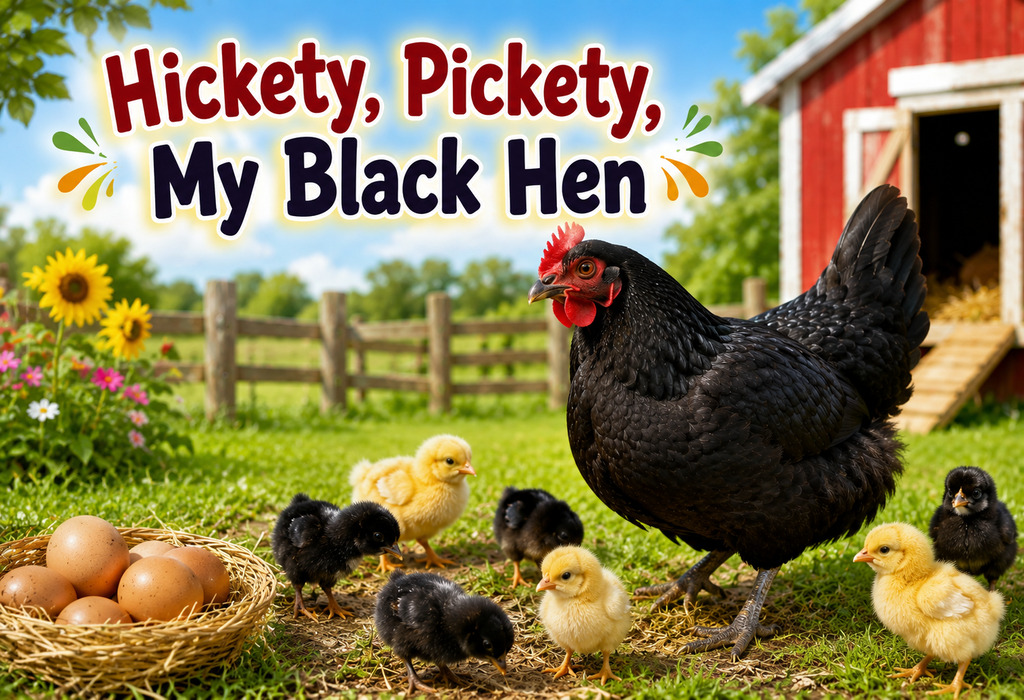
Hickety, Pickety, My Black Hen is a cheerful nursery rhyme about a little black hen that lays eggs for gentlemen. Its catchy rhythm and playful wording make it enjoyable for young children to sing along with parents and teachers. Kids love the funny sounds and repeating phrases, which help them remember the rhyme easily. This classic rhyme also supports early learning by improving listening skills, pronunciation, memory, and rhythm recognition. The simple storyline keeps children engaged while introducing them to basic vocabulary related to animals and numbers. Singing rhymes like this together can also create happy bonding moments at home or in the classroom. With its short and lively verses, this rhyme continues to be a favorite among preschoolers and early learners around the world.
Hickety, Pickety, My Black Hen Song Lyrics
Children enjoy singing the playful Hickety, Pickety, My Black Hen words because the rhyme is short, musical, and easy to remember.
Hickety pickety, my black hen,
She lay’s eggs for gentlemen;
Sometimes nine, sometimes ten,
Hickety pickety, my black hen.
Other Versions of Hickety, Pickety, My Black Hen Song
Many traditional nursery rhymes have slightly different versions, and this rhyme is sometimes sung with small word changes in different regions.
Hickety, pickety, my black hen,
She lays eggs for gentlemen.
Gentlemen come every day,
To see what my black hen will lay.
Another version replaces “gentlemen” with “little men” to make it sound more playful for younger children.
Gestures – How to Teach Hickety, Pickety, My Black Hen to Kids
Using actions while singing helps children stay engaged and remember the rhyme more easily. Simple movements also make learning fun and interactive for toddlers and preschoolers.
- Flap both arms gently like wings when saying “my black hen” so children can pretend to be a hen.
- Hold up fingers while saying “sometimes nine and sometimes ten” to help kids practice counting.
- Pretend to place eggs in a basket during the rhyme to make the story feel real and playful.
- Nod the head to the rhythm of the song so children learn timing and musical flow naturally.
- Encourage children to walk in a tiny circle while singing to keep them active and focused.
- End the rhyme with a cheerful clap and smile to make the activity enjoyable and memorable.
History & Quick Facts
Hickety, Pickety, My Black Hen is a traditional English nursery rhyme that has been passed down through generations for many years. The exact writer of the rhyme is unknown, which is common with old folk rhymes and children’s songs. It first appeared in printed collections of nursery rhymes during the 18th and 19th centuries and later became popular in schools and homes because of its simple rhythm and playful theme. The rhyme was loved for its easy-to-sing pattern, making it useful for helping young children learn pronunciation, rhythm, and counting skills. Over time, it became a well-known rhyme in many English-speaking countries.
Interesting Facts
- The rhyme is considered one of the classic traditional English nursery rhymes taught to preschool children.
- Many parents use the rhyme to introduce counting because it mentions the numbers nine and ten.
- The catchy “Hickety, pickety” sound helps children practice rhythm and pronunciation skills.
- The rhyme has appeared in several nursery rhyme collections and children’s songbooks over the years.
- Different countries sometimes sing slightly different versions while keeping the same playful tune.
- Teachers often use hand gestures and pretend play with the rhyme to make classroom learning more interactive.
Suitable age & Learnings
This rhyme is best suited for children between the ages of 2 and 5 years because of its short length and repetitive sounds. It helps young learners build listening, speaking, and memory skills while enjoying music and movement.
- Children learn counting basics by hearing the numbers nine and ten in the rhyme.
- The repetitive sounds improve pronunciation and help kids recognize rhyming patterns.
- Singing the rhyme supports memory development because children repeat the lines often.
- Kids build listening skills by following the rhythm and words carefully during group singing.
- The rhyme introduces simple vocabulary words such as “hen,” “eggs,” and “gentlemen.”
- Action-based singing encourages movement and coordination, which helps with motor skills.
FAQs
1. What is the rhyming scheme of Hickety, Pickety, My Black Hen?
The rhyme mainly follows an AABB-style rhyming pattern, with words like “hen,” “gentlemen,” and “ten” creating a musical flow.
2. Why do children enjoy Hickety, Pickety, My Black Hen?
Children enjoy the rhyme because it has a catchy rhythm, funny sounds, and simple words that are easy to sing and remember.
3. How does this rhyme help in early learning?
The rhyme supports early learning by improving counting skills, listening ability, vocabulary, rhythm recognition, and memory through repetition and singing.
Hickety, Pickety, My Black Hen remains a timeless nursery rhyme that children continue to enjoy across generations. Its playful rhythm and easy words make it perfect for singing at home, in preschools, and during group activities. The rhyme not only entertains young learners but also helps them develop important early language and counting skills. Adding gestures and actions can make the learning experience even more exciting and memorable for children. Parents and teachers appreciate how such simple rhymes encourage creativity, movement, and joyful interaction. With its cheerful tune and educational value, this classic rhyme continues to bring smiles to little learners everywhere.
Explore Other Rhymes for Kids:
Cock a Doodle Doo Nursery Rhyme With Lyrics
The Farmer in the Dell Nursery Rhyme With Lyrics
Old Macdonald Had A Farm Nursery Rhyme With Lyrics