
Table of Contents
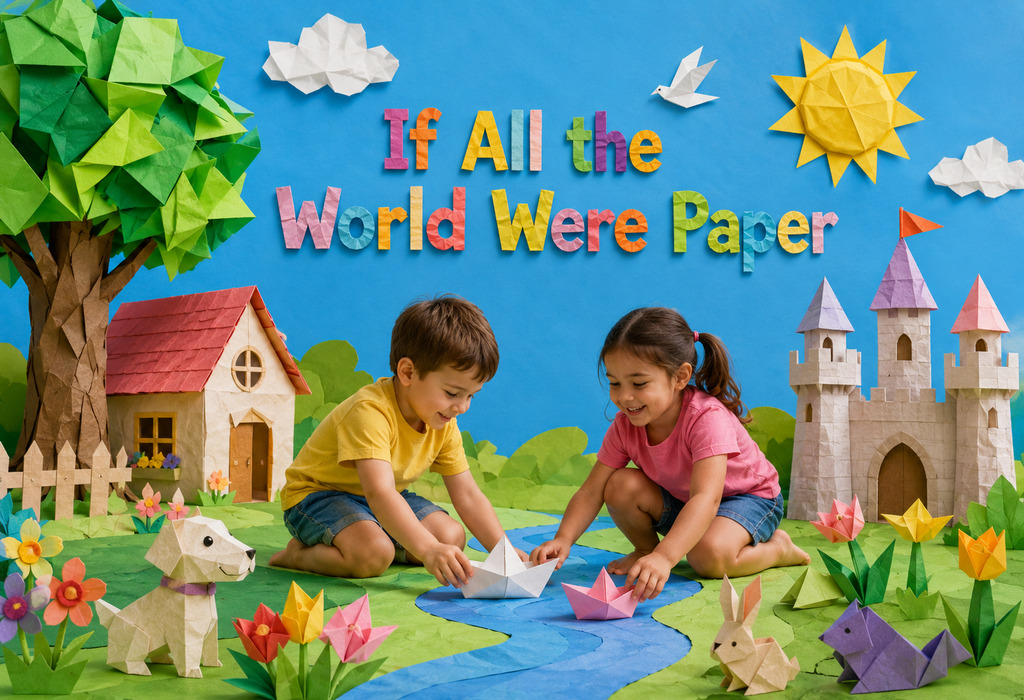
If All the World Were Paper is a playful and imaginative nursery rhyme that encourages children to think creatively about the world around them. The rhyme paints a funny picture of a world made of paper, seas made of ink, and people writing endlessly with giant pens. Young children enjoy its rhythmic flow, simple words, and silly ideas that spark curiosity and laughter. Parents and teachers often use this rhyme to improve listening skills, vocabulary, and memory through repetition and singing. It also helps children explore imagination and descriptive thinking in a fun and engaging way. With its catchy rhythm and easy-to-follow structure, this classic rhyme remains a favorite for story time, classroom activities, and musical learning sessions for toddlers and preschoolers.
If All the World Were Paper Song Lyrics
Children love singing along to the cheerful and imaginative If All the World Were Paper words because the rhyme creates a fun world full of creativity and playful ideas.
If all the world were paper,
And all the sea were ink,
If all the trees were bread and cheese,
What would we have to drink?
Other Versions of If All the World Were Paper Song
Many traditional nursery rhymes have slightly different versions, and If All the World Were Paper is often sung with small word changes in different regions.
Version 1 (Classic Style)
If all the world were paper,
And all the sea were ink,
If all the trees were bread and cheese,
What should we have to drink?
Version 2 (Playful Words)
If all the world were paper,
And all the sea were ink,
If all the trees were cakes and cheese,
What should we have to drink?
Version 3 (Softer Ending)
If all the world were paper,
And all the sea were ink,
If all the trees were bread and cheese,
What would we have to drink?
Version 4 (Creative Classroom Version)
If all the world were paper,
And all the sea were ink,
If all the trees were bread and cheese,
What should we have to drink?
If all the pens were giant ones,
And books were big and bright,
We’d draw and write our happy world,
From morning until night!
Version 5 (Fun Extended Version)
If all the world were paper,
And all the sea were ink,
If all the trees were cakes and cheese,
What would we have to drink?
We’d write on every corner,
With colors bold and bright,
And make a joyful paper world,
Full of fun and light!
Gestures – How to Teach If All the World Were Paper to Kids
Simple actions and movements make this rhyme more enjoyable and easier for children to remember. Using gestures also helps improve coordination, listening skills, and participation during rhyme time.
- Stretch both arms wide while saying “all the world” to show something very big and endless.
- Pretend to hold a large sheet of paper in front of you when saying “world were paper.”
- Move hands in a wave motion during “all the sea were ink” to imitate flowing water.
- Rub your tummy and smile while saying “trees were bread and cheese” to show tasty food.
- Pretend to drink from a cup when the rhyme mentions “drink” to make the action fun and interactive.
- Tap your finger gently on your head during “we’d all sit down and think” to encourage thoughtful expressions.
History & Quick Facts
If All the World Were Paper is a traditional English nursery rhyme that has been passed down orally for many generations. Like many old folk rhymes, its exact author and original publication date are unknown. The rhyme likely became popular during the 18th or 19th century when short imaginative verses were commonly shared among children and families. Its playful use of exaggerated ideas and simple rhyming patterns made it easy for children to remember and repeat. Over time, the rhyme appeared in nursery rhyme collections, school songbooks, and children’s music recordings around the world. Today, it continues to be enjoyed in homes and classrooms as a fun example of imaginative poetry for young learners.
Interesting Facts
- This rhyme is known for encouraging imaginative thinking by asking children to picture an impossible but funny world.
- The song uses repetition, which helps young children improve memory and language skills.
- Many teachers use the rhyme during storytelling and music activities because it is short and easy to learn.
- Different countries sometimes sing the rhyme with slightly changed words or tunes while keeping the same playful idea.
- The rhyme has been included in several classic nursery rhyme books and educational collections over the years.
- Children often enjoy creating their own funny endings to the rhyme, making it a creative classroom activity.
Suitable age & Learnings
If All the World Were Paper is best suited for children between the ages of 2 and 6 years. Its simple language, repetitive lines, and imaginative ideas make it ideal for early learning, group singing, and interactive classroom fun.
- Children learn new vocabulary words such as “paper,” “ink,” and “sea” while listening to the rhyme.
- The repeating lines help improve memory, listening, and pronunciation skills in young learners.
- The rhyme encourages imaginative thinking by asking children to picture unusual and funny situations.
- Singing the rhyme aloud helps children understand rhythm, sound patterns, and rhyming words.
- Action-based teaching improves coordination and motor skills through simple gestures and movements.
- Group singing activities help children build confidence, participation, and social interaction skills.
FAQs
1. What is the rhyming scheme of If All the World Were Paper?
The rhyme mainly follows a simple ABCB-style rhyming pattern, where certain ending words create a musical and memorable flow for children.
2. Why do children enjoy If All the World Were Paper rhyme?
Children enjoy the rhyme because it uses funny imaginary ideas, easy words, and a catchy rhythm that makes singing fun.
3. How does this rhyme help in early learning?
The rhyme supports vocabulary building, listening skills, imagination, memory development, and rhythm recognition through repetition and music.
If All the World Were Paper is a charming nursery rhyme filled with creativity, rhythm, and playful imagination. Its funny ideas encourage children to think beyond the ordinary while enjoying music and storytelling. The rhyme’s simple words and repetitive structure make it easy for toddlers and preschoolers to learn and sing along with confidence. Parents and teachers can also use actions and gestures to make learning even more interactive and enjoyable. Over the years, this classic rhyme has remained a favorite in homes, schools, and nursery collections around the world. With its cheerful tone and imaginative theme, it continues to bring smiles and learning together for young children.
Explore Other Rhymes for Kids:
If Wishes Were Horses Nursery Rhyme With Lyrics
If All the Seas Were One Sea Nursery Rhyme With Lyrics
The Man in the Moon Came Down Too Soon Nursery Rhyme With Lyrics