
Table of Contents
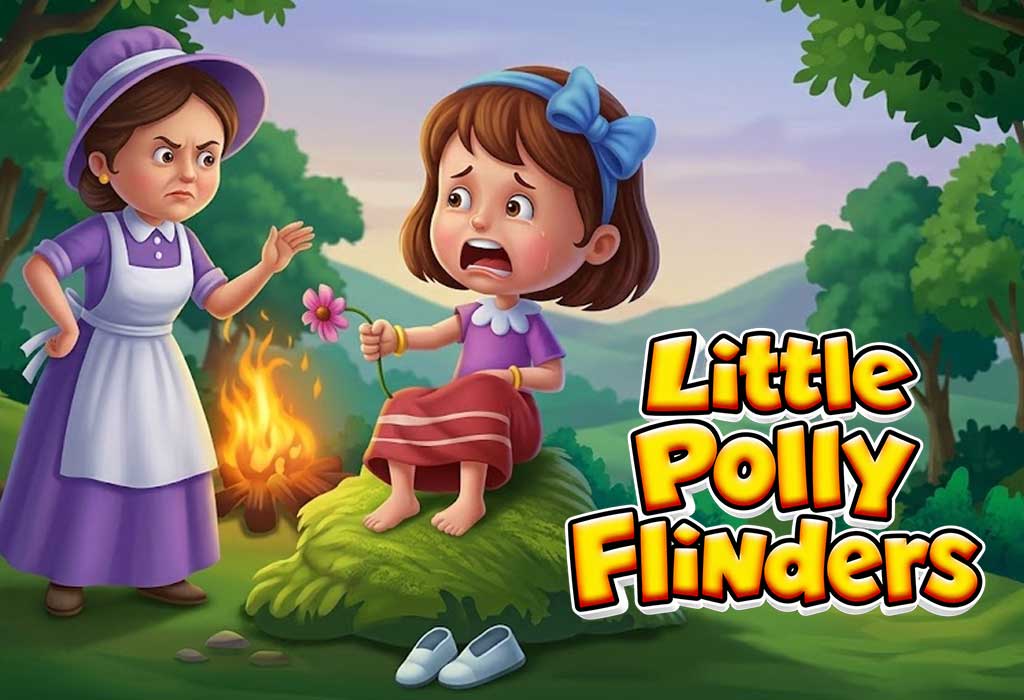
“Little Polly Flinders” is a short and playful nursery rhyme that tells the story of a little girl who sits among the ashes and gets scolded by her mother. Its catchy rhythm and simple storyline make it fun and easy for young children to remember. Kids enjoy the rhyme because of its musical flow, repeating sounds, and amusing ending. Parents and teachers often use it during story time, singing sessions, or classroom activities to build listening and speaking skills. The rhyme also helps children learn new vocabulary, understand emotions, and improve memory through repetition. With its gentle humor and easy words, “Little Polly Flinders” remains a timeless nursery favorite that introduces children to classic rhymes in a fun and engaging way.
Little Polly Flinders Song Lyrics
Children love singing the Little Polly Flinders words because the rhyme is short, rhythmic, and easy to follow.
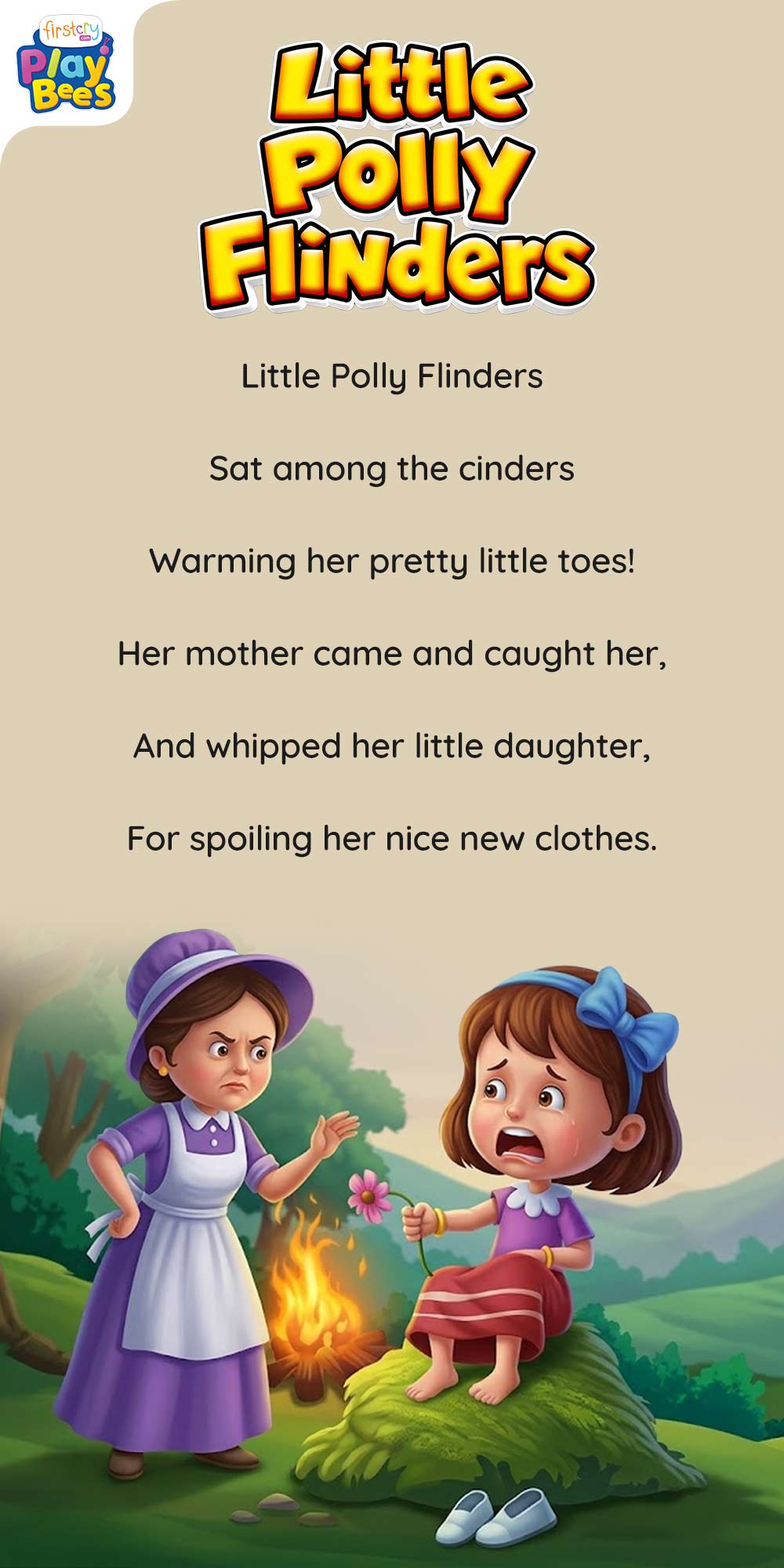
Little Polly Flinders
Sat among the cinders
Warming her pretty little toes!
Her mother came and caught her,
And whipped her little daughter,
For spoiling her nice new clothes.
Other Versions of Little Polly Flinders Song
Different versions of the rhyme have appeared over the years, with small word changes to suit regional styles and singing traditions.
Version 1 (Traditional)
Little Polly Flinders,
Sat among the cinders,
Warming her pretty little toes;
Her mother came and caught her,
And smacked her little daughter,
For spoiling her nice new clothes.
Version 2 (Gentler Adaptation)
Little Polly Flinders,
Sat among the cinders,
Warming her tiny little feet;
Her mother came and scolded her,
Because she had spoiled her,
Nice new clothes so neat.
Version 3 (Simplified for Kids)
Little Polly Flinders,
Sat among the cinders,
Warming her little feet;
Her mother came and told her,
Not to spoil her,
Nice new clothes so neat.
Gestures – How to Teach Little Polly Flinders to Kids
Using simple actions while singing helps children remember the rhyme better and keeps them actively involved. These easy gestures make learning fun and encourage movement, expression, and coordination.
- Pretend to sit down on the floor when saying “Little Polly Flinders” to help children act out the character.
- Rub both hands together near the feet during “warming her pretty little toes” to show the feeling of warmth.
- Point toward imaginary ashes or cinders on the ground while singing the second line.
- Act surprised and place hands on cheeks when “Her mother came and caught her” is sung.
- Gently wag a finger to show the mother scolding Polly for spoiling her clothes.
- Pretend to brush or clean clothes at the end of the rhyme to connect with the story ending.
History & Quick Facts
“Little Polly Flinders” is a traditional English nursery rhyme that first appeared in print during the 19th century. The rhyme was included in collections of popular folk rhymes shared among families and schools in England. Like many classic nursery rhymes, its exact author is unknown because it was passed down orally for many years before being published. The rhyme became popular because of its simple rhythm, memorable wording, and playful storytelling style. Over time, it was included in children’s books, nursery collections, and educational materials around the world, making it a familiar rhyme for generations of young learners.
Interesting Facts
- “Little Polly Flinders” is believed to have originated in England and was shared through oral storytelling before publication.
- The rhyme is popular in preschool classrooms because its short length makes it easy for toddlers to memorize.
- Many modern versions soften the wording to make the rhyme friendlier for younger children.
- The rhyme is often sung with simple hand actions to improve movement and participation during learning time.
- “Little Polly Flinders” has appeared in many nursery rhyme collections and children’s storybooks over the years.
- The catchy rhythm and repeated sounds help children develop early phonics and language skills while singing.
Suitable age & Learnings
“Little Polly Flinders” is most suitable for children between the ages of 2 and 6 years. The rhyme supports early childhood learning by combining rhythm, storytelling, listening, and simple vocabulary in a fun way.
- Children improve memory skills by repeating the short and catchy lines of the rhyme.
- The rhyme helps build vocabulary with words such as “cinders,” “toes,” and “clothes.”
- Kids learn listening and sequencing skills by following the simple story from beginning to end.
- Singing the rhyme aloud encourages clearer pronunciation and speaking confidence.
- Action-based learning with gestures improves coordination and motor skills during rhyme time.
- The rhyme introduces children to emotions and consequences through Polly’s playful experience.
FAQs
1. What is the rhyming scheme of Little Polly Flinders?
The rhyme follows a simple AABCCB-style sound pattern that makes it musical and easy for children to remember.
2. Why do children enjoy Little Polly Flinders?
Children enjoy the rhyme because it has a catchy rhythm, playful storytelling, and easy words that are fun to sing aloud.
3. Is Little Polly Flinders good for preschool learning?
Yes, the rhyme is excellent for preschool learning because it supports language development, memory building, listening skills, and action-based activities.
“Little Polly Flinders” is a charming nursery rhyme that has entertained children for generations with its simple story and rhythmic lines. Its playful words and easy melody make it enjoyable for toddlers, preschoolers, parents, and teachers alike. The rhyme not only brings fun during singing time but also supports important early learning skills such as vocabulary, listening, and memory development. Adding gestures and actions can make the experience even more interactive and engaging for young learners. As part of traditional nursery rhyme collections, it continues to introduce children to classic storytelling in a gentle and memorable way. Sharing rhymes like “Little Polly Flinders” helps create joyful learning moments that children can treasure for years.
Explore Other Rhymes for Kids:
Lucy Locket Nursery Rhyme With Lyrics
Miss Mary Mack Nursery Rhyme With Lyrics
Miss Polly Had A Dolly Nursery Rhyme With Lyrics