
Table of Contents
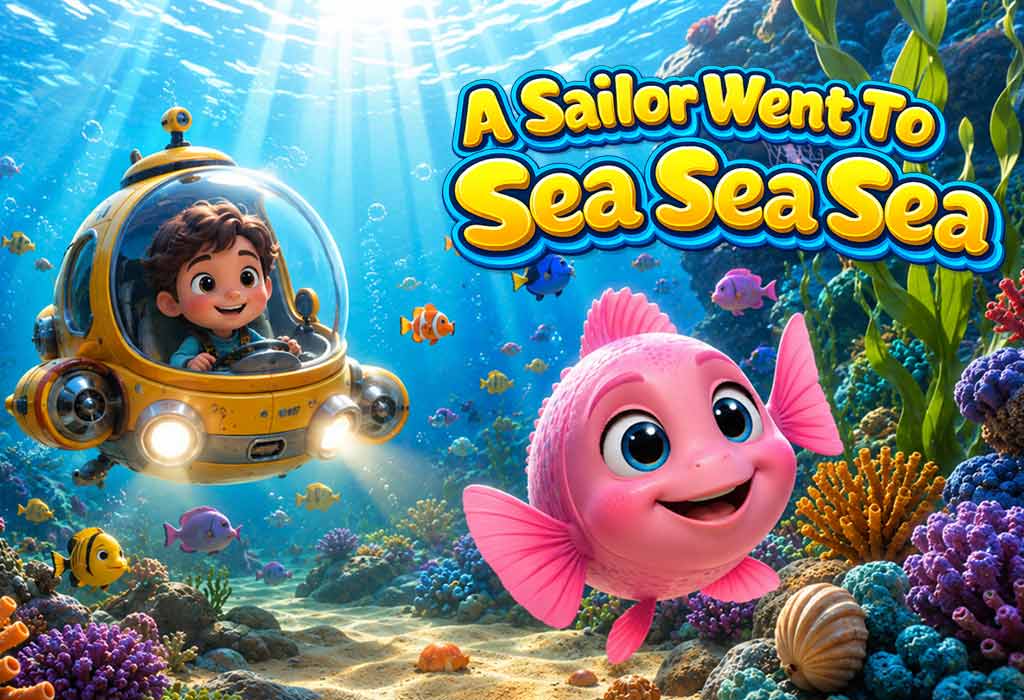
“A Sailor Went To Sea Sea Sea” is a cheerful nursery rhyme that takes children on a fun ocean adventure with a curious sailor. Kids enjoy this rhyme because of its catchy rhythm, playful repetition, and easy-to-follow words that make singing along exciting. The repeated “sea” and “see” sounds also turn it into a fun word game that children love to recite again and again. Parents and teachers often use this rhyme during playtime, circle time, or action-song activities because it keeps little learners engaged. Along with entertainment, the rhyme supports early learning by improving listening skills, pronunciation, memory, and rhythm recognition. The hand actions and gestures used with the song also help children build coordination and motor skills. Its simple language and joyful tune make it a timeless favorite among young children across many generations.
A Sailor Went To Sea Sea Sea Song Lyrics
Children enjoy singing these playful A Sailor Went To Sea Sea Sea words because the rhyme is catchy, repetitive, and easy to remember.
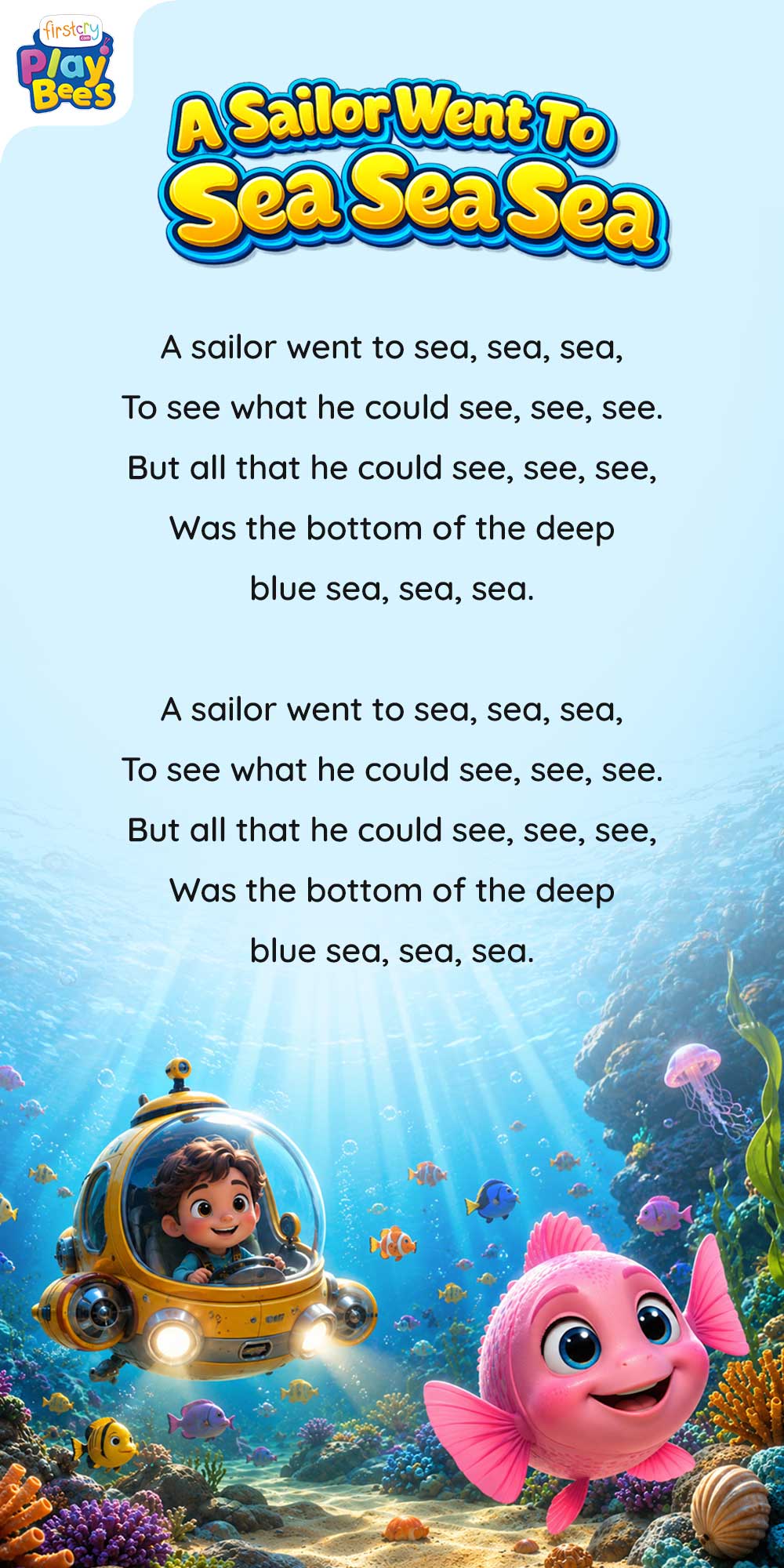
A sailor went to sea, sea, sea,
To see what he could see, see, see.
But all that he could see, see, see,
Was the bottom of the deep blue sea, sea, sea.
A sailor went to sea, sea, sea,
To see what he could see, see, see.
But all that he could see, see, see,
Was the bottom of the deep blue sea, sea, sea.
Other Versions of A Sailor Went To Sea Sea Sea Song
Many playful versions of this rhyme have been created over the years by changing words and actions to make the song even more fun for children.
A sailor went to chop, chop, chop,
To see what he could chop, chop, chop,
But all that he could chop, chop, chop,
Was the bottom of the deep blue chop, chop, chop.
A sailor went to knee, knee, knee,
To see what he could knee, knee, knee,
But all that he could knee, knee, knee,
Was the bottom of the deep blue knee, knee, knee.
Some modern versions also include sea creatures like seahorses, turtles, jellyfish, and sharks to make the rhyme more interactive and educational for children.
Gestures – How to Teach A Sailor Went To Sea Sea Sea to Kids
This rhyme becomes more exciting when children sing it with simple hand movements and actions. Using gestures helps kids stay active, understand the words better, and remember the rhyme more easily.
- Raise one hand to your forehead like a sailor looking far away whenever you say “see, see, see.”
- Move both hands in a wave-like motion during the word “sea” to imitate ocean waves.
- March gently in one place while singing to make children feel like sailors on a journey.
- Point downward with both hands when singing “bottom of the deep blue sea” to show the deep ocean.
- Clap hands softly to the rhythm of the rhyme so children can follow the beat easily.
- Encourage children to repeat actions faster during repeated rounds to make the activity more playful and energetic.
History & Quick Facts
“A Sailor Went To Sea Sea Sea” is a traditional English nursery rhyme and clapping game that became popular among children in the United Kingdom during the late 1960s and early 1970s. It was originally known as “My Father Went to Sea” before later becoming widely recognized by its current title. The rhyme does not have a confirmed author because it spread mainly through oral tradition and playground singing games. One of the earliest recorded versions was collected by folklorist Iona Opie in Birmingham in 1972. Over time, the rhyme became popular in schools, playgrounds, and children’s music collections because of its simple rhythm, repetitive wording, and fun actions. Today, it remains a beloved nursery rhyme enjoyed by children around the world.
Interesting Facts
- The rhyme was first known as “My Father Went to Sea” before its title changed over time.
- Many children sing the rhyme as a clapping game or skipping game with friends.
- The words “sea” and “see” make the rhyme a fun tongue twister for young learners.
- Different versions of the rhyme replace words with “chop,” “knee,” or funny action words to create new games.
- The rhyme is often sung to the tune of “The Sailor’s Hornpipe,” a traditional sailor tune.
- Modern children’s channels and music groups continue to create animated versions of the rhyme featuring sea animals and ocean adventures.
Suitable Age & Learnings
“A Sailor Went To Sea Sea Sea” is best suited for children between the ages of 2 and 6 years. The rhyme is simple enough for toddlers to enjoy while also helping preschoolers build important early learning skills.
- Children improve listening and memory skills by repeating the catchy lines again and again.
- The rhyme helps kids learn rhyming words such as “sea” and “see,” which supports language development.
- Singing with actions improves hand-eye coordination and gross motor skills in young children.
- Kids develop better pronunciation and speech clarity through repetitive sounds and playful word patterns.
- The rhyme introduces children to simple ocean-related vocabulary like sailor, sea, and deep blue sea.
- Group singing and clapping activities encourage confidence, teamwork, and social interaction among children.
FAQs
1. What is the rhyming scheme of A Sailor Went To Sea Sea Sea?
The rhyme mainly follows an AABB-style sound pattern with repeated words like “sea” and “see,” making it catchy and easy for children to remember.
2. Why do children enjoy A Sailor Went To Sea Sea Sea?
Children enjoy the rhyme because it has fun repetition, playful actions, and an easy tune that encourages singing and movement together.
3. How does this rhyme help in early childhood learning?
The rhyme supports language development, memory skills, coordination, rhythm recognition, and vocabulary building through music and movement.
“A Sailor Went To Sea Sea Sea” continues to be a favorite nursery rhyme for children because of its joyful rhythm and playful storytelling. Its repetitive words make it easy for little learners to sing along and remember quickly. The rhyme also becomes more exciting when paired with clapping games and simple actions that keep children active and engaged. Parents and teachers appreciate how it combines fun with early learning benefits such as language development, listening skills, and coordination. Over the years, many creative versions have kept the rhyme fresh and entertaining for new generations of children. With its cheerful tune and interactive nature, this classic nursery rhyme remains a wonderful addition to every child’s learning and playtime routine.
Explore Other Rhymes for Kids:
Down by the Bay Nursery Rhyme With Lyrics
Row Row Row Your Boat Nursery Rhyme With Lyrics
My Bonnie Lies Over the Ocean Nursery Rhyme With Lyrics