
Table of Contents
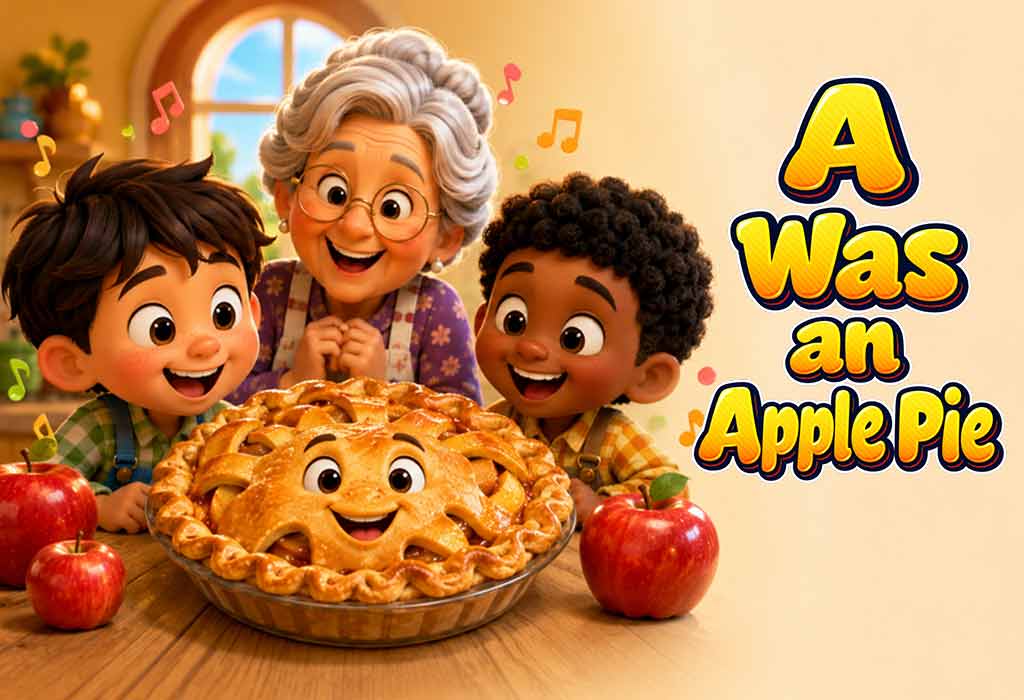
A Was an Apple Pie is a cheerful alphabet nursery rhyme that takes children on a fun journey through letters and actions. Each line follows a letter of the alphabet and describes what happened to an apple pie in a playful and imaginative way. Kids enjoy the catchy rhythm, funny wording, and repeating pattern that makes the rhyme easy to remember and sing along with. Parents and teachers often use this rhyme to introduce young children to alphabet recognition, pronunciation, and early vocabulary skills. The rhyme also encourages listening, memory, and language development through repetition and rhyme. Its playful storytelling keeps little learners entertained while gently helping them build confidence with letters and sounds in a fun and engaging way.
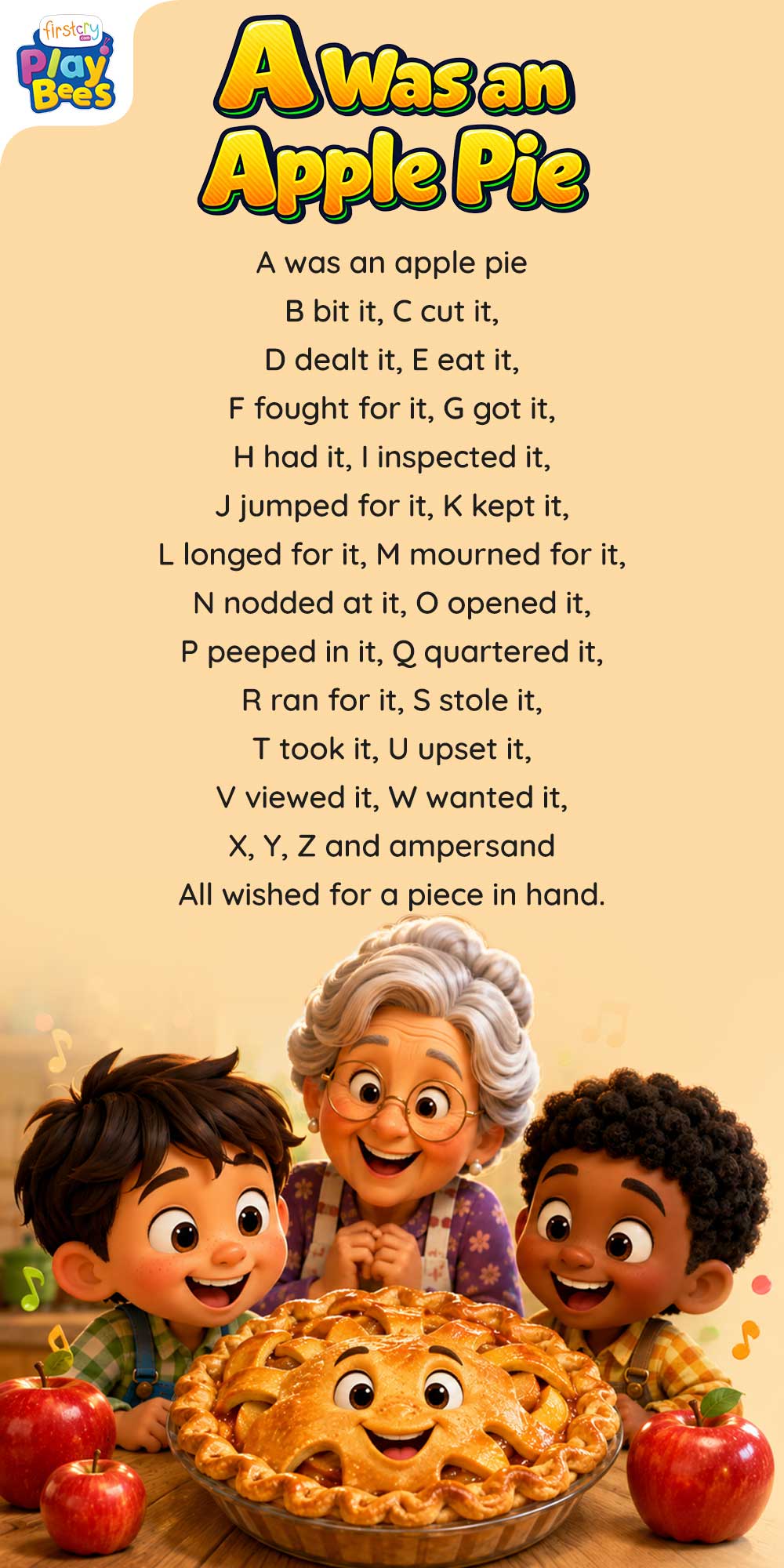
A Was an Apple Pie Song Lyrics
These classic A Was an Apple Pie words are loved by children for their playful alphabet pattern and rhythmic storytelling.
A was an apple pie
B bit it,
C cut it,
D dealt it,
E eat it,
F fought for it,
G got it,
H had it,
I inspected it,
J jumped for it,
K kept it,
L longed for it,
M mourned for it,
N nodded at it,
O opened it,
P peeped in it,
Q quartered it,
R ran for it,
S stole it,
T took it,
U upset it,
V viewed it,
W wanted it,
X, Y, Z and ampersand
All wished for a piece in hand.
Other Versions of A Was an Apple Pie Song
Over the years, a few alternate versions of the rhyme have appeared with small wording changes and extra lines to make the rhythm easier for children.
Version 1
A was an apple pie,
B bit it,
C cut it,
D shared it,
E enjoyed it,
And all the children loved it!
Version 2
A was an apple pie,
B baked it warm,
C carried it home,
D danced with joy,
E ate a slice,
F finished it all!
Version 3
A was an apple pie,
B bought it,
C cooked it,
D dropped it,
E explored it,
F found it funny!
Version 4
A was an apple pie,
B bounced around,
C clapped with cheer,
D dreamed of more,
E enjoyed the taste,
And everyone sang along!
Gestures – How to Teach A Was an Apple Pie to Kids
Using actions while singing the rhyme makes learning more exciting and helps children remember the alphabet words more easily. Simple hand movements and facial expressions also keep young learners active and engaged during rhyme time.
- Pretend to hold a big pie with both hands when saying “A was an apple pie” to introduce the story visually.
- Make a gentle biting action near the mouth during “B bit it” so children can connect the action with the word.
- Use one hand like a pretend knife for “C cut it” while moving slowly and safely through the air.
- Jump lightly in place during “J jumped for it” to add movement and excitement to the rhyme.
- Place both hands over the heart during “L longed for it” to show wanting or wishing for the pie.
- Stretch both arms wide at the ending line to make the final part dramatic and fun for group participation.
History & Quick Facts
A Was an Apple Pie is a traditional English alphabet rhyme that dates back to the 17th century. It is believed to have first appeared in early English chapbooks and children’s collections around the 1600s. The rhyme does not have a confirmed single author because it was passed down through oral storytelling for many generations before being printed. Its alphabetical structure helped make it popular in schools and homes as an entertaining way to teach letters and vocabulary. Over time, different regions created their own versions with slight wording changes. The rhyme became widely known because of its simple rhythm, playful language, and educational value for young children learning the alphabet.
Interesting Facts
- The rhyme is considered one of the oldest alphabet nursery rhymes still shared with children today.
- Many early schoolbooks used the rhyme to help children practice letter recognition in a fun way.
- Different countries have adapted the rhyme with local words and accents while keeping the alphabet theme.
- The funny actions connected to each letter make the rhyme popular for classroom performances and storytelling sessions.
- Some printed versions include extra decorative illustrations of the apple pie and alphabet characters.
- The rhyme has remained popular for centuries because it mixes learning with rhythm, repetition, and imagination.
Suitable Age & Learnings
A Was an Apple Pie is best suited for children between the ages of 2 and 6 years. The rhyme supports early childhood learning by combining alphabet practice with listening, movement, and vocabulary building.
- Children learn alphabet order by hearing each letter connected to an action throughout the rhyme.
- The repeating rhythm improves memory skills and helps kids remember words more easily.
- Action words like “bit,” “cut,” and “jumped” help expand early vocabulary and language understanding.
- Singing the rhyme aloud supports pronunciation and speaking confidence in young learners.
- Following gestures and movements improves coordination and listening attention during group activities.
- The playful story encourages imagination and helps children enjoy learning through music and repetition.
FAQs
1. What is the rhyming scheme of A Was an Apple Pie?
The rhyme follows a simple rhythmic and alphabetical pattern rather than a strict rhyming structure. Its repetition and sequence make it easy for children to remember.
2. Why is A Was an Apple Pie good for preschoolers?
The rhyme helps preschoolers learn alphabet letters, action words, listening skills, and memory through music and repetition.
3. Can A Was an Apple Pie be used in classroom activities?
Yes, teachers often use the rhyme for alphabet games, action activities, singing sessions, and early language lessons because children can easily participate with gestures and movements.
A Was an Apple Pie continues to be a favorite nursery rhyme because it combines alphabet learning with playful storytelling and rhythm. Its simple structure makes it easy for young children to sing, remember, and enjoy. The rhyme encourages listening, speaking, movement, and imagination all at the same time. Parents and teachers appreciate how naturally it supports early language and literacy development. With fun gestures and repeating patterns, children stay engaged while building important learning skills. Whether sung at home, in preschool, or during playtime, this classic rhyme remains a joyful way to introduce little learners to the world of words and letters.
Explore Other Rhymes for Kids:
A for Apple Nursery Rhyme With Lyrics
Alphabet Song Nursery Rhyme With Lyrics
Apples and Bananas Nursery Rhyme With Lyrics