
Table of Contents
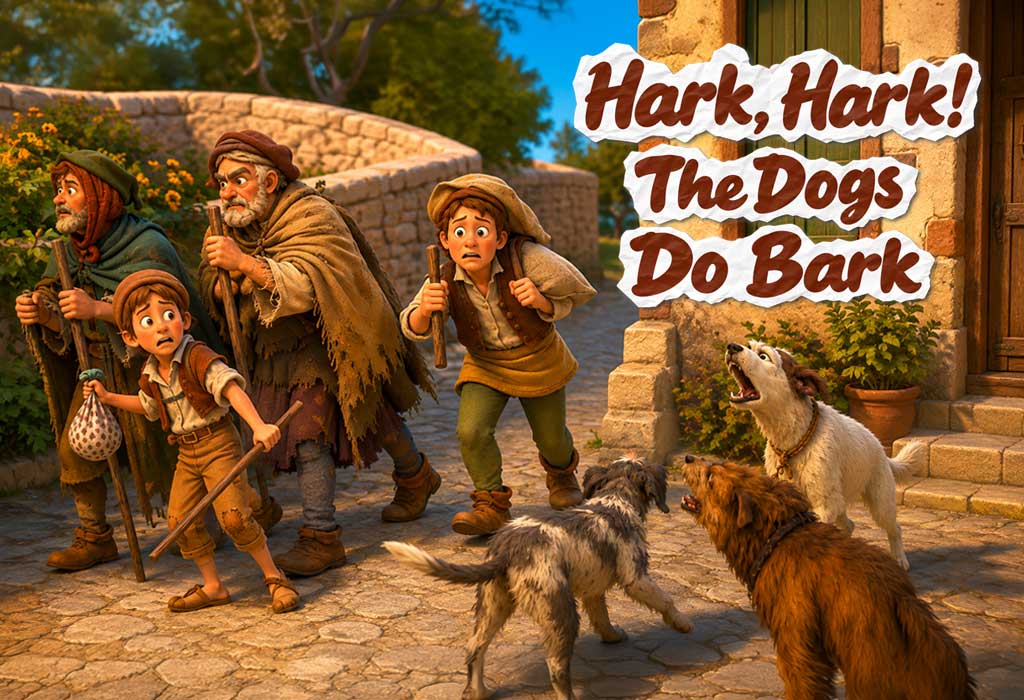
Hark, Hark! The Dogs Do Bark is a cheerful traditional nursery rhyme that introduces children to playful sounds, simple storytelling, and catchy rhythm. The rhyme follows the lively scene of barking dogs and traveling beggars, making it fun and memorable for young learners. Kids enjoy its repetitive words and musical flow, which make singing along easy and exciting. Parents and teachers often use this rhyme to help children improve listening skills, pronunciation, and early language development. It also encourages imagination as children picture the characters and actions in the song. With its short lines and engaging beat, this classic rhyme is perfect for circle time, sing-alongs, and playful learning activities at home or in the classroom.
Hark, Hark! The Dogs Do Bark Song Lyrics
Children love singing along to the playful rhythm of these classic Hark, Hark! The Dogs Do Bark words because they are easy to remember and fun to repeat.
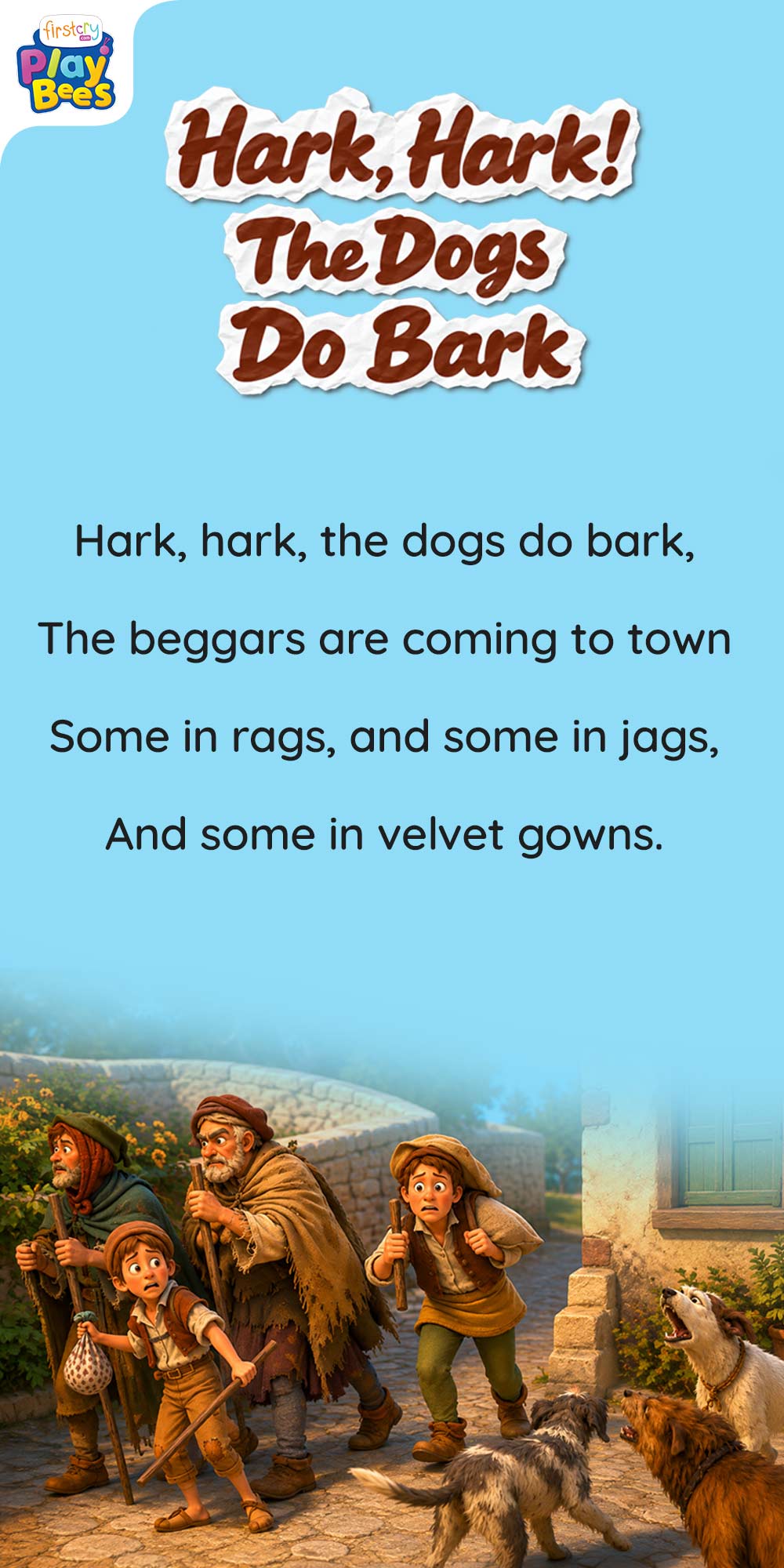
Hark, hark, the dogs do bark,
The beggars are coming to town
Some in rags, and some in jags,
And some in velvet gowns.
Other Versions of Hark, Hark! The Dogs Do Bark Song
Many traditional nursery rhymes have slightly different versions, and this rhyme is sometimes sung with small word changes depending on the region or storyteller.
Version 1
“Hark, hark! the dogs do bark,
The beggars are coming to town;
Some in rags and some in tags,
And some in velvet gowns.”
Version 2
“Hark, hark! the dogs do bark,
The beggars are coming to town;
One in silk and one in rags,
And one in a velvet gown.”
Version 3
“Hark! Hark! the dogs do bark,
The beggars have come to town;
Some in jags and some in rags,
And some in velvet gowns.”
Version 4
“Bow, wow, the dogs do bark,
The beggars are coming to town;
Some in lace and some in rags,
And some in velvet gowns.”
Gestures – How to Teach Hark, Hark! The Dogs Do Bark to Kids
Using simple actions while singing makes this rhyme more exciting and helps children remember the words better. These easy gestures also improve coordination, listening, and participation during rhyme time.
- Raise both hands near the ears when saying “Hark, hark!” to show children are listening carefully.
- Pretend to bark like a dog and make playful puppy movements during “the dogs do bark.”
- March slowly in place while singing “The beggars are coming to town” to act out people walking.
- Point to imaginary clothes when saying “some in rags and some in tags” to help kids understand different outfits.
- Spread arms wide and pretend to wear a fancy dress during “velvet gowns” for a dramatic and fun action.
- Clap softly at the end of the rhyme and encourage children to repeat the lines together with smiles and enthusiasm.
History & Quick Facts
Hark, Hark! The Dogs Do Bark is a traditional English nursery rhyme that dates back several centuries. The exact author is unknown, which is common for many old folk rhymes passed down through oral storytelling. The rhyme first appeared in printed collections during the 18th century and later became popular in children’s books and nursery rhyme compilations across the United Kingdom. Its simple rhythm and short structure helped it spread easily among families, schools, and storytellers. Over time, the rhyme became a familiar part of early childhood learning because children enjoyed the catchy sounds and repetitive wording.
Interesting Facts
- This rhyme is considered one of the oldest traditional English nursery rhymes still sung by children today.
- The word “hark” means “listen carefully,” helping children learn older English vocabulary in a fun way.
- Different countries and regions sometimes sing slightly different versions of the rhyme with changed clothing descriptions.
- The rhyme is often used in preschool classes because its rhythm helps children remember words more easily.
- Many illustrated nursery rhyme books include playful dog characters to make the song visually engaging for kids.
- The tune is simple and repetitive, making it easy for toddlers and young children to sing along after hearing it only a few times.
Suitable Age & Learnings
This nursery rhyme is best suited for children between the ages of 2 and 6 years because of its short lines and easy rhythm. It supports early childhood learning by helping kids build vocabulary, listening skills, and confidence through music and repetition.
- Children learn sound recognition by copying the barking dog sounds and rhythmic words in the rhyme.
- The rhyme improves memory skills because kids repeat short and catchy lines several times.
- Young learners build listening and attention skills by following the sequence of words and actions.
- Kids are introduced to descriptive vocabulary such as “rags,” “tags,” and “velvet gowns” in a simple context.
- Singing together encourages social interaction and group participation during classroom or family activities.
- The actions and gestures help children improve coordination, movement, and motor skills while having fun.
FAQs
1. What is the rhyming scheme of Hark, Hark! The Dogs Do Bark?
The rhyme follows a simple ABCB rhyming pattern, where “town” and “gown” rhyme at the end of the second and fourth lines.
2. Why do children enjoy Hark, Hark! The Dogs Do Bark?
Children enjoy the rhyme because it has fun sounds, easy repetition, and playful imagery involving dogs and costumes.
3. Is Hark, Hark! The Dogs Do Bark good for preschool learning?
Yes, the rhyme is excellent for preschool learning because it supports language development, listening skills, rhythm recognition, and active participation through gestures and singing.
Hark, Hark! The Dogs Do Bark remains a timeless nursery rhyme that continues to entertain and educate young children around the world. Its playful rhythm, memorable lines, and easy actions make it enjoyable for both kids and adults. The rhyme helps children strengthen language, listening, and coordination skills in a natural and engaging way. Parents and teachers can use it during story time, music sessions, or playful classroom activities to create happy learning moments. Even though it is an old rhyme, its simple charm still connects with modern children today. Sharing classic nursery rhymes like this also helps keep traditional storytelling and musical learning alive for future generations.
Explore Other Rhymes for Kids:
Old Mother Hubbard Nursery Rhyme With Lyrics
How Much is That Doggie in the Window? Nursery Rhyme With Lyrics
Oh Where, Oh Where, Has My Little Dog Gone? Nursery Rhyme With Lyrics