
Table of Contents
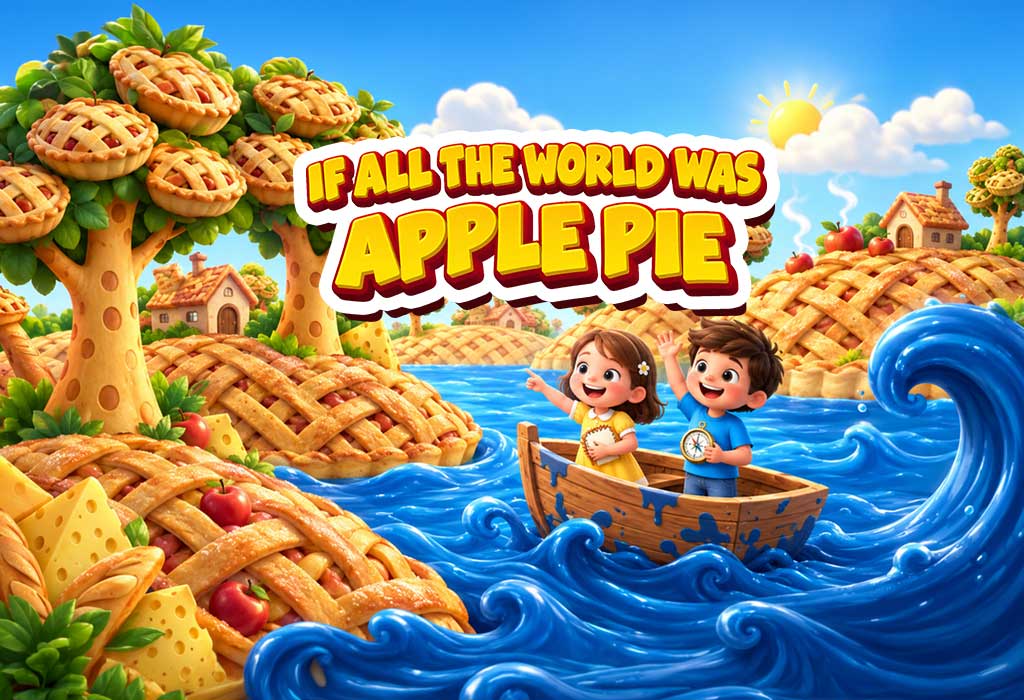
“If All the World Was Apple Pie” is a cheerful and imaginative nursery rhyme that invites children to picture a sweet world made entirely of apple pie. The rhyme uses playful ideas and simple language to spark creativity and make children smile while singing along. Kids enjoy its catchy rhythm, funny imagery, and easy-to-remember lines that encourage participation and repetition. Parents and teachers often use this rhyme during sing-along sessions because it helps young learners improve listening, speaking, and memory skills in a fun way. The rhyme also introduces children to rhyming words, rhythm, and descriptive thinking, which are important for early language development. Its lighthearted theme makes it perfect for preschoolers and toddlers who are beginning to explore music, storytelling, and imaginative play through nursery rhymes.
If All the World Was Apple Pie Song Lyrics
Here are the popular If All the World Was Apple Pie words that children love to sing during rhyme time.
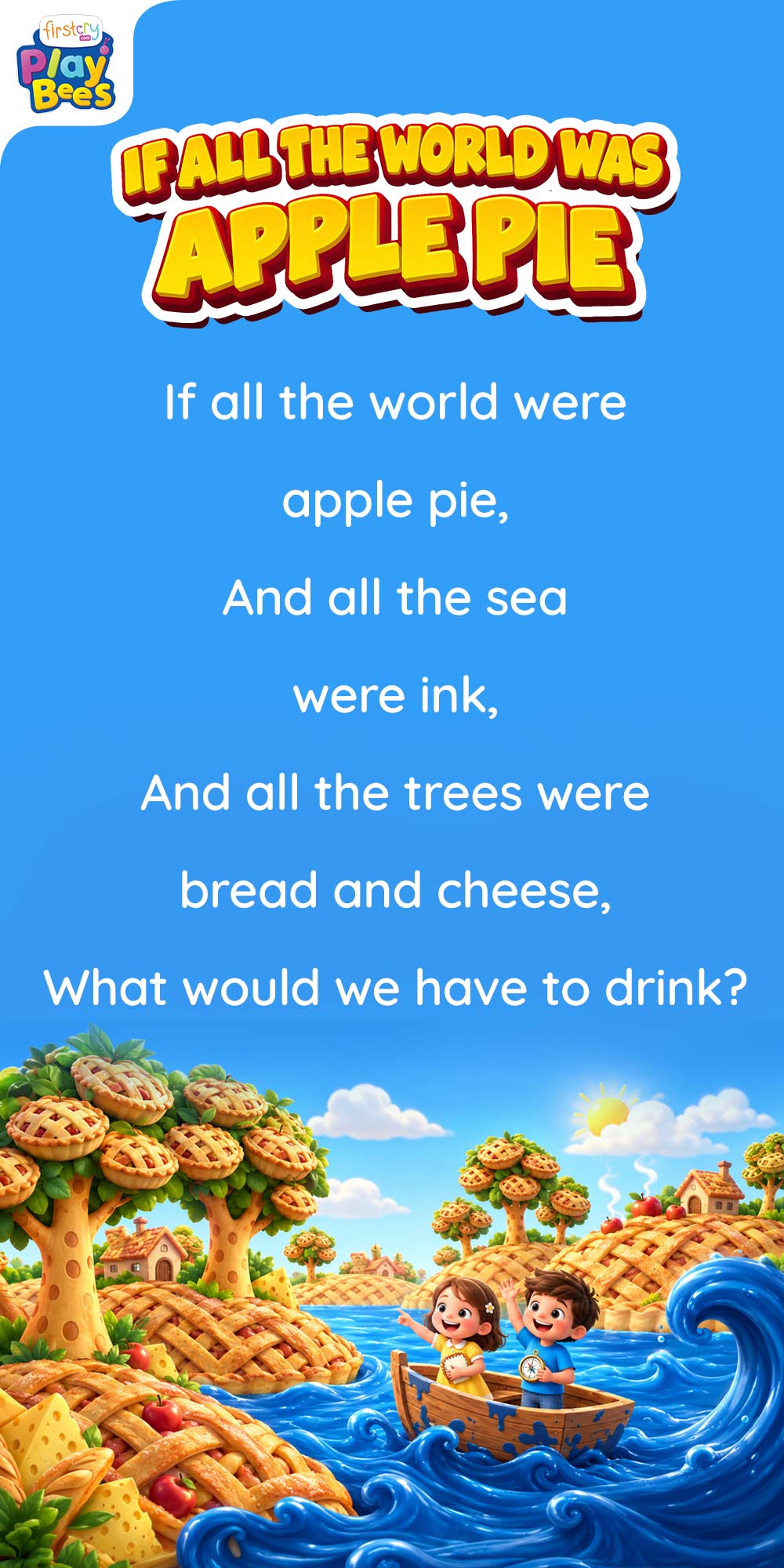
If all the world were apple pie,
And all the sea were ink,
And all the trees were bread and cheese,
What would we have to drink?
Other Versions of If All the World Was Apple Pie Song
Many parents and teachers sing slightly different versions of this rhyme to make it more playful or easier for children to remember.
Version 1
“If all the world was apple pie,
And all the sea was ink,
And all the trees were bread and cheese,
What would we have to drink?”
Version 2
“If all the world were apple pie,
And all the sea were ink,
And all the trees were bread and cheese,
What should we have to drink?”
Version 3
“If all the world was apple pie,
And all the oceans ink,
And every tree was bread and cheese,
What then would people drink?”
Version 4
“If all the world was apple pie,
And every star a sweet,
And all the roads were candy canes,
What fun we all would meet!”
Gestures – How to Teach If All the World Was Apple Pie to Kids
Using simple hand movements and actions makes the rhyme more exciting and easier for children to remember. These playful gestures also help improve coordination, listening skills, and participation during rhyme time.
- Stretch both arms wide while saying “all the world” to show something big and huge.
- Pretend to hold and smell a delicious pie when singing “apple pie” to make the rhyme fun and expressive.
- Move hands in a wave motion during “all the sea was ink” to imitate the movement of the ocean.
- Raise both hands like tall trees while saying “all the trees” so children can visualize a forest.
- Pretend to eat bread and cheese by bringing fingers to the mouth in a playful action.
- Hold an imaginary cup and pretend to sip a drink at the end of the rhyme for a funny finishing gesture.
History & Quick Facts
“If All the World Was Apple Pie” is a traditional English nursery rhyme that has been passed down orally for many generations. The exact author of the rhyme is unknown, which is common with many classic nursery rhymes. It is believed to have appeared in collections of children’s rhymes during the 19th century, when simple rhythmic poems were widely used for teaching and entertainment. The rhyme became popular because of its imaginative idea of turning the world into food and ink, which children found amusing and easy to remember. Over time, teachers and parents continued sharing it through storytelling, singing sessions, and nursery rhyme books, helping it remain a favorite among young learners.
Interesting Facts
- The rhyme is famous for using imagination to turn everyday things like the world and trees into food items.
- Many preschool teachers use this rhyme to introduce children to creative thinking and rhyming patterns.
- The short length of the rhyme makes it easy for toddlers and preschoolers to memorize quickly.
- Different countries sometimes sing slightly different versions while keeping the same playful meaning.
- The rhyme is often included in nursery rhyme collections alongside classic English folk songs for children.
- Children enjoy acting out the rhyme with gestures because it combines singing, movement, and pretend play together.
Suitable Age & Learnings
This nursery rhyme is best suited for children between the ages of 2 and 6 years. Its short lines, repeating sounds, and imaginative theme make it ideal for early learners developing speech and listening skills.
- Children learn rhyming words through phrases that sound similar and create a musical rhythm.
- The rhyme encourages imagination by asking kids to picture a world made of pie, bread, and cheese.
- Listening and memory skills improve as children repeat and remember the short lines of the song.
- Kids build vocabulary by learning simple words such as “sea,” “trees,” “bread,” and “drink.”
- Singing the rhyme with actions helps improve coordination and body movement in young children.
- Group singing activities teach children confidence, participation, and social interaction with others.
FAQs
1. What is the rhyming scheme of If All the World Was Apple Pie?
The rhyme mainly follows a simple ABCB-style rhyming pattern, where the second and fourth lines connect through sound and rhythm.
2. Why do children enjoy If All the World Was Apple Pie?
Children enjoy the rhyme because it is short, funny, imaginative, and easy to sing along with during playtime or classroom activities.
3. Is If All the World Was Apple Pie good for preschool learning?
Yes, the rhyme supports early language learning, memory development, rhythm recognition, and creative thinking for preschool children.
“If All the World Was Apple Pie” continues to be a charming nursery rhyme loved by children, parents, and teachers around the world. Its playful words and imaginative theme make singing time both entertaining and educational for young learners. The rhyme encourages creativity while also helping children improve language, listening, and memory skills in a natural way. Because it is short and simple, even toddlers can quickly join in and enjoy the fun actions and rhythm. Whether sung at home, in preschool, or during story sessions, the rhyme creates happy learning moments for children. Simple nursery rhymes like this one remain timeless because they combine music, imagination, and joyful learning together.
Explore Other Rhymes for Kids:
Apple Pie ABC Nursery Rhyme With Lyrics
A Was an Apple Pie Nursery Rhyme With Lyrics
Apples and Bananas Nursery Rhyme With Lyrics