
Table of Contents
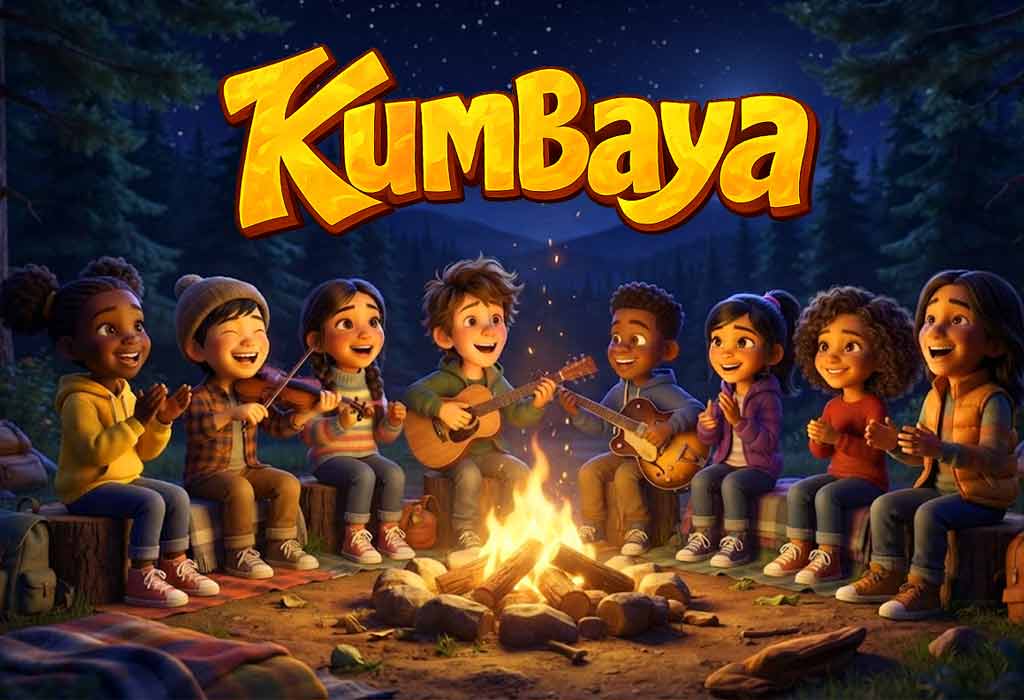
Gentle melodies and meaningful words make “Kumbaya” a timeless song that children and adults enjoy together. Often sung around campfires or in classrooms, this simple rhyme is about asking for togetherness, kindness, and hope. Kids love its soothing tune and easy-to-repeat lines, which help them sing along with confidence. The song also encourages emotional expression and introduces values like empathy and unity in a soft, memorable way. For early learners, “Kumbaya” supports listening skills, rhythm recognition, and language development. Its repetitive structure makes it easy for young children to remember, while its calm mood creates a comforting learning experience that parents and teachers appreciate.
Kumbaya Song Lyrics
Sing along with these calming Kumbaya words that bring a sense of peace and togetherness:
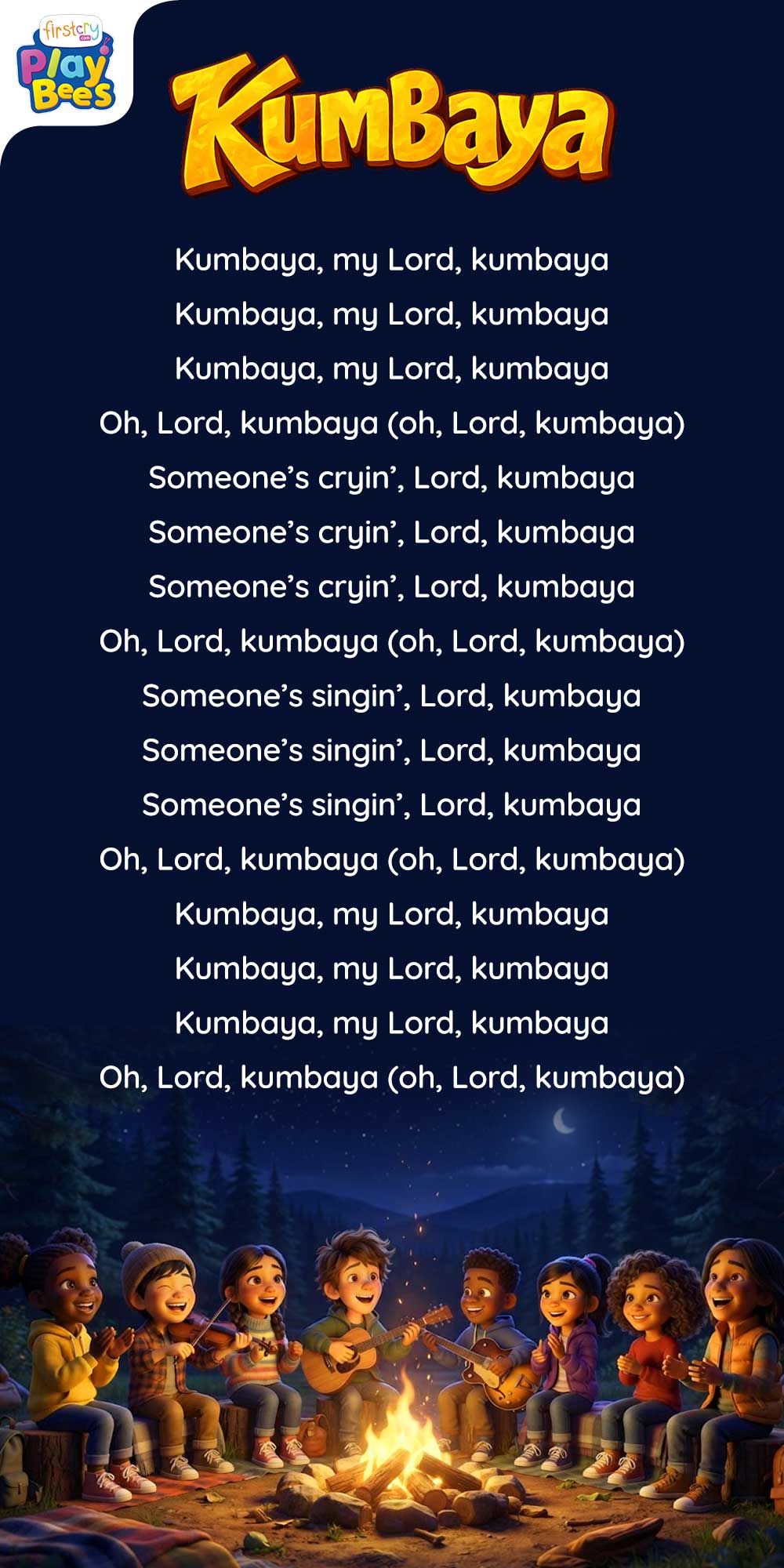
Kumbaya, my Lord, kumbaya
Kumbaya, my Lord, kumbaya
Kumbaya, my Lord, kumbaya
Oh, Lord, kumbaya (oh, Lord, kumbaya)
Someone’s cryin’, Lord, kumbaya
Someone’s cryin’, Lord, kumbaya
Someone’s cryin’, Lord, kumbaya
Oh, Lord, kumbaya (oh, Lord, kumbaya)
Someone’s singin’, Lord, kumbaya
Someone’s singin’, Lord, kumbaya
Someone’s singin’, Lord, kumbaya
Oh, Lord, kumbaya (oh, Lord, kumbaya)
Kumbaya, my Lord, kumbaya
Kumbaya, my Lord, kumbaya
Kumbaya, my Lord, kumbaya
Oh, Lord, kumbaya (oh, Lord, kumbaya)
Other Versions of Kumbaya Song
Many variations of the song exist, adding different emotions and situations while keeping the same melody.
Version 1: Laughing
Someone’s laughing, Lord, kumbaya,
Someone’s laughing, Lord, kumbaya,
Someone’s laughing, Lord, kumbaya,
Oh Lord, kumbaya.
Version 2: Calling
Someone’s calling, Lord, kumbaya,
Someone’s calling, Lord, kumbaya,
Someone’s calling, Lord, kumbaya,
Oh Lord, kumbaya.
Version 3: Dreaming
Someone’s dreaming, Lord, kumbaya,
Someone’s dreaming, Lord, kumbaya,
Someone’s dreaming, Lord, kumbaya,
Oh Lord, kumbaya.
Version 4: Hoping
Someone’s hoping, Lord, kumbaya,
Someone’s hoping, Lord, kumbaya,
Someone’s hoping, Lord, kumbaya,
Oh Lord, kumbaya.
Version 5: Group Singing
We are singing, Lord, kumbaya,
We are singing, Lord, kumbaya,
We are singing, Lord, kumbaya,
Oh Lord, kumbaya.
Gestures – How to Teach Kumbaya to Kids
Simple actions can make this calm song more interactive and enjoyable for children. These gestures help kids connect movements with words, making learning easier.
- Ask children to gently sway side to side while singing to match the soothing rhythm.
- Encourage them to place their hands near their mouth when singing “someone’s singing” to show the action.
- For “someone’s crying,” children can pretend to wipe tears from their eyes.
- During “someone’s praying,” guide them to fold their hands like a prayer gesture.
- For “someone’s laughing,” children can smile widely and gently giggle along.
- At “Oh Lord, kumbaya,” ask them to stretch their hands upward to express hope and togetherness.
History & Quick Facts
“Kumbaya” is believed to have originated from African American spiritual songs in the early 20th century. The phrase “kumbaya” is thought to mean “come by here,” reflecting a call for help or closeness. Though its exact author is unknown, the song gained popularity in the United States during the 1930s and later became widely known during the folk music revival of the 1950s and 1960s. It was often sung at camps, gatherings, and community events, symbolizing unity and peace.
Interesting Facts
- The word “Kumbaya” comes from a creole phrase meaning “come by here,” showing its cultural roots.
- The song became especially popular during campfires and group gatherings because of its simple tune.
- It has been translated into many languages, making it a global song of togetherness.
- The melody is slow and calming, which helps children relax while singing.
- Over time, it has been used in schools to teach values like kindness and empathy.
- The song is often associated with unity and peace, making it meaningful for all age groups.
Suitable Age & Learnings
This gentle rhyme is best suited for children aged 3 to 8 years, as its simple words and melody are easy to follow. It supports both emotional and educational growth in early learners.
- Children learn emotional vocabulary such as singing, crying, and laughing through repeated phrases.
- The rhyme helps build listening and memory skills as kids recall lines and repeat them.
- It encourages empathy by showing different human feelings in a simple way.
- The song improves rhythm and musical awareness through its steady and slow tune.
- Group singing builds social skills and helps children feel connected to others.
- It introduces basic spiritual or reflective concepts in a gentle and age-appropriate manner.
FAQs
1. What is the rhyming scheme of Kumbaya?
The song follows a simple repetitive pattern rather than a strict rhyming scheme, making it easy for children to remember and sing.
2. Why is Kumbaya popular with kids?
Its calm tune, repetition, and meaningful words make it easy to learn and enjoyable for group singing.
3. Can Kumbaya be used for learning activities?
Yes, it is often used to teach emotions, rhythm, and social bonding in classrooms and group settings.
Soft melodies and meaningful lyrics make “Kumbaya” a special song that continues to connect people across generations. Its simple structure allows young children to learn quickly while enjoying the soothing rhythm. Beyond just a rhyme, it carries messages of kindness, empathy, and togetherness that are important in early childhood. Singing it in groups helps build confidence and encourages social interaction among kids. Parents and teachers value it for both its calming effect and its learning benefits. With its timeless charm, “Kumbaya” remains a beautiful way to introduce music and values to young learners.
Explore Other Rhymes for Kids:
Amazing Grace Nursery Rhyme With Lyrics
This Little Light of Mine Nursery Rhyme With Lyrics
Make New Friends But Keep The Old Nursery Rhyme With Lyrics