
Table of Contents
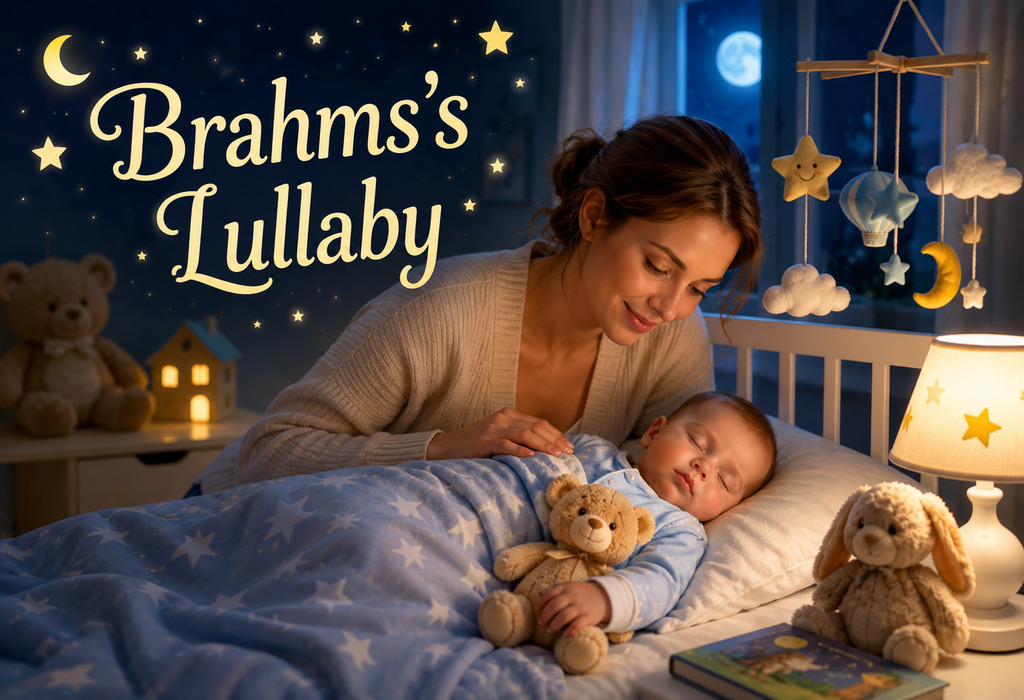
Brahms’s Lullaby is a sweet and soothing nursery rhyme that is often sung to babies and young children at bedtime. The rhyme talks about comfort, rest, and peaceful sleep, making it a favorite choice for parents during nighttime routines. Children enjoy the soft melody and gentle words because they create a calm and cozy feeling that helps them relax. The slow rhythm and repeating sounds are easy for little ones to listen to and remember. Besides helping children settle down, this lullaby also supports early learning by improving listening skills, memory, language development, and sound recognition. Singing lullabies together can also strengthen the bond between parents and children. With its warm tune and comforting message, Brahms’s Lullaby continues to be one of the most loved bedtime songs for families around the world.
Brahms’s Lullaby Song Lyrics
These gentle Brahms’s Lullaby words create a peaceful bedtime atmosphere that helps children feel calm, safe, and ready for sleep.
Good evening, good night,
With roses covered,
With cloves adorned,
Slip under the covers.
Tomorrow morning, if God wills,
you will wake once again.
Other Versions of Brahms’s Lullaby Song
Over the years, Brahms’s Lullaby has been adapted into many gentle versions that children around the world enjoy in different languages and musical styles.
Gestures – How to Teach Brahms’s Lullaby to Kids
Teaching Brahms’s Lullaby with simple actions makes the rhyme more fun and easier for children to remember. Gentle movements also help kids stay calm, focused, and connected to the soothing rhythm of the song.
- Rock the arms slowly – Pretend to cradle a baby by gently rocking both arms from side to side while singing the lullaby.
- Place hands under the cheek – Encourage children to rest their hands under one cheek to show “sleeping” during calm parts of the rhyme.
- Point upward like stars – Ask kids to point toward the sky and wiggle their fingers to represent twinkling stars at bedtime.
- Close eyes softly – Children can slowly close and open their eyes to match the peaceful and sleepy mood of the song.
- Sway the body gently – Let children move side to side in a slow swaying motion to follow the soft rhythm of the lullaby.
- Give a goodnight wave – At the end of the rhyme, children can smile and wave “good night” to make the activity feel warm and comforting.
History & Quick Facts
Brahms’s Lullaby, also known as “Wiegenlied,” is a famous bedtime song written by the German composer Johannes Brahms in 1868. The lullaby was first published as part of his collection called Opus 49, No. 4. Brahms composed the song for a close friend to celebrate the birth of her baby, which is why the tune feels warm and comforting. The original lyrics were written in German, and later the song was translated into English and many other languages. Over time, the gentle melody became popular in homes, schools, movies, and baby music collections around the world. Today, Brahms’s Lullaby is known as one of the most recognized and loved lullabies ever created for children.
Interesting Facts
- Brahms’s Lullaby was originally written in German and is also known by the name “Wiegenlied,” which means “cradle song.”
- The lullaby has been translated into many languages, allowing children from different countries to enjoy the same calming melody.
- Many parents play instrumental versions of the song using piano, music boxes, or soft orchestras to help babies sleep peacefully.
- The tune is often used in cartoons, movies, baby toys, and bedtime music playlists because it is so widely recognized.
- Johannes Brahms wrote the song as a gift for a friend who had recently become a mother, making the lullaby extra special and heartfelt.
- Even after more than 150 years, Brahms’s Lullaby remains one of the world’s most famous bedtime songs for babies and young children.
Suitable Age & Learnings
Brahms’s Lullaby is best suited for babies, toddlers, and preschool children between the ages of 0 to 5 years. The soft tune, gentle rhythm, and calming words make it perfect for bedtime routines while also supporting early childhood learning and emotional comfort.
- Listening Skills – Children improve their listening and attention skills by following the slow rhythm and soothing melody of the lullaby.
- Language Development – The rhyme introduces simple and comforting words that help young children hear and understand everyday language patterns.
- Memory Building – Repeating the song regularly helps kids remember words, sounds, and the sequence of lines more easily.
- Emotional Comfort – The peaceful tone of the lullaby helps children feel safe, calm, and relaxed during bedtime or quiet time.
- Rhythm and Sound Recognition – Kids learn to recognize gentle musical patterns, rhyming sounds, and repeated phrases while singing along.
- Vocabulary Words – Children become familiar with bedtime-related words such as “lullaby,” “good night,” “sleep,” “rest,” and “dreams,” helping expand their early vocabulary.
FAQs
1. What is the rhyming scheme of Brahms’s Lullaby?
Brahms’s Lullaby mainly follows a simple rhyming pattern with soft and repeating end sounds, making it soothing and easy for young children to listen to and remember.
2. Why is Brahms’s Lullaby so popular for bedtime?
The lullaby has a calm melody and gentle words that help children relax, feel safe, and prepare for sleep, which is why parents around the world still use it at bedtime.
3. Can Brahms’s Lullaby help with early learning?
Yes, the rhyme supports early learning by improving listening skills, memory, language development, rhythm recognition, and emotional comfort through repeated singing and music.
Brahms’s Lullaby is a timeless nursery rhyme that continues to bring comfort and calmness to children across generations. Its gentle melody and peaceful words make bedtime feel warm, safe, and relaxing for little ones. Parents and teachers also value the rhyme because it supports early learning in a simple and enjoyable way. From improving listening skills to building vocabulary and emotional connection, the lullaby offers many benefits for young children. The song’s rich history and worldwide popularity make it a special part of childhood for families everywhere. Whether sung softly at bedtime or played as soothing music, Brahms’s Lullaby remains a beautiful and loving rhyme that children will continue to cherish for years to come.
Explore Other Rhymes for Kids:
Rock-a-bye Baby Nursery Rhyme With Lyrics
Hush, Little Baby Nursery Rhyme With Lyrics
Day is Done Gone the Sun Nursery Rhyme With Lyrics