
Table of Contents
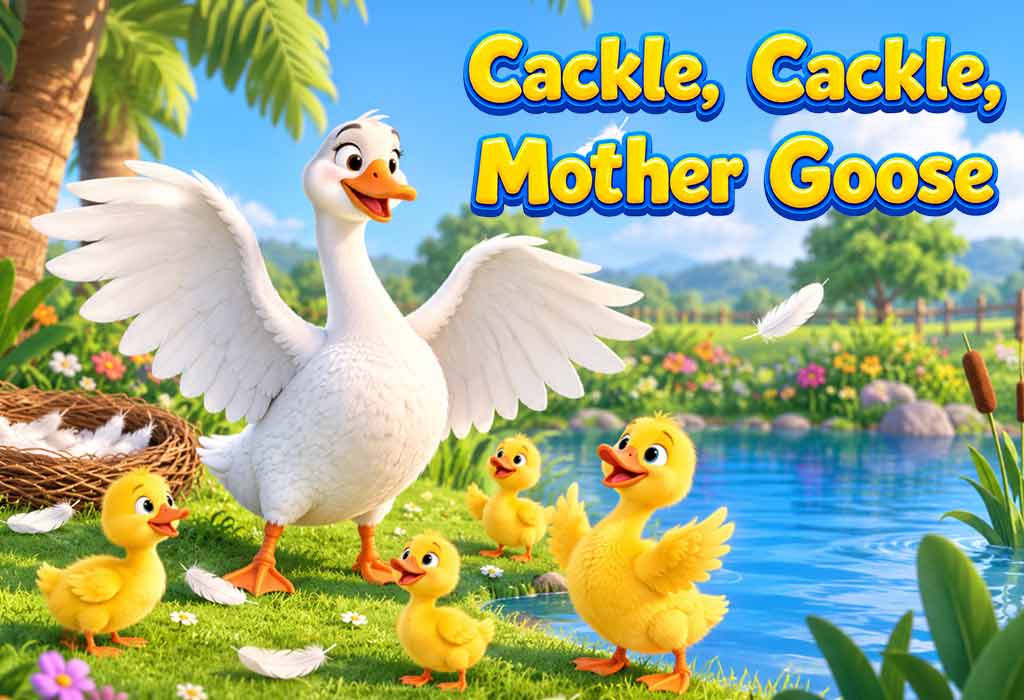
Cackle, Cackle, Mother Goose is a playful and cheerful nursery rhyme that children love for its funny sounds and easy rhythm. The rhyme tells a lighthearted story about Mother Goose and her amusing actions, making it entertaining for young listeners. Kids enjoy repeating the catchy lines, especially the “cackle” sounds, which encourage laughter and participation during sing-alongs. Parents and teachers often use this rhyme to introduce rhythm, rhyme patterns, and listening skills in a fun way. It also helps children improve pronunciation, memory, and confidence while speaking aloud. Because the words are simple and repetitive, toddlers and preschoolers can quickly learn and enjoy the rhyme. Singing together also creates a warm bonding experience between children and adults during playtime, storytime, or classroom activities.
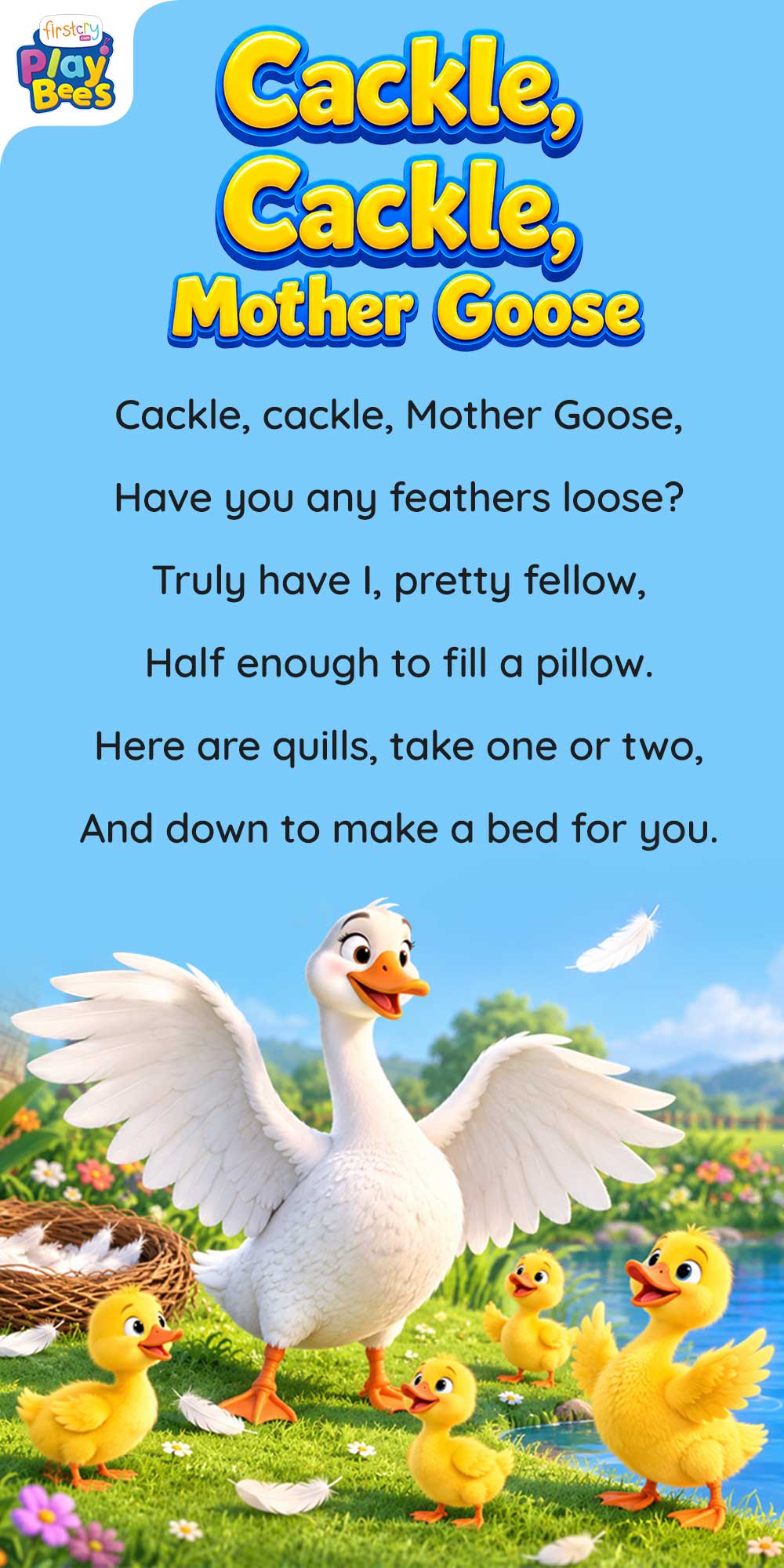
Cackle, Cackle, Mother Goose Song Lyrics
Children enjoy reciting the playful Cackle, Cackle, Mother Goose words because of the funny sounds and simple rhythm that make singing along exciting.
Cackle, cackle, Mother Goose,
Have you any feathers loose?
Truly have I, pretty fellow,
Half enough to fill a pillow.
Here are quills, take one or two,
And down to make a bed for you.
Other Versions of Cackle, Cackle, Mother Goose Song
Many traditional nursery rhymes have slightly different versions, and Cackle, Cackle, Mother Goose is sometimes sung with small word changes depending on the region or book edition.
Version 1
Cackle, cackle, Mother Goose,
Have you any feathers loose?
Truly have I, pretty fellow,
Enough to stuff a quilt so yellow.
Version 2
Cackle, cackle, Mother Goose,
Have you any feathers loose?
Truly have I, my good fellow,
Come tomorrow and buy them cheap.
Version 3
Cackle, cackle, Mother Goose,
Have you any feathers loose?
Yes indeed, my funny fellow,
I will sell them very cheap.
Gestures – How to Teach Cackle, Cackle, Mother Goose to Kids
Teaching this rhyme with actions makes it more enjoyable and helps children remember the words more easily. Simple hand movements and playful expressions can keep kids active and engaged while singing.
- Spread both arms like wings and flap them gently when saying “Cackle, cackle, Mother Goose” to imitate a goose moving around.
- Point toward another child or the teacher during “Have you any feathers loose?” to make the rhyme interactive and fun.
- Pretend to pick feathers from the air with your fingers while singing about the white and yellow feathers.
- Show two different colors with your hands or point to yellow and white objects nearby when mentioning the feather colors.
- Cup both hands together as if gathering feathers into a heap to match the action in the rhyme.
- Pretend to hand something to a friend like selling feathers for a penny, helping children act out the story naturally.
History & Quick Facts
Cackle, Cackle, Mother Goose is a traditional English nursery rhyme that has been passed down through generations for many years. Like many classic nursery rhymes, its exact author is unknown, but it is connected to the famous “Mother Goose” collection of children’s rhymes and songs. The rhyme appeared in early collections of English nursery literature during the 18th and 19th centuries, when rhymes were commonly shared orally before being printed in books. Its playful language and short structure made it popular among parents and teachers for entertaining young children. Over time, the rhyme became part of nursery rhyme collections around the world and continues to be enjoyed in homes, schools, and story sessions today.
Interesting Facts
- The rhyme is very short, which makes it easier for toddlers and preschoolers to memorize quickly.
- The word “cackle” imitates the sound made by geese, helping children learn fun animal sounds through music.
- Cackle, Cackle, Mother Goose is often included in classic Mother Goose nursery rhyme collections for young readers.
- Many illustrated children’s books feature colorful goose characters to make the rhyme more engaging for kids.
- Teachers sometimes use the rhyme in phonics lessons because it contains repeating sounds and simple rhyming words.
- Different countries may sing slightly different versions of the rhyme while keeping the same cheerful theme and rhythm.
Suitable Age & Learnings
This rhyme is best suited for children between the ages of 2 and 6 years because of its simple words and repetitive pattern. Young learners can enjoy singing it while also building important early language and social skills.
- Children learn rhyming words and sound patterns, which support early reading and listening development.
- The rhyme improves memory skills because kids remember the repeating lines through singing and repetition.
- Children practice pronunciation by repeating playful words like “cackle” and “feathers” aloud.
- Acting out the rhyme with gestures helps improve coordination and motor skills during movement activities.
- Kids learn simple vocabulary words such as “goose,” “feathers,” “yellow,” and “penny” in a natural way.
- Singing together encourages confidence, participation, and social interaction during classroom or family activities.
FAQs
1. What is the rhyming scheme of Cackle, Cackle, Mother Goose?
The rhyme mainly follows a simple rhyming pattern with matching ending sounds that make it easy and enjoyable for children to remember.
2. Why do children enjoy Cackle, Cackle, Mother Goose?
Children enjoy the rhyme because of its funny sounds, playful rhythm, and easy-to-follow words that encourage singing and actions.
3. Can Cackle, Cackle, Mother Goose help in early learning?
Yes, the rhyme supports language development, memory, listening skills, vocabulary learning, and rhythmic understanding in young children.
Cackle, Cackle, Mother Goose remains a charming nursery rhyme that continues to entertain young children with its playful sounds and simple storytelling. Its cheerful rhythm makes it enjoyable for singing, classroom activities, and bedtime fun. Parents and teachers appreciate how easily children can remember the rhyme and participate with actions and expressions. The rhyme also supports early learning by building vocabulary, listening skills, and confidence in speaking aloud. Because it is short and engaging, it works wonderfully for toddlers and preschoolers who are just beginning to explore language through music and repetition. Sharing classic rhymes like this helps create joyful learning moments and happy memories for children and families alike.
Explore Other Rhymes for Kids:
Cock a Doodle Doo Nursery Rhyme With Lyrics
Goosey, Goosey Gander Nursery Rhyme With Lyrics
Old Macdonald Had A Farm Nursery Rhyme With Lyrics