
Table of Contents
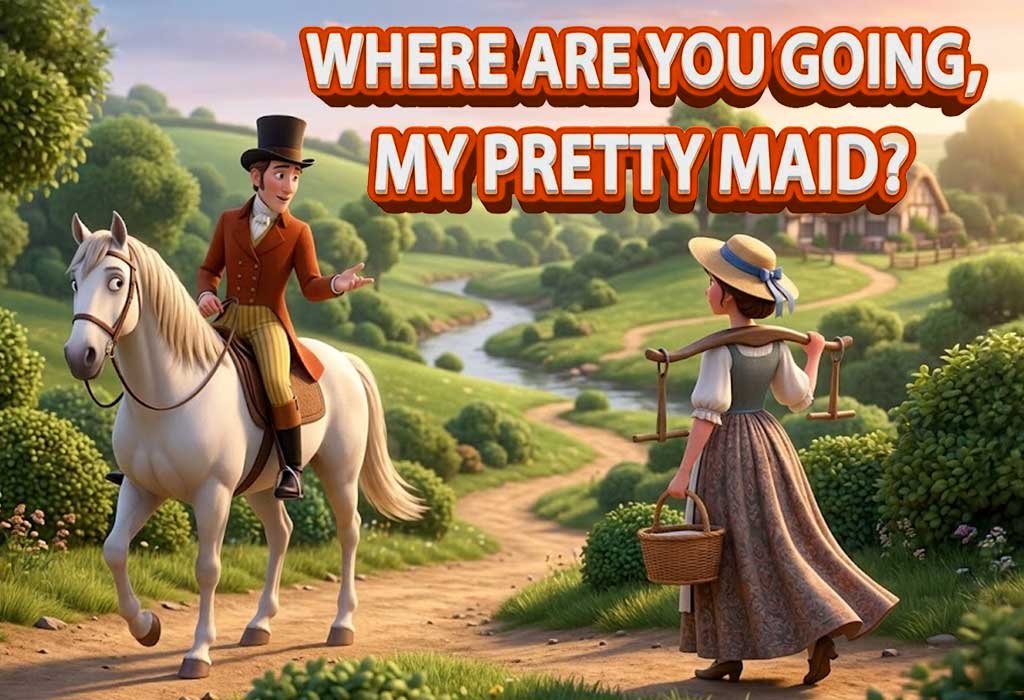
“Where Are You Going, My Pretty Maid” is a charming traditional nursery rhyme that tells a simple conversation between a traveler and a young maid. The rhyme uses gentle questions and answers that are easy for children to understand and enjoy. Kids love the catchy rhythm, repeated sentence patterns, and playful storytelling that make the rhyme fun to sing aloud. Parents and teachers often use this classic rhyme to introduce children to early listening and speaking skills. It also helps young learners improve vocabulary, memory, and pronunciation through repetition. The polite conversational style encourages children to understand basic social interactions and question-answer patterns. With its soft melody and easy words, this rhyme remains a favorite for bedtime, classroom singing, and playful learning activities for preschoolers and young children.
Where Are You Going, My Pretty Maid Song Lyrics
Children enjoy singing the cheerful Where Are You Going, My Pretty Maid words because the rhyme has a gentle rhythm and simple conversational style.
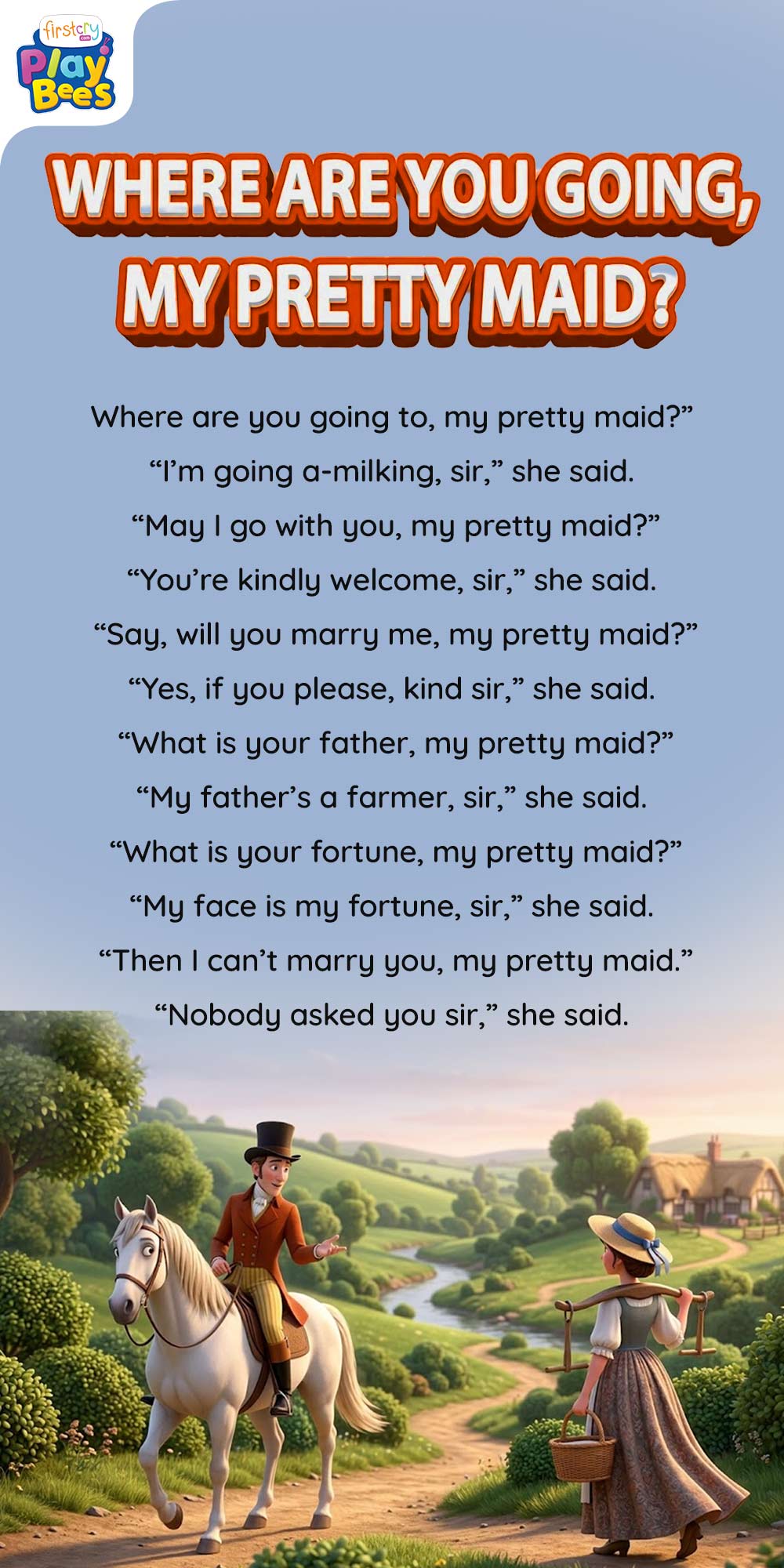
“Where are you going to, my pretty maid?”
“I’m going a-milking, sir,” she said.
“May I go with you, my pretty maid?”
“You’re kindly welcome, sir,” she said.
“Say, will you marry me, my pretty maid?”
“Yes, if you please, kind sir,” she said.
“What is your father, my pretty maid?”
“My father’s a farmer, sir,” she said.
“What is your fortune, my pretty maid?”
“My face is my fortune, sir,” she said.
“Then I can’t marry you, my pretty maid.”
“Nobody asked you sir,” she said.
Other Versions of Where Are You Going, My Pretty Maid Song
Many traditional collections include slightly different versions of this rhyme with changed words, extra verses, or regional language styles.
One popular alternate version changes the opening line to:
“Where are you going, my bonny lass?”
“I’m going a-milking, sir,” she said.
Some versions also include extra verses where the gentleman asks more questions about the maid’s family and future. In a few adaptations for children, the ending is softened to sound more playful and friendly. Modern nursery rhyme books sometimes simplify the language so younger kids can sing it more easily.
Gestures – How to Teach Where Are You Going, My Pretty Maid to Kids
This rhyme becomes more exciting for children when simple actions are added while singing. Easy hand movements and facial expressions help kids remember the words and enjoy the story better.
- Point forward with one hand while saying “Where are you going” to show someone walking on a journey.
- Pretend to carry a milk bucket during “I’m going a-milking” so children can act out the maid’s work.
- Place one hand over the heart and bow slightly while saying “You’re kindly welcome” to teach polite manners.
- Use both hands to mimic farming actions when mentioning the father being a farmer.
- Smile brightly and point to the face during “My face is my fortune” to make the line fun and memorable.
- Shake the head gently and wag a playful finger at the ending line to help children enjoy the humorous finish.
History & Quick Facts
“Where Are You Going, My Pretty Maid” is a traditional English nursery rhyme that dates back to the late 18th century. The rhyme first appeared in print around 1795 and became popular in Britain through collections of folk songs and nursery rhymes. Although the exact author is unknown, the rhyme is believed to have grown from English folk traditions and countryside life. The story reflects simple village conversations and social customs of the time. Over the years, the rhyme became widely known in schools, homes, and children’s songbooks because of its catchy rhythm and memorable dialogue format. Today, it remains a well-loved classic nursery rhyme enjoyed by children around the world.
Interesting Facts
- The rhyme is believed to come from old English countryside traditions where milking cows was a common daily task.
- “Where Are You Going, My Pretty Maid” is often taught as a dialogue rhyme because it uses questions and answers throughout the song.
- The phrase “My face is my fortune” became famous because it shows the maid’s confidence and clever personality.
- Different countries and children’s books sometimes use alternate words while keeping the same rhythm and tune.
- The rhyme has appeared in nursery rhyme collections, children’s TV programs, and school music activities for many years.
- Teachers like using the rhyme because it helps children practice listening skills, speaking clearly, and remembering repeated patterns.
Suitable Age & Learnings
This nursery rhyme is best suited for children aged 3 to 7 years because of its simple language and repetitive conversational style. It supports early learning in a fun and musical way while helping children build confidence in speaking and listening.
- Children learn polite conversation skills by listening to the respectful questions and answers in the rhyme.
- The repeated sentence structure improves memory and helps young learners predict words while singing.
- Kids build vocabulary by learning words such as “fortune,” “farmer,” and “milking” in an easy context.
- Singing the rhyme aloud supports pronunciation and rhythm awareness during early language development.
- Acting out the rhyme with gestures improves coordination, expression, and creative play skills.
- The rhyme also introduces children to traditional storytelling and classic folk music from English culture.
FAQs
1. What is the rhyming scheme of Where Are You Going, My Pretty Maid?
The rhyme mainly follows a simple paired rhyme style where lines end with matching sounds such as “maid” and “said,” making it easy for children to remember.
2. Why do children enjoy this nursery rhyme?
Children enjoy the rhyme because it has a catchy rhythm, playful conversation, and easy repetition that makes singing fun and engaging.
3. What skills can kids develop from this rhyme?
Kids can improve listening, vocabulary, memory, pronunciation, and social communication skills while singing and acting out the rhyme.
“Where Are You Going, My Pretty Maid” continues to be a timeless nursery rhyme loved by children, parents, and teachers alike. Its gentle storytelling and rhythmic conversation make learning enjoyable for young minds. The rhyme encourages speaking practice, listening skills, and confidence through simple repeated phrases. Fun gestures and role-play activities can make the song even more interactive and memorable for children. With its rich history and playful charm, this classic rhyme still holds a special place in early childhood learning. Singing traditional nursery rhymes together also creates warm bonding moments that children remember for years.
Explore Other Rhymes for Kids:
Lazy Mary Nursery Rhyme With Lyrics
Curly Locks Nursery Rhyme With Lyrics
Lucy Locket Nursery Rhyme With Lyrics