
Table of Contents
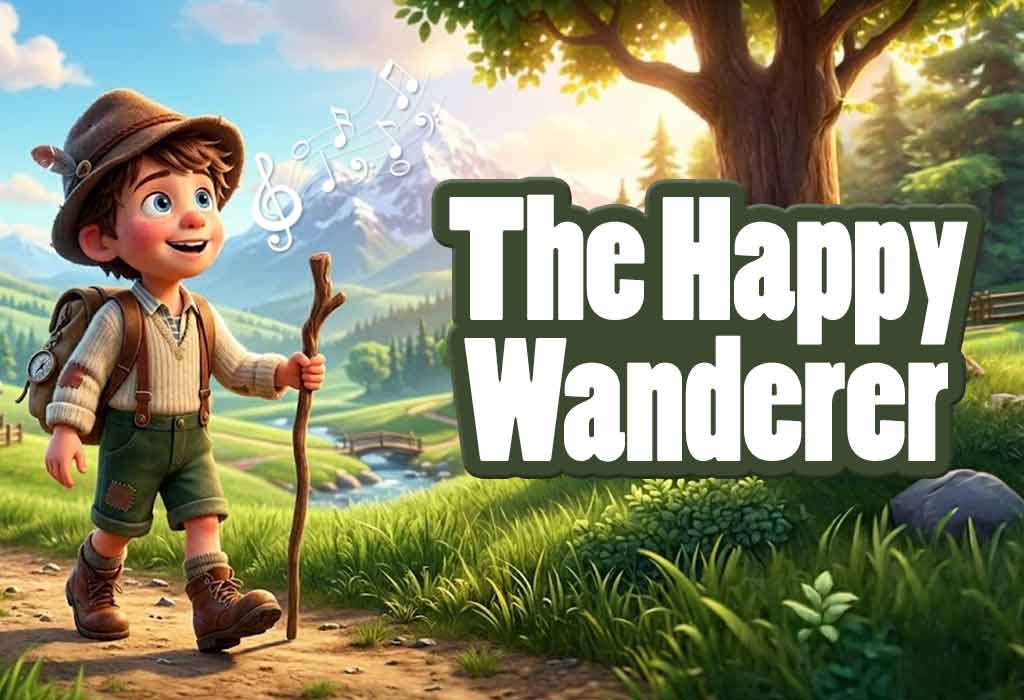
A cheerful tune filled with a love for nature and freedom, The Happy Wanderer is a delightful rhyme that celebrates walking through hills, forests, and open spaces. Children enjoy its lively rhythm and joyful mood, which makes it easy to sing along and remember. The repeating chorus adds to the fun, encouraging participation and movement. For early learners, this rhyme supports listening skills, memory building, and vocabulary development related to nature and travel. It also inspires curiosity about the outdoors while promoting a positive and carefree mindset. Simple words and a catchy melody make it a favorite for both classrooms and home learning time.
The Happy Wanderer Song Lyrics
Here are The Happy Wanderer words that children love to sing along with:
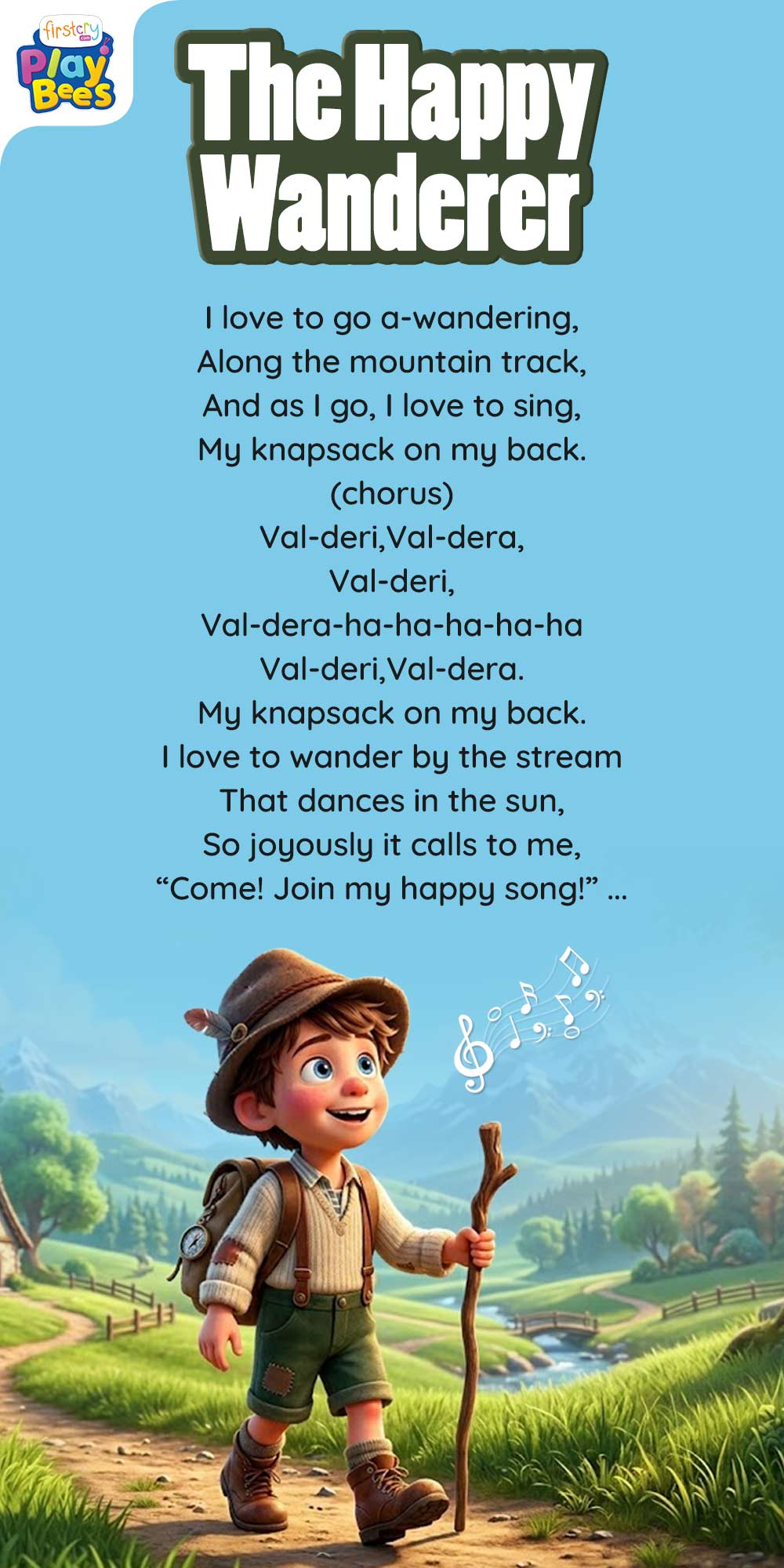
I love to go a-wandering,
Along the mountain track,
And as I go, I love to sing,
My knapsack on my back.
(chorus)
Val-deri,Val-dera,
Val-deri,
Val-dera-ha-ha-ha-ha-ha
Val-deri,Val-dera.
My knapsack on my back.
I love to wander by the stream
That dances in the sun,
So joyously it calls to me,
“Come! Join my happy song!”
I wave my hat to all I meet,
And they wave back to me,
And blackbirds call so loud and sweet
From ev’ry green wood tree.
High overhead, the skylarks wing,
They never rest at home
But just like me, they love to sing,
As o’er the world we roam.
Oh, may I go a-wandering
Until the day I die!
Oh, may I always laugh and sing,
Beneath God’s clear blue sky!
Other Versions of The Happy Wanderer Song
Different versions of this song add small variations while keeping the joyful spirit the same.
1. Country Track
I love to go a-wandering
Along the country track,
And as I go, I love to sing,
My knapsack on my back.
Valderi, valdera,
Valderi, valdera ha ha ha ha ha,
Valderi, valdera,
My knapsack on my back.
2. Short Classroom
I love to go a-wandering
Along the mountain track,
And as I go, I love to sing,
My knapsack on my back.
Valderi, valdera,
Valderi, valdera ha ha ha ha ha,
Valderi, valdera,
My knapsack on my back.
3. Nature-Themed
I love to go a-wandering
By rivers, hills, and trees,
And as I go, I laugh and sing
With birds and buzzing bees.
Valderi, valdera,
Valderi, valdera ha ha ha ha ha,
Valderi, valdera,
My knapsack on my back.
4. Action-Based
I love to go a-wandering
And wave to all I meet,
I clap my hands and stomp my feet
As I walk down the street.
Valderi, valdera,
Valderi, valdera ha ha ha ha ha,
Valderi, valdera,
My knapsack on my back.
5. Simplified Preschool
I love to go a-wandering,
I walk and sing all day,
With happy steps and smiling face,
I laugh along the way.
Valderi, valdera,
Valderi, valdera ha ha ha ha ha,
Valderi, valdera,
My knapsack on my back.
Gestures – How to Teach The Happy Wanderer to Kids
Adding actions makes this rhyme more fun and helps children remember the words easily. Here are simple steps to follow while teaching it.
- Pretend to walk in place while singing “I love to go a-wandering” to show the idea of traveling happily.
- Tap your shoulders like carrying a bag when saying “my knapsack on my back” so kids can mimic the action.
- Move your hands side to side like flowing water during the “wander by the stream” line to represent a stream.
- Wave your hand happily when singing “I wave my hat to all I meet” to encourage friendly interaction.
- Flap your arms gently like birds during “blackbirds call” to bring nature into action play.
- Stretch your arms wide and look up during the last verse to express joy and freedom under the sky.
History & Quick Facts
The Happy Wanderer is originally a German folk song titled “Der fröhliche Wanderer.” It was composed by Friedrich-Wilhelm Möller in the early 20th century, with the English version later popularized in the 1950s. The song gained worldwide fame after being performed by a German choir and soon became a favorite in schools and children’s music collections. Its cheerful melody and simple lyrics helped it spread quickly across different countries, making it a well-loved sing-along rhyme for generations.
Interesting Facts
- The song was first written in German and later translated into English for global audiences.
- Its famous “Valderi, valdera” chorus is designed to be fun and easy for children to repeat.
- The rhyme celebrates nature, which helps children connect with the outdoors in a playful way.
- It became widely popular in the 1950s through radio and choir performances.
- Many schools use it as a marching or action song because of its rhythm.
- The tune has been adapted into several languages while keeping the same joyful melody.
Suitable Age & Learnings
This rhyme is ideal for children aged 3 to 8 years as it is easy to follow and enjoyable to sing. It offers a mix of fun, movement, and meaningful learning for early development.
- Children improve memory skills by repeating verses and the catchy chorus.
- The rhyme builds vocabulary with words related to nature like “mountain,” “stream,” and “sky.”
- It encourages physical activity through actions and gestures linked to the lyrics.
- Kids learn about positivity and joy by expressing happiness while singing.
- Social skills are enhanced when children sing and perform together in groups.
- Listening and pronunciation improve as children follow the rhythm and repeat lines clearly.
FAQs
1. What is the rhyming scheme of The Happy Wanderer?
The rhyme mainly follows a simple AABB pattern, making it easy for children to recognize and remember.
2. Why do kids enjoy The Happy Wanderer rhyme?
Kids love it because of its cheerful tune, repetitive chorus, and fun actions that make singing interactive.
3. Can this rhyme be used for classroom activities?
Yes, it is perfect for group singing, action play, and even simple movement exercises in classrooms.
Filled with joy and a sense of adventure, The Happy Wanderer continues to be a timeless favorite among children and educators. Its simple words and lively rhythm make learning both fun and meaningful. The song encourages kids to appreciate nature while building essential early skills like memory and coordination. With easy gestures and a repeatable chorus, it becomes an engaging activity for groups as well as individual play. Parents and teachers can use it to create a cheerful learning environment that feels light and enjoyable. Over time, this classic rhyme remains a wonderful way to combine music, movement, and imagination in early childhood learning.
Explore Other Rhymes for Kids:
Oh! Susanna Nursery Rhyme With Lyrics
My Bonnie Lies Over the Ocean Nursery Rhyme With Lyrics
She’ll Be Coming ‘Round the Mountain Nursery Rhyme With Lyrics