
Table of Contents
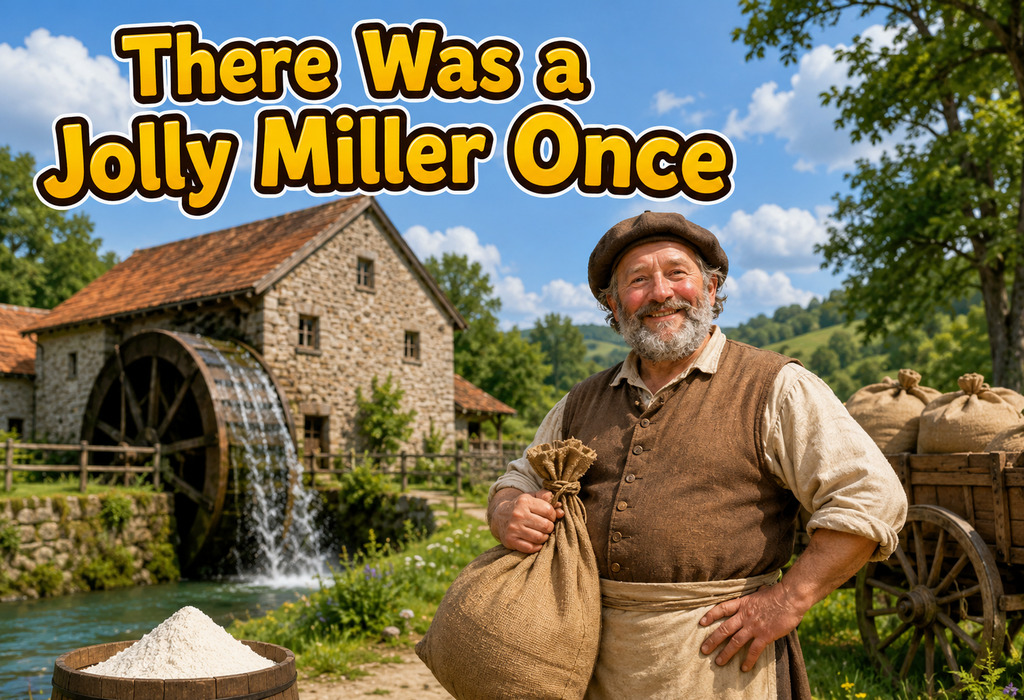
There Was a Jolly Miller Once is a cheerful traditional nursery rhyme that children enjoy for its happy rhythm and playful repetition. The rhyme tells the story of a carefree miller who lives a joyful life, making it fun and easy for young kids to sing along. Its catchy tune helps children remember the words quickly while improving listening and pronunciation skills. Parents and teachers often use this rhyme during circle time, music activities, and early language lessons because it encourages participation and movement. The simple storytelling and repeated phrases also help build confidence in speaking and singing. With its lighthearted mood and easy lyrics, this classic rhyme continues to entertain children while supporting early learning in a fun and engaging way.
There Was a Jolly Miller Once Song Lyrics
Children love singing along to the cheerful There Was a Jolly Miller Once words because the rhyme is simple, rhythmic, and easy to remember.
There was a jolly miller once,
Lived on the river Dee;
He worked and sang from morn till night,
No lark as blithe as he.
And this the burden of his song
Forever used to be,
I care for nobody, no not I,
And nobody cares for me
Other Versions of There Was a Jolly Miller Once Song
Different versions of this traditional rhyme are sometimes sung with small wording changes or added verses to make the song more playful for children.
Gestures – How to Teach There Was a Jolly Miller Once to Kids
This rhyme becomes more exciting when children use simple actions while singing. Movement helps kids remember the lyrics, stay engaged, and enjoy group participation.
- Pretend to turn a large mill wheel with both hands while singing about the miller.
- Point downward and wave one hand gently like flowing water when saying “River Dee.”
- March lightly in place during the line about working from morning till night.
- Smile widely and place hands on cheeks to show how cheerful and happy the miller is.
- Raise one finger and shake the head playfully during the line “I care for nobody.”
- End by opening both arms wide and encouraging children to sing the last line together loudly.
History & Quick Facts
There Was a Jolly Miller Once is a traditional English folk rhyme and song that became popular in the 18th century. The song is often linked to Isaac Bickerstaffe, who included it in his 1766 musical play Love in a Village. Over time, the cheerful tune and simple lyrics made it popular among families, schools, and children’s music collections. The rhyme was originally sung as a folk song before becoming widely known as a nursery rhyme. Its joyful message and memorable chorus helped it remain popular for generations. Today, it continues to be used in classrooms and homes as a fun singing activity for young children.
Interesting Facts
- The rhyme began as a folk song before becoming a popular nursery rhyme for children.
- Many people connect the song to the musical play Love in a Village from the 1700s.
- The phrase “River Dee” refers to a real river found in parts of the United Kingdom.
- Children enjoy the rhyme because of its cheerful tune and easy repeated lines.
- The song is sometimes performed with clapping, marching, or circle-game activities in schools.
- Different countries and music books may slightly change the words while keeping the same melody.
Suitable Age & Learnings
There Was a Jolly Miller Once is best suited for children between the ages of 3 and 7 years. The rhyme supports early learning by improving language skills, rhythm recognition, memory, and social participation through singing and movement.
- Children learn new vocabulary words such as “miller,” “blithe,” and “burden” while singing the rhyme.
- The repeated lines help improve memory and word recall in young learners.
- Singing the rhyme aloud supports pronunciation, listening, and speaking confidence.
- Rhythm and melody help children understand musical patterns and timing.
- Group singing activities encourage teamwork, sharing, and social interaction with others.
- Action-based learning through gestures improves coordination and physical movement skills.
FAQs
1. What is the rhyming scheme of There Was a Jolly Miller Once?
The rhyme mostly follows an ABCB-style rhyming pattern, with simple repeating sounds that make it easy and musical for children.
2. Why do children enjoy There Was a Jolly Miller Once?
Children enjoy the rhyme because it has a cheerful tune, repeated lines, and simple words that are easy to sing and remember.
3. What does the rhyme teach young children?
The rhyme helps children develop listening skills, vocabulary, rhythm recognition, memory, and confidence through singing and actions.
There Was a Jolly Miller Once is a timeless nursery rhyme that continues to bring smiles to children and families. Its cheerful melody and simple words make it easy for young learners to sing along with confidence. The rhyme not only entertains but also supports important early learning skills like memory, language development, rhythm, and movement. Parents and teachers enjoy using it during music time, classroom activities, and playful learning sessions. With its happy theme and engaging actions, the rhyme creates a fun and positive learning experience for children. Even after many generations, this classic nursery rhyme remains a joyful part of early childhood learning and musical tradition.
Explore Other Rhymes for Kids:
Simple Simon Nursery Rhyme With Lyrics
Old King Cole Nursery Rhyme With Lyrics
The Farmer in the Dell Nursery Rhyme With Lyrics