
Table of Contents
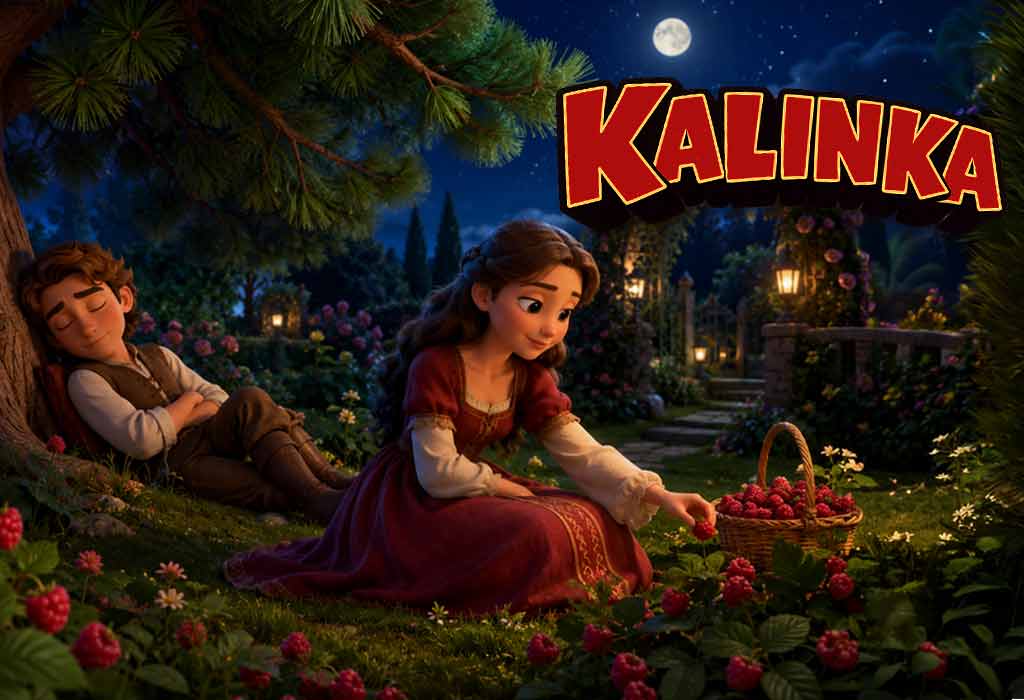
Bright melodies and lively rhythms make Kalinka a joyful song that children quickly grow fond of. This traditional Russian folk tune is filled with repeated lines and playful sounds, which makes it easy for kids to remember and sing along. Its cheerful pace often encourages movement, clapping, and dancing, turning learning into a fun activity. For young learners, Kalinka helps improve listening skills, rhythm recognition, and pronunciation. Parents and teachers appreciate how it introduces children to a different culture while keeping them engaged. With its catchy tune and simple structure, Kalinka is a wonderful addition to early learning through music and play.
Kalinka Song Lyrics
Enjoy singing along with these popular Kalinka words that children love for their rhythm and repetition.
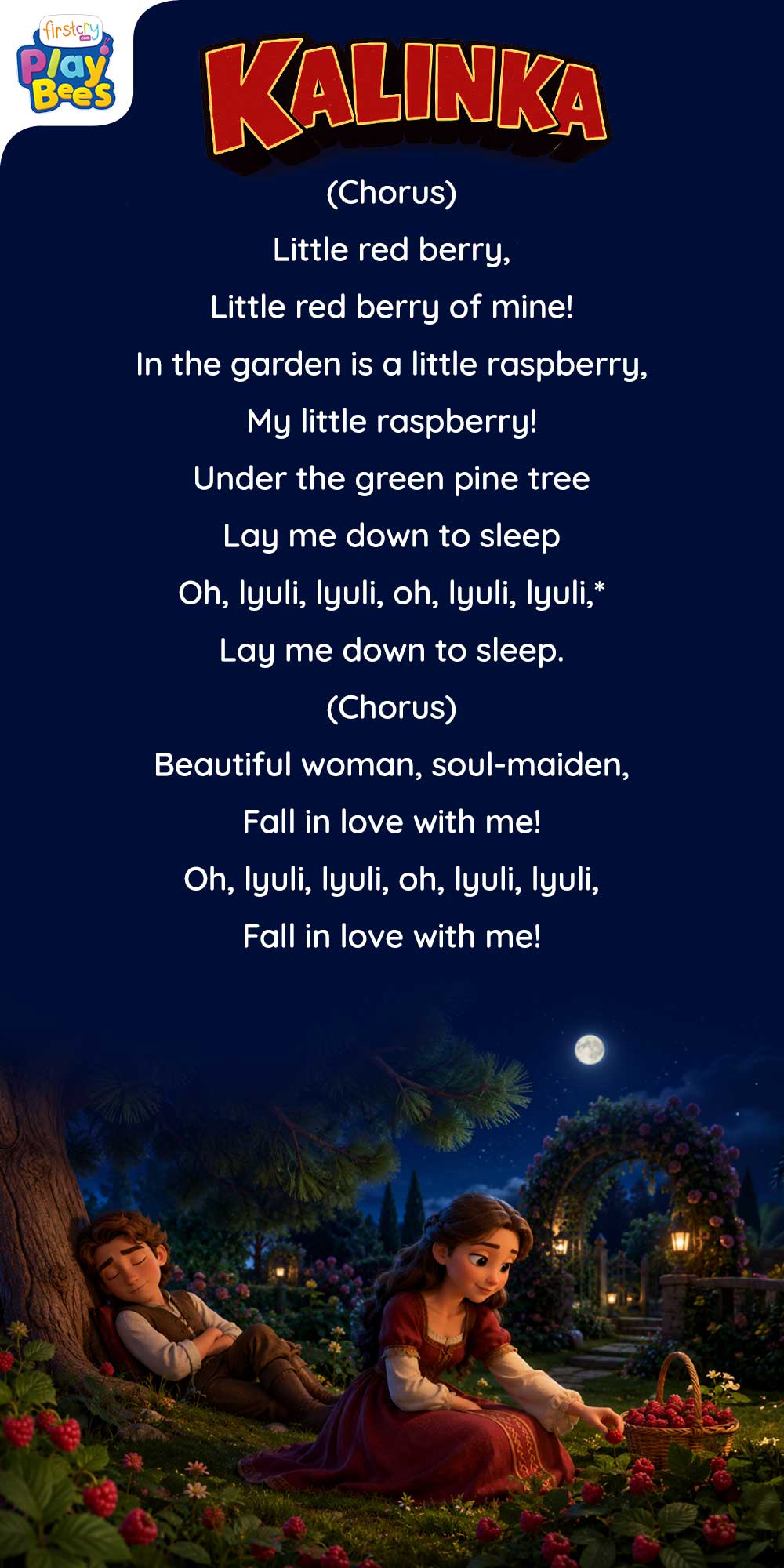
(Chorus)
Little red berry,
Little red berry of mine!
In the garden is a little raspberry,
My little raspberry!
Under the green pine tree
Lay me down to sleep
Oh, lyuli, lyuli, oh, lyuli, lyuli,*
Lay me down to sleep.
(Chorus)
Beautiful woman, soul-maiden,
Fall in love with me!
Oh, lyuli, lyuli, oh, lyuli, lyuli,
Fall in love with me!
(Chorus)
Other Versions of Kalinka Song
Different versions of Kalinka exist across languages and performances, making it a versatile and widely loved song.
1. English Version (Simplified for Kids)
Kalinka, Kalinka, Kalinka my dear,
In the garden grows a berry, sweet and clear!
Kalinka, Kalinka, Kalinka my dear,
In the garden grows a berry, sweet and clear!
Under the pine tree, green and bright,
Lay me down to rest tonight.
Sing a lullaby, soft and low,
Gently let me fall asleep slow.
2. Action / Dance Version (Repetitive & Playful)
Kalinka, Kalinka, clap your hands,
Turn around and where you stand!
Kalinka, Kalinka, stomp your feet,
Move along to the happy beat!
Spin around and touch the ground,
Dance along to the joyful sound!
3. Short Chorus Version (For Toddlers)
Kalinka, Kalinka, Kalinka hey!
Sing and dance and laugh today!
Kalinka, Kalinka, clap along,
Join together in this song!
Gestures – How to Teach Kalinka to Kids
Adding simple actions makes Kalinka more engaging and helps children remember the song better. These easy gestures can turn singing into a fun activity.
- Ask children to clap their hands gently to match the rhythm as they sing the repeated “Kalinka” lines.
- Encourage kids to sway side to side like trees to match the calm parts of the song.
- Have them pretend to pick berries when singing about “malinka” to connect actions with words.
- Let children spin slowly in a circle during the musical parts to express the lively tune.
- Use hand motions like pointing downwards to act out “lying down” in the lyrics.
- Finish with jumping or light dancing to celebrate the cheerful ending of the song.
History & Quick Facts
Kalinka is a famous Russian folk song written by composer Ivan Larionov in 1860. It was first performed as part of a theatrical production and quickly gained popularity among audiences. Over time, the song became widely known across Russia and later around the world due to its lively tune and strong cultural identity. It is often performed by choirs and dance groups, especially in traditional Russian performances. Its simple lyrics and repeating structure made it easy to pass down through generations.
Interesting Facts
- Kalinka is not a traditional folk song in origin, but it became one due to its widespread popularity over time.
- The word “malinka” in the song refers to raspberries, adding a nature theme that children can easily relate to.
- The song is often performed with increasing speed, making it exciting and fun for listeners.
- Kalinka is commonly featured in Russian dance performances with colorful costumes and energetic moves.
- It has been translated into many languages, helping children around the world enjoy it.
- The melody is widely recognized and often used in cultural shows and celebrations.
Suitable Age & Learnings
Kalinka is suitable for children aged 3 to 8 years as it combines simple repetition with lively rhythm. It is especially helpful for early learners who enjoy music and movement-based activities.
- Children improve memory skills by repeating catchy lines and remembering the sequence of lyrics.
- The rhyme helps develop listening skills as kids follow rhythm and melody closely.
- It introduces basic foreign words, helping expand vocabulary in a fun and natural way.
- Kids learn rhythm and timing by clapping or moving along with the beat.
- The song encourages physical activity through gestures and dance movements.
- It builds cultural awareness by introducing children to Russian music and traditions.
FAQs
1. What is the rhyming scheme of Kalinka?
Kalinka does not follow a strict rhyming scheme but uses repetition and rhythm to create a musical flow.
2. Is Kalinka suitable for very young children?
Yes, its repetitive and simple structure makes it easy for toddlers and preschoolers to enjoy and learn.
3. Why is Kalinka popular worldwide?
Its catchy tune, lively rhythm, and cultural charm have made it a favorite in many countries.
Kalinka stands out as a joyful and energetic rhyme that brings music, movement, and culture together. Its catchy repetition makes it easy for children to learn and enjoy, while its lively rhythm keeps them engaged. Parents and teachers find it useful for building listening skills and encouraging active participation. The song also introduces young learners to new words and cultural elements in a fun way. With simple gestures and playful singing, Kalinka becomes more than just a rhyme. It turns into a delightful learning experience that children will remember and enjoy for years.
Explore Other Rhymes for Kids:
Bella Ciao Nursery Rhyme With Lyrics
La Cucaracha Nursery Rhyme With Lyrics
Funiculi, Funicula Nursery Rhyme With Lyrics