

Learning about every animal begin with e is a fun way for young children to build vocabulary while exploring the natural world. This list of 40 animals that start with E introduces kids to familiar creatures, from the mighty elephant to the tiny earthworm, with simple facts about each one, their scientific name, their habitat and a couple of fun facts that make learning exciting.
Animals Names Beginning With E
There are so many animals starting with letter E that children can easily recognise and enjoy learning about, from farmyard favourites to wild and exotic species. Below is a full list of every animal name start with alphabet e, each with easy facts perfect for young learners.
1. Elephant
Elephants are the largest land animals on Earth and use their long trunks to eat, drink and greet each other.
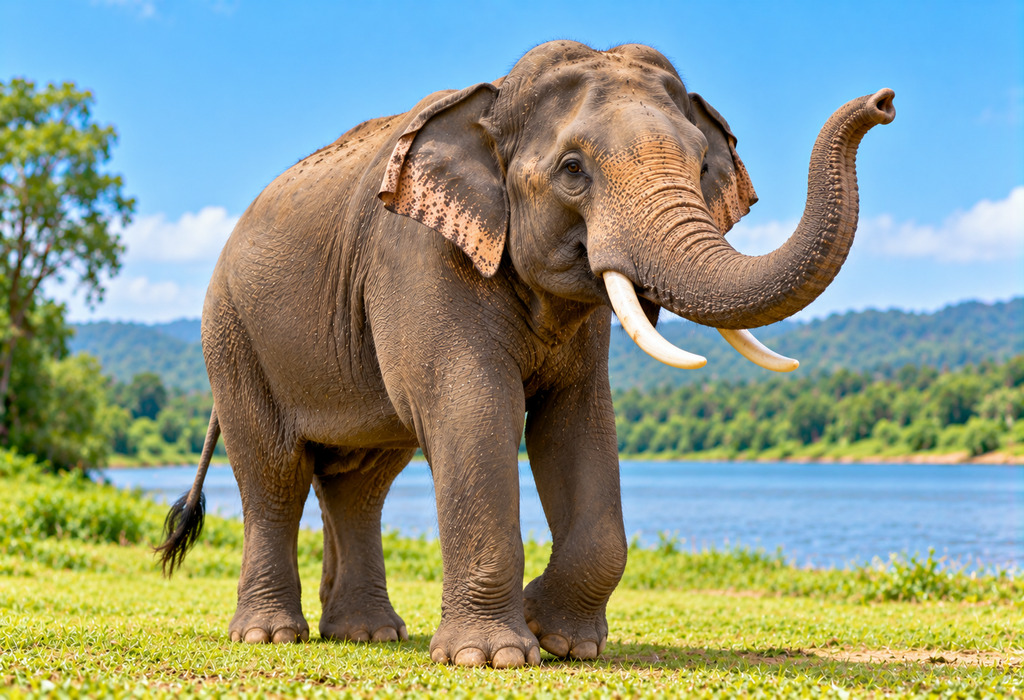
Scientific Name – Loxodonta africana (African elephant)
Type of Animal – Mammal
Where They Live – Grasslands and forests across Africa and Asia
Fun Facts
- Elephants can weigh as much as six tonnes.
- A group of elephants is called a herd.
2. Eagle
Eagles are powerful birds of prey known for their incredible eyesight and strong, curved beaks.
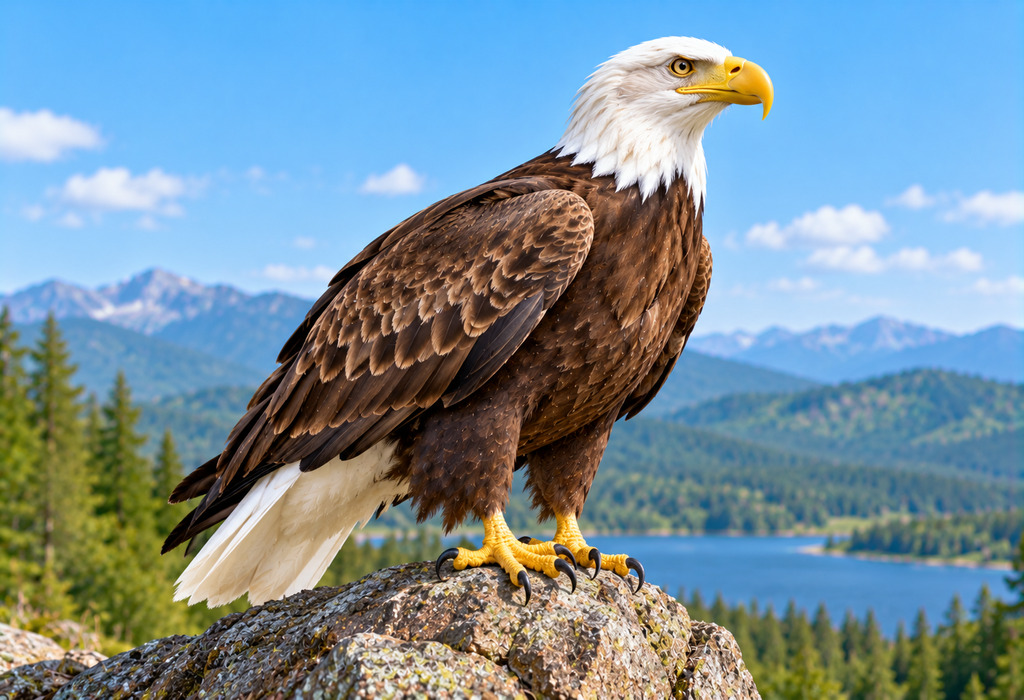
Scientific Name – Haliaeetus leucocephalus (Bald eagle)
Type of Animal – Bird
Where They Live – Near lakes, rivers and coastlines in North America
Fun Facts
- Eagles can spot prey from almost two miles away.
- Their nests can weigh over a tonne.
3. Emu
Emus are tall, flightless birds that can run very fast on their strong legs.
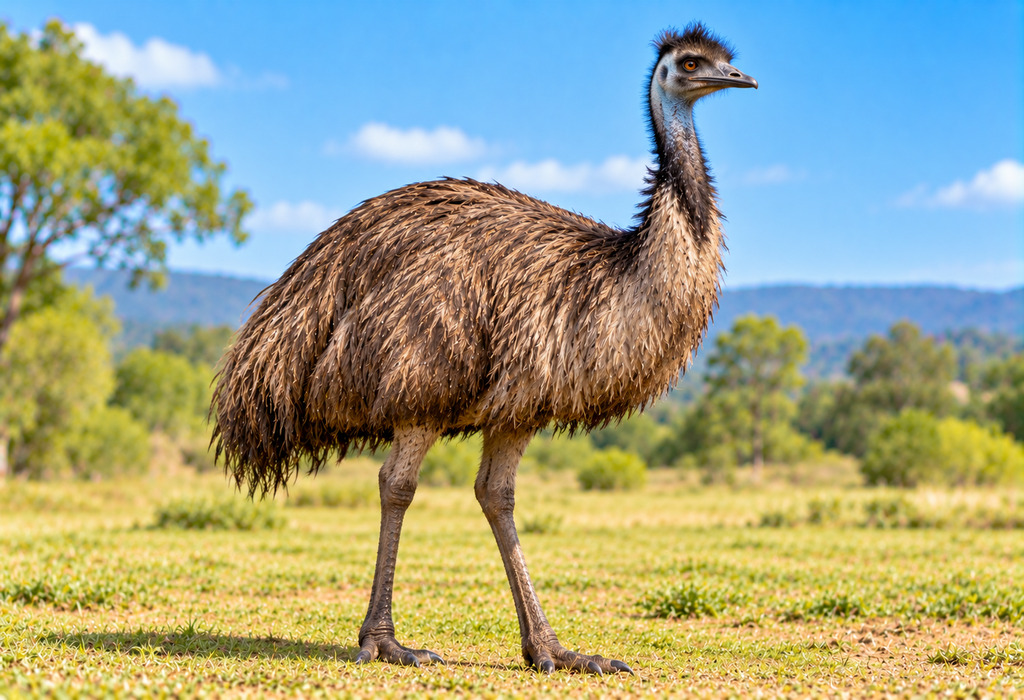
Scientific Name – Dromaius novaehollandiae
Type of Animal – Bird
Where They Live – Open plains and woodlands in Australia
Fun Facts
- Emus can run up to 50 kilometres per hour.
- Male emus look after the eggs and chicks.
4. Eel
Eels are long, snake-like fish that live in both rivers and oceans.
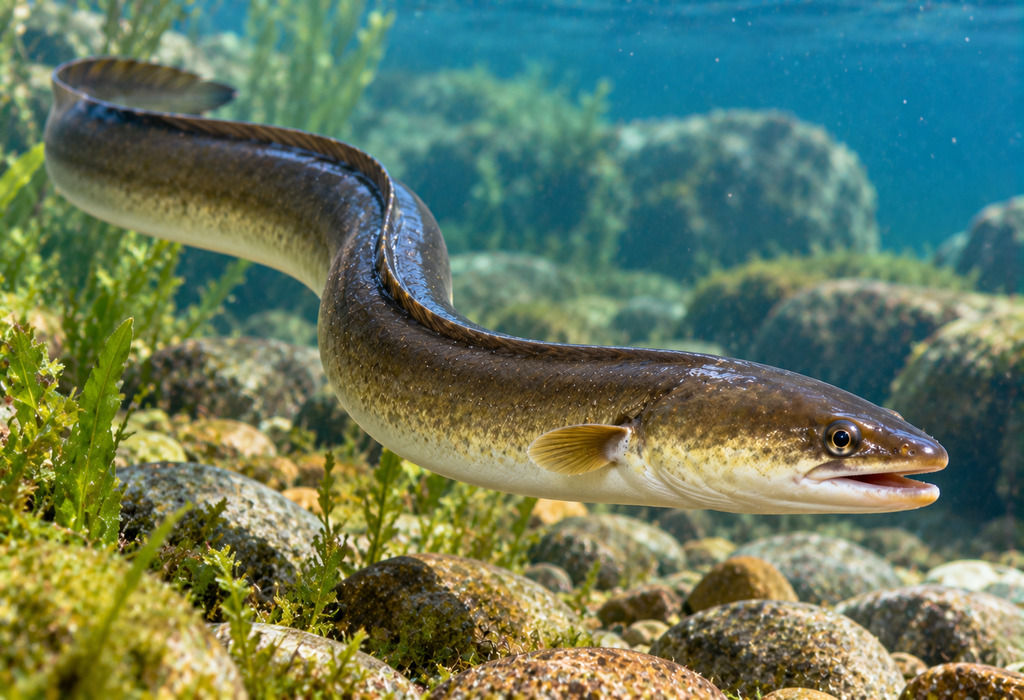
Scientific Name – Anguilla anguilla (European eel)
Type of Animal – Fish
Where They Live – Rivers, lakes and oceans worldwide
Fun Facts
- Some eels can live for over 50 years.
- Eels can swim backwards as well as forwards.
5. Earthworm
Earthworms are small, wriggly creatures that live underground and help keep soil healthy.
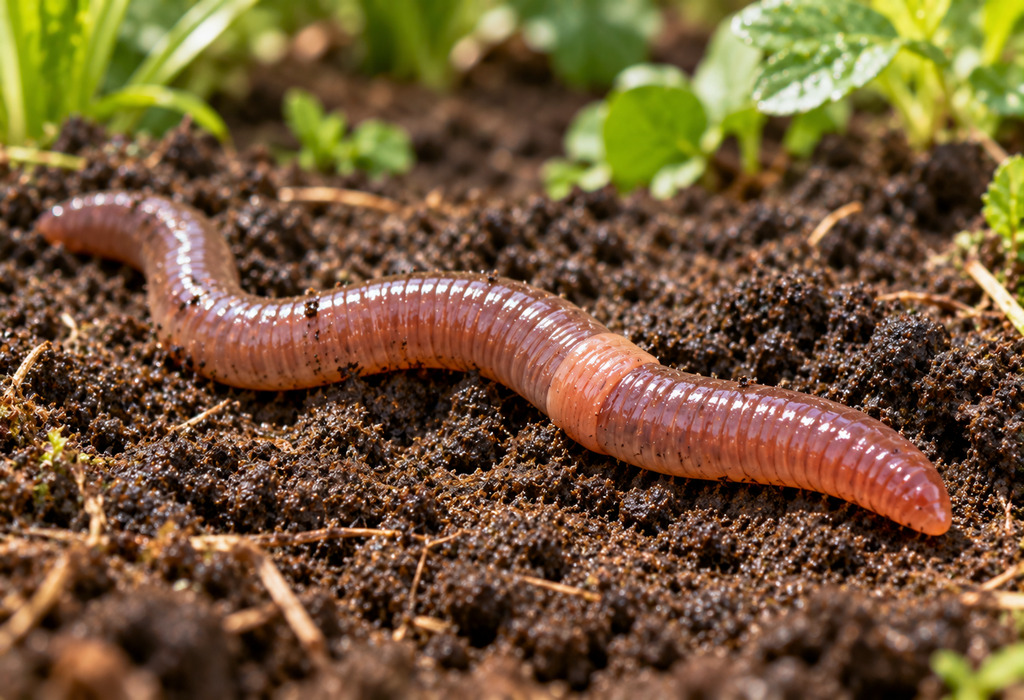
Scientific Name – Lumbricus terrestris
Type of Animal – Invertebrate
Where They Live – Moist soil in gardens and fields around the world
Fun Facts
- Earthworms have no eyes but can sense light.
- They help plants grow by loosening the soil.
6. Elk
Elk are large deer with impressive antlers that live in forests and mountains.
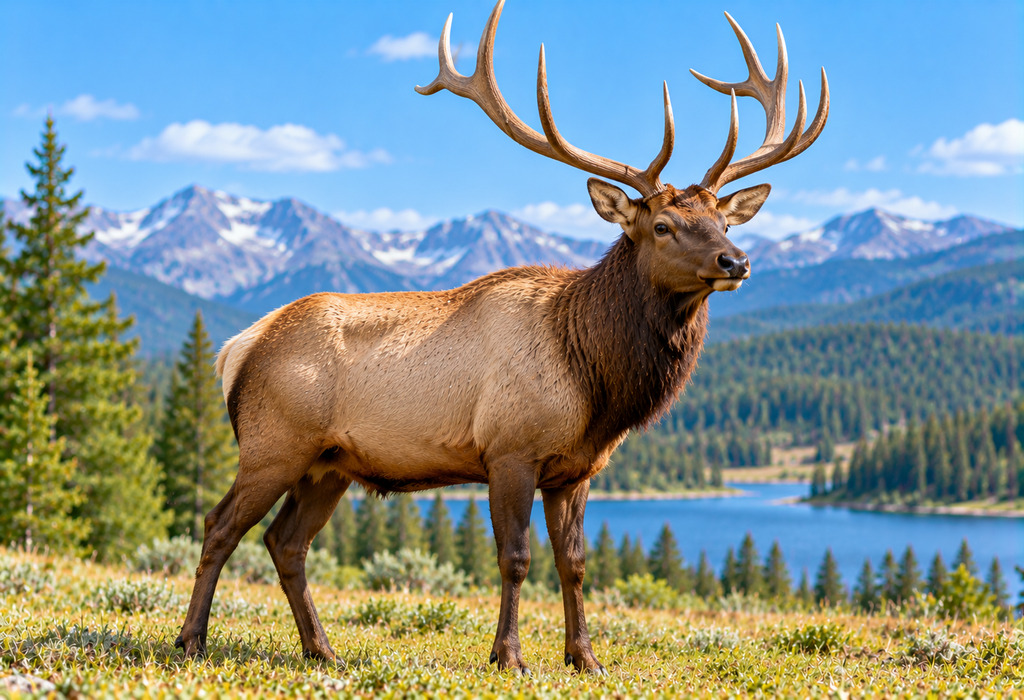
Scientific Name – Cervus canadensis
Type of Animal – Mammal
Where They Live – Forests and mountains in North America and Asia
Fun Facts
- Male elk grow new antlers every year.
- Elk can weigh as much as a small car.
7. Echidna
Echidnas are spiky mammals that lay eggs, making them unusual among mammals.
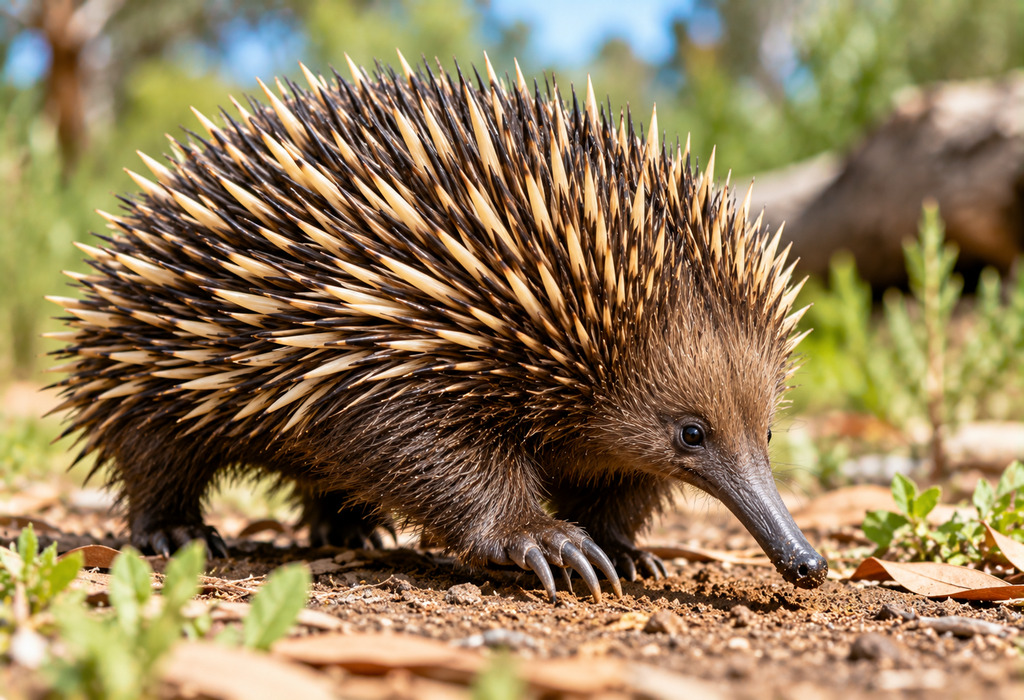
Scientific Name – Tachyglossus aculeatus
Type of Animal – Mammal
Where They Live – Forests and grasslands in Australia and New Guinea
Fun Facts
- Echidnas use their long tongues to eat ants and termites.
- They curl into a ball to protect themselves.
8. Egret
Egrets are elegant white birds often seen wading through shallow water.
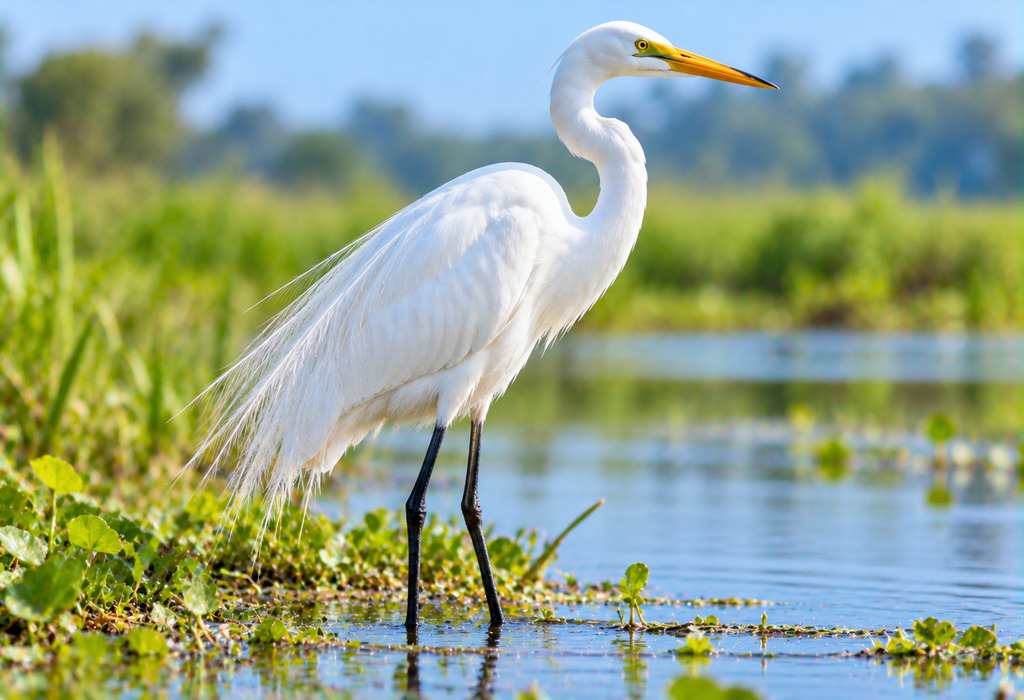
Scientific Name – Ardea alba (Great egret)
Type of Animal – Bird
Where They Live – Wetlands, marshes and rivers worldwide
Fun Facts
- Egrets stand very still to catch fish.
- They grow long, delicate feathers during breeding season.
9. Elephant Seal
Elephant seals are giant seals named for the male’s long, trunk-like nose.
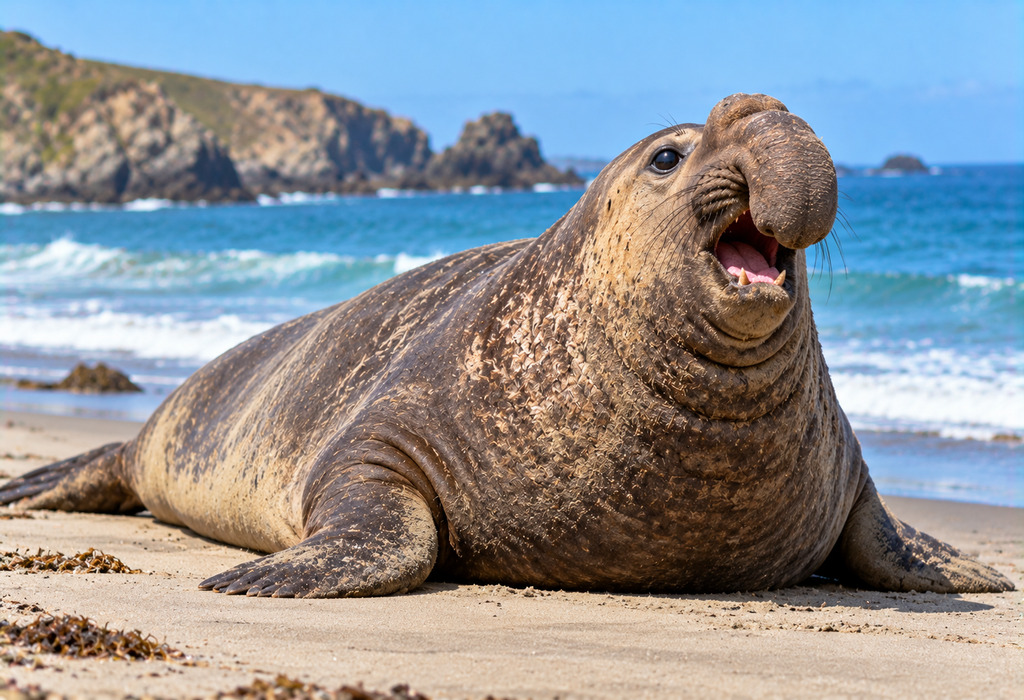
Scientific Name – Mirounga leonina (Southern elephant seal)
Type of Animal – Mammal
Where They Live – Beaches and coastal waters near Antarctica and the Pacific coast
Fun Facts
- Male elephant seals can weigh up to four tonnes.
- They can dive deeper than 1,500 metres.
10. Emperor Penguin
Emperor penguins are the tallest of all penguin species and live in one of the coldest places on Earth.
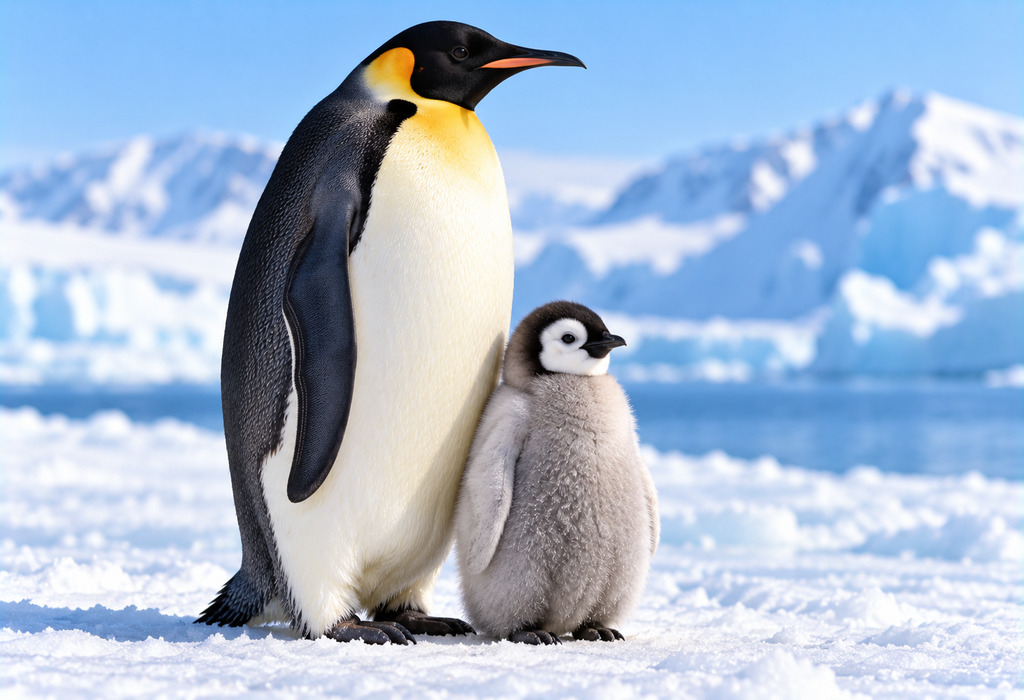
Scientific Name – Aptenodytes forsteri
Type of Animal – Bird
Where They Live – Antarctica
Fun Facts
- Emperor penguins can dive deeper than any other bird.
- Fathers keep the eggs warm on their feet.
11. European Robin
European robins are small songbirds famous for their bright orange-red chest.
Scientific Name – Erithacus rubecula
Type of Animal – Bird
Where They Live – Gardens, woodlands and parks across Europe
Fun Facts
- Robins sing almost all year round.
- Both males and females have the red breast.
12. Electric Eel
Electric eels can produce a powerful electric shock to stun their prey.
Scientific Name – Electrophorus electricus
Type of Animal – Fish
Where They Live – Rivers and streams in South America
Fun Facts
- Electric eels can produce shocks of up to 600 volts.
- They breathe air at the water’s surface as well as through gills.
13. Earwig
Earwigs are small insects with pincers at the back of their body.
Scientific Name – Forficula auricularia
Type of Animal – Insect
Where They Live – Gardens and damp places worldwide
Fun Facts
- Earwigs use their pincers for defence, not for pinching people.
- Mother earwigs care for their eggs and young.
14. Eastern Bluebird
Eastern bluebirds are small songbirds known for their bright blue feathers.
Scientific Name – Sialia sialis
Type of Animal – Bird
Where They Live – Open fields and woodlands in eastern North America
Fun Facts
- Eastern bluebirds nest in tree holes and nest boxes.
- Males have brighter blue feathers than females.
15. Eastern Chipmunk
Eastern chipmunks are small striped rodents that store food in their cheek pouches.
Scientific Name – Tamias striatus
Type of Animal – Mammal
Where They Live – Forests and gardens in eastern North America
Fun Facts
- Chipmunks can carry many seeds at once in their cheeks.
- They spend winter sleeping in underground burrows.
16. Eastern Cottontail Rabbit
Eastern cottontail rabbits are wild rabbits known for their fluffy white tail.
Scientific Name – Sylvilagus floridanus
Type of Animal – Mammal
Where They Live – Fields, meadows and gardens across North America
Fun Facts
- Their fluffy tail looks like a ball of cotton.
- Cottontail rabbits can run in a zigzag pattern to escape danger.
17. Eastern Gray Squirrel
Eastern gray squirrels are agile climbers often seen gathering nuts in parks and gardens.
Scientific Name – Sciurus carolinensis
Type of Animal – Mammal
Where They Live – Forests, parks and gardens in eastern North America
Fun Facts
- Squirrels bury nuts to eat later in winter.
- Their bushy tail helps them balance while climbing.
18. Eastern Screech Owl
Eastern screech owls are small owls with excellent camouflage against tree bark.
Scientific Name – Megascops asio
Type of Animal – Bird
Where They Live – Woodlands across eastern North America
Fun Facts
- They can be grey or reddish-brown in colour.
- Screech owls hunt mostly at night.
19. Elephant Shrew
Elephant shrews are tiny mammals with a long, flexible nose like a mini trunk.
Scientific Name – Macroscelididae (family)
Type of Animal – Mammal
Where They Live – Grasslands and forests in Africa
Fun Facts
- Despite the name, they are not closely related to elephants.
- They can run extremely fast for their small size.
20. Emperor Angelfish
Emperor angelfish are colourful fish that live among coral reefs.
Scientific Name – Pomacanthus imperator
Type of Animal – Fish
Where They Live – Coral reefs in the Indian and Pacific Oceans
Fun Facts
- Young emperor angelfish look completely different from adults.
- Their bright stripes help them blend into the reef.
21. Emerald Tree Boa
Emerald tree boas are bright green snakes that spend most of their life in trees.
Scientific Name – Corallus caninus
Type of Animal – Reptile
Where They Live – Rainforests in South America
Fun Facts
- Their green colour helps them hide among leaves.
- Baby emerald tree boas are born orange or red.
22. Eurasian Lynx
Eurasian lynxes are wild cats with tufted ears and thick fur for cold climates.
Scientific Name – Lynx lynx
Type of Animal – Mammal
Where They Live – Forests across Europe and Asia
Fun Facts
- Their large paws act like snowshoes in the snow.
- Lynxes have excellent hearing thanks to their tufted ears.
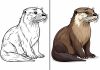
23. Eurasian Otter
Eurasian otters are playful animals that swim well in rivers and lakes.
Scientific Name – Lutra lutra
Type of Animal – Mammal
Where They Live – Rivers, lakes and coasts across Europe and Asia
Fun Facts
- Otters have waterproof fur to stay warm.
- They use rocks to crack open shellfish.
24. Eastern Box Turtle
Eastern box turtles have a domed shell that can close completely for protection.
Scientific Name – Terrapene carolina
Type of Animal – Reptile
Where They Live – Woodlands and fields in eastern North America
Fun Facts
- Their shell can close tightly like a box.
- Eastern box turtles can live for over 50 years.
25. Eastern Diamondback Rattlesnake
Eastern diamondback rattlesnakes are large snakes with a rattle on their tail that warns others away.
Scientific Name – Crotalus adamanteus
Type of Animal – Reptile
Where They Live – Forests and dry areas in the southeastern United States
Fun Facts
- Their rattle is made of hard, hollow segments.
- They are the largest venomous snake in North America.
26. Eastern Meadowlark
Eastern meadowlarks are grassland birds known for their bright yellow chest.
Scientific Name – Sturnella magna
Type of Animal – Bird
Where They Live – Grasslands and meadows in eastern North America
Fun Facts
- Their song is a clear, flute-like whistle.
- They build nests hidden in tall grass.
27. Egyptian Cobra
Egyptian cobras are large snakes known for raising their hood when threatened.
Scientific Name – Naja haje
Type of Animal – Reptile
Where They Live – Deserts and grasslands across Africa
Fun Facts
- They can raise the front of their body when alarmed.
- Egyptian cobras were often shown in ancient Egyptian art.
28. Eland
Elands are the largest antelope species, known for their spiral horns.
Scientific Name – Taurotragus oryx
Type of Animal – Mammal
Where They Live – Grasslands and savannas in Africa
Fun Facts
- Elands can jump nearly three metres from a standing start.
- Both male and female elands have horns.
29. Elephant Beetle
Elephant beetles are giant beetles named for the horn on the male’s head.
Scientific Name – Megasoma elephas
Type of Animal – Insect
Where They Live – Rainforests in Central and South America
Fun Facts
- Males use their horns to fight over mates.
- They are among the heaviest insects in the world.
30. European Hedgehog
European hedgehogs are small, spiny mammals that curl into a ball when scared.
Scientific Name – Erinaceus europaeus
Type of Animal – Mammal
Where They Live – Gardens, hedgerows and woodlands across Europe
Fun Facts
- Hedgehogs have around 5,000 spines.
- They sleep through winter in a state called hibernation.
31. European Wildcat
European wildcats look similar to house cats but are shy and live in the wild.
Scientific Name – Felis silvestris
Type of Animal – Mammal
Where They Live – Forests across Europe
Fun Facts
- They have a thicker, bushier tail than pet cats.
- Wildcats hunt mostly at night.
32. Eyelash Viper
Eyelash vipers are small, colourful snakes named for the scales above their eyes.
Scientific Name – Bothriechis schlegelii
Type of Animal – Reptile
Where They Live – Rainforests in Central and South America
Fun Facts
- They can be yellow, green or even pink.
- The scales above their eyes look like little eyelashes.
33. Eastern Kingbird
Eastern kingbirds are small, bold birds known for chasing away larger birds.
Scientific Name – Tyrannus tyrannus
Type of Animal – Bird
Where They Live – Open fields and orchards in North America
Fun Facts
- They catch insects in mid-air.
- Kingbirds will even chase away hawks and crows.
34. Eastern Newt
Eastern newts are small amphibians that change colour as they grow.
Scientific Name – Notophthalmus viridescens
Type of Animal – Amphibian
Where They Live – Ponds and forests in eastern North America
Fun Facts
- Young newts are bright orange and live on land.
- Adults turn olive green and return to water.
35. Eastern Painted Turtle
Eastern painted turtles have colourful red and yellow markings on their shell.
Scientific Name – Chrysemys picta picta
Type of Animal – Reptile
Where They Live – Ponds, lakes and slow rivers in eastern North America
Fun Facts
- They like to bask in the sun on logs.
- Their shell markings look like painted stripes.
36. Eastern Tiger Salamander
Eastern tiger salamanders are large amphibians with yellow, tiger-like markings.
Scientific Name – Ambystoma tigrinum
Type of Animal – Amphibian
Where They Live – Woodlands and grasslands in eastern North America
Fun Facts
- They spend most of their life underground.
- Their spotted pattern helps them hide from predators.
37. Emperor Tamarin
Emperor tamarins are small monkeys famous for their long, white moustache.
Scientific Name – Saguinus imperator
Type of Animal – Mammal
Where They Live – Rainforests in South America
Fun Facts
- Their long white whiskers look like a moustache.
- Emperor tamarins live in small family groups.
38. European Badger
European badgers are stocky mammals with black and white striped faces.
Scientific Name – Meles meles
Type of Animal – Mammal
Where They Live – Woodlands and countryside across Europe
Fun Facts
- Badgers live in underground burrows called setts.
- They are mostly active at night.
39. European Starling
European starlings are small birds known for their shiny, speckled feathers.
Scientific Name – Sturnus vulgaris
Type of Animal – Bird
Where They Live – Towns, farmland and woodlands across Europe
Fun Facts
- Large flocks of starlings can form amazing shapes in the sky.
- Starlings are excellent mimics and can copy other sounds.
40. Ewe
A ewe is an adult female sheep, often seen on farms with her lambs.
Scientific Name – Ovis aries
Type of Animal – Mammal
Where They Live – Farms and grasslands around the world
Fun Facts
- A ewe usually gives birth to one or two lambs at a time.
- Ewes can recognise their own lambs by their bleat.
From the enormous elephant to the tiny earthworm, animals beginning with E come in every shape, size and habitat imaginable. This list gives children a fun and easy way to discover new creatures while learning key facts about the animal kingdom. Encourage your child to pick a favourite from the list and find out even more about it. With so many fascinating creatures to explore, there is always something new and exciting to learn.
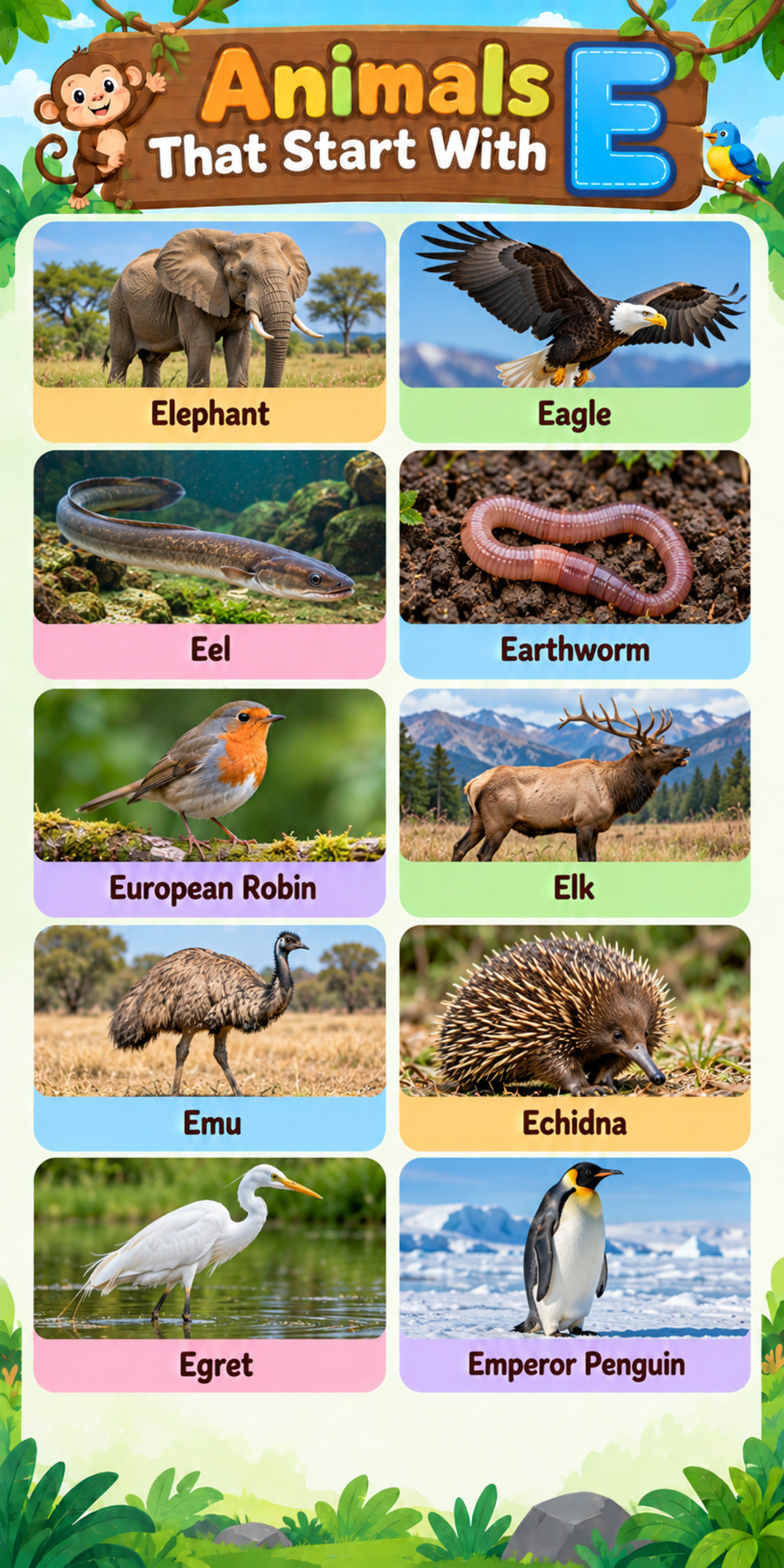
Infographic – Animals Starting With Letter E
Also Read: Animals That Begin With Letter A to Z